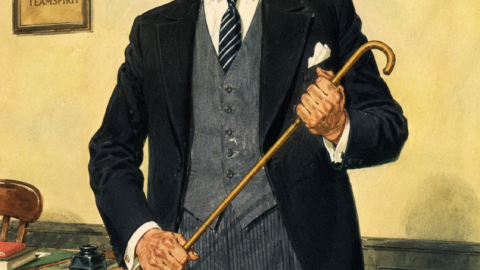
On the one occasion I was caned, I was taken directly to the Deputy Head, so there was no opportunity to prepare myself mentally for what was coming. After a lecture — which was probably more effective than the punishment itself — he said, “I’ll give you two.” I was told to place my hands on the desk. He moved around behind the desk, lifted the hem of my blazer, and then there was a whirr followed by a dull thud, quickly repeated a second time. I was told not to speak about it and dismissed.
It certainly was not as painful as the slipperings our PE teacher handed out when we were wearing only a thin layer of PE shorts. After all the rumours and exaggerated stories told by boys who claimed to have been caned, the reality seemed rather an anti-climax.
One of the tougher boys in the school, who played in the 2nd XV rugby team, used to say that a caning from the Headmaster was far more painful and usually involved six strokes, though occasionally four were given. The Head caned only rarely each term, whereas the Deputy Head did so several times a week. It was simply accepted as part of school life in the 1960s.
I was only caned once and, unlike some boys, I had expected it to hurt badly. In truth, the most painful punishment I ever received was a slippering. This took place at the end of a PE lesson when I was wearing only thin shorts. I really was not expecting the level of pain and it came as quite a shock.
I had received a couple of very mild slipperings at junior school and had assumed this would be much the same. It was not. The sting was immediate and intense, and I remember the feeling lingering for quite some time afterwards. Subsequent slipperings were easier to cope with simply because I knew what to expect.
One curious memory connected with that particularly painful slippering was that a very attractive girl gave me an extremely sympathetic look after seeing me in obvious distress. At that age, however, I was painfully shy around girls and never found the courage to speak properly to her. She used to sit close to me in biology and chemistry lessons where we worked in groups, often brushing against me, but again I could never quite bring myself to say very much.
I do remember that she once received a detention herself and looked equally distressed on that occasion. Looking back now, those moments remain more vivid in my memory than the punishments themselves.
Corporal punishment affected boys differently. Some dreaded it intensely, while others were more curious than frightened. In my own case, curiosity probably outweighed fear. Stories circulated constantly around the school, often growing more dramatic with each retelling. Boys would compare punishments, discuss which masters hit hardest, and speculate endlessly about who might be next.
The cane carried a certain reputation, partly because of its rarity and formality. A summons to the Headmaster’s study had an atmosphere all of its own. The Deputy Head’s punishments, by contrast, were more routine and therefore somehow less intimidating. Even so, the anticipation beforehand was often worse than the punishment itself.
Not everyone found the cane unimpressive. A colleague later told me that at his school a girl had written something extremely rude on a blackboard. The teacher assumed a boy was responsible, but nobody confessed and nobody betrayed the girl who had actually done it. As a result, all the boys in the class were caned while she escaped punishment entirely. Stories like that were common at the time and reflected the rather unquestioned acceptance of corporal punishment in schools.
For some boys, however, the cane certainly lived up to expectations. One friend recalled receiving six hard strokes across the backside and described the pain as extremely severe — “like your bottom was on fire,” as he put it. While the worst of the pain faded after a while, the stinging sensation often remained for quite some time afterwards.
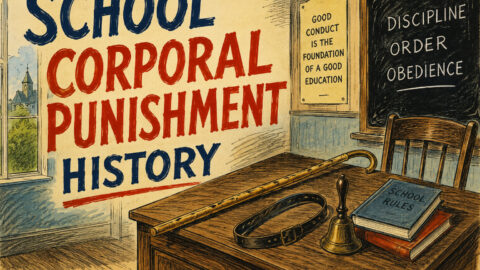
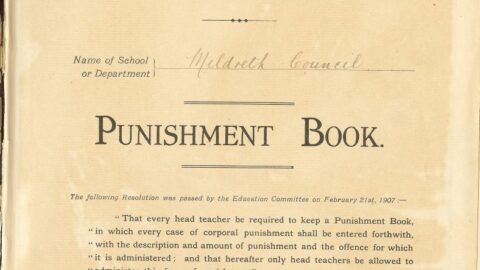
Looking back today, it is difficult to explain just how normal all of this once seemed. Corporal punishment was woven into everyday school life in many British schools during that era. Boys discussed it casually, teachers administered it matter-of-factly, and parents often accepted it as part of discipline and growing up.
Whether it was effective is another question entirely. In many cases, the lecture beforehand, the embarrassment, or simply the fear of anticipation probably had more impact than the punishment itself.