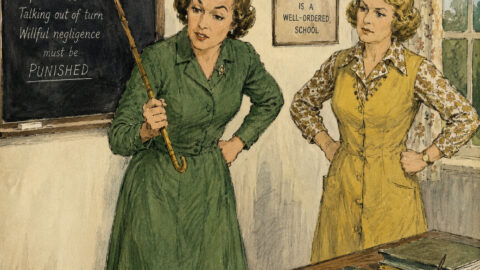
I have often found myself wondering how schoolmasters first learned the art of using the cane. Was it something formally taught at teachers’ college, quietly included among lectures on discipline and classroom control? Or was it simply inherited through tradition — each generation of teachers repeating what had been done to them when they themselves sat nervously at wooden desks beneath the watchful eye of authority?
One imagines the newly appointed headmaster arriving at his first school with little practical guidance beyond the customs of the profession. Somewhere, perhaps tucked away in an education department handbook, there may have been regulations governing when and how corporal punishment was to be administered. Yet the actual practice — the measured swing of the cane, the decision of whether punishment should fall upon the hands or the seat, the number of strokes deemed “appropriate” — seems to have depended as much upon tradition and personal temperament as official policy.
In many schools throughout Australia and Britain during the first half of the twentieth century, corporal punishment was regarded not merely as acceptable, but as an essential pillar of discipline. To question the cane was, in some circles, to question order itself. Teachers and parents alike often believed that fear of punishment instilled respect, obedience, and moral character. “Spare the rod and spoil the child” was quoted with unquestioning certainty.
Yet even within this culture of acceptance, there existed a maze of rules and conventions. In Queensland state schools, where I grew up, regulations eventually stipulated that caning was to be administered only upon the hands. Earlier generations remembered differently. Before Federation, and in some schools long afterward, boys and girls alike might receive strokes across the buttocks. Over time, however, authorities appear to have grown uneasy about the complications such punishments could invite — particularly where male teachers punished girls, or female teachers punished boys. To avoid accusations of impropriety and to standardise procedure across the education system, hand caning gradually became the accepted norm in many government schools.
Private schools often operated according to their own traditions. There, much depended upon the headmaster’s philosophy and the culture of the institution itself. Some schools retained severe disciplinary practices well into the modern era, while others quietly softened their approach.
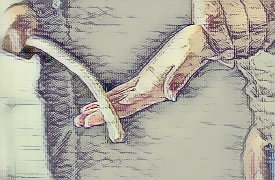
The cane itself was hardly an improvised instrument. Specially manufactured canes were ordered for school use, usually fashioned from rattan or similar flexible material. They varied in thickness and suppleness according to preference. Some headmasters reportedly prized particular canes in the way a craftsman values his tools. It is difficult not to wonder whether teachers practised beforehand — perhaps against furniture, perhaps against cushions, or perhaps simply through observation of older colleagues who demonstrated the accepted technique.
There were also procedures intended, at least in theory, to prevent abuse. I know from experience that in some schools a witness was required during formal canings. For boys, the witness could be either male or female staff, whereas punishments administered to girls were generally supervised by another woman teacher. Such precautions were likely designed to protect both pupil and teacher from accusations of misconduct.
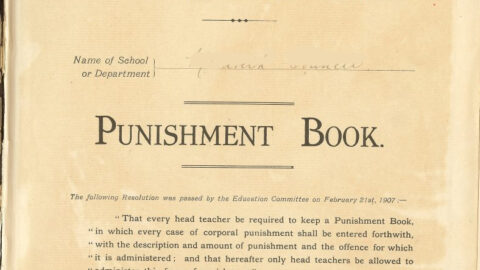
Yet this was far from universal. In the schools I attended, official witnesses were rarely present. The only requirement for a formal punishment was that it be entered into the punishment book — a grim ledger recording offences, dates, and the number of strokes administered. Once the classroom door closed, however, oversight often disappeared. Teachers could administer immediate punishments with little accountability, and much depended upon individual character.
Most teachers, in fairness, exercised restraint. Many probably disliked administering corporal punishment as much as students disliked receiving it. But there were exceptions, and it is those exceptions that linger painfully in memory.
I recall one teacher in particular whose use of corporal punishment crossed the line from discipline into cruelty. He ruled his classroom through intimidation, striking children frequently and unpredictably. Under his authority, my final year of primary school became an experience of constant anxiety. Fear overshadowed learning. The atmosphere was one of tension and dread rather than education.
Decades later, the memory of that man still stirs resentment. He exemplified the danger inherent in any system that grants unchecked authority over children. The problem with corporal punishment was not merely the pain of the cane itself, unpleasant though that certainly was. Rather, it was the absence of sufficient safeguards against those individuals who enjoyed wielding power. A strict but fair teacher might administer punishment sparingly and without malice. A sadistic one could inflict lasting psychological harm while remaining protected by the culture of silence surrounding discipline.
Supporters of the cane often argued that it produced respect and resilience. Critics countered that it encouraged fear, humiliation, and resentment. Looking back now, it seems likely that both views contained some truth. For many children, the cane was simply an accepted fact of school life, endured and then forgotten. For others, it became a symbol of humiliation and helplessness that remained vivid long after schooldays had ended.