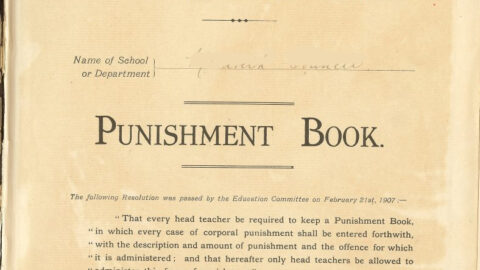
In the decades when school discipline was regarded as an essential pillar of education, the administration of corporal punishment was often treated not as an act of temper, but as a solemn duty requiring restraint, precision, and even a curious degree of professionalism. Few countries became more closely associated with this philosophy than Singapore, where tales of the feared “DM” — the Discipline Master — became part of educational folklore throughout the Commonwealth.
It has long been said in Singapore that every aspiring principal and discipline master or mistress undergoes formal preparation within the Ministry of Education before assuming authority in the schools. According to persistent accounts, this instruction extended beyond rules and regulations into the practical mechanics of administering the cane itself. Former pupils and teachers alike have remarked upon the remarkable uniformity with which punishments were carried out from one school to another: the same measured stance, the same deliberate pause between strokes, the same carefully aimed delivery. Such consistency has naturally given rise to the belief that officials were trained not merely to punish, but to do so in a controlled and calculated manner.
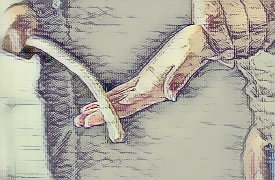
The prevailing understanding was that caning, if it was to be used at all, had to be administered firmly enough to command respect, yet carefully enough to avoid lasting injury. Stories circulated that trainees were instructed in matters as exacting as body position, the angle of the swing, the importance of striking only the lower portion of the buttocks, and the precise degree of follow-through required to produce pain without physical harm. Some even claimed that the final stage of the training involved each trainee receiving a stroke of the cane personally, so that they might fully appreciate the sensation they were expected to inflict upon others. Whether this dramatic detail was fact or merely staff-room legend remains uncertain, though it has persisted in anecdotal accounts for years.
What is beyond dispute is that corporal punishment, in those days, was rarely considered something to be improvised. Even in Britain, where standards varied enormously from school to school, experienced masters often instructed younger colleagues in the accepted techniques. One former housemaster recalled how a senior member of staff patiently demonstrated the “expert flick of the wrist” needed at the final moment of the stroke. He was advised on where to stand, how far back to draw the cane, how long to pause between strokes, and the necessity of aiming accurately at the lower half of the posterior. Before ever administering punishment to a pupil, he was encouraged to practise repeatedly on the back of a heavily padded armchair.
Such recollections reveal that, in many schools, caning was regarded almost as a craft — one demanding composure, judgement, and physical control. Indeed, defenders of the practice often argued that the greatest failures occurred not because corporal punishment existed, but because some teachers employed it clumsily or emotionally. Accounts of misjudged strokes, bruising, or punishments delivered in anger suggested that not every member of the profession possessed either the temperament or the skill believed necessary for so controversial a responsibility.
Among pupils, meanwhile, the rituals surrounding punishment became etched permanently into memory. Many former students can still describe, in remarkable detail, the routines of their headmasters. One recalls how his own headmaster would administer between four and six strokes, each delivered with almost ceremonial precision. There would be a pause of roughly three seconds between strokes, during which the headmaster counted each one aloud in a calm and deliberate voice. Only after the final stroke had been delivered would permission be given for the boy to stand. The cane would then be returned carefully to its cabinet before the headmaster resumed his seat behind the desk. Then, with the formality of a magistrate concluding proceedings, came the words that signalled the end of the ordeal:
“You are dismissed, young man.”