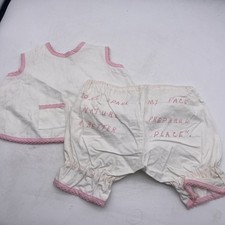
In later years, many former pupils would compare notes about school discipline with the peculiar fascination reserved for vanished institutions. Among the stories most often retold were those concerning the Magdalene establishments, where, according to persistent rumour, punishments were administered not across the seat in the traditional manner, but on the backs of the thighs — a detail that seemed to lend the whole business an especially grim and ceremonial quality.
Corporal punishment, once so ordinary a feature of school life as to be scarcely questioned, now survives largely in recollection: half horror story, half dark comedy. Yet the methods, rituals and personalities surrounding it were often far more elaborate than outsiders imagined.
One former teacher recalled an extraordinary incident from the early years of his career, some forty years ago. Fresh from teacher training college and not long appointed to his first school, he was summoned to the headmaster’s study before taking charge of his class. The purpose of the meeting was not academic guidance, nor advice on classroom management, but practical instruction in the administration of the strap.
The headmaster, evidently a man who believed firmly in proper procedure, first instructed the nervous young master to put on a boxing glove. Only then did he demonstrate the correct motion and technique upon him. Afterwards, roles were reversed: the probationary teacher was required to practise upon the headmaster himself.
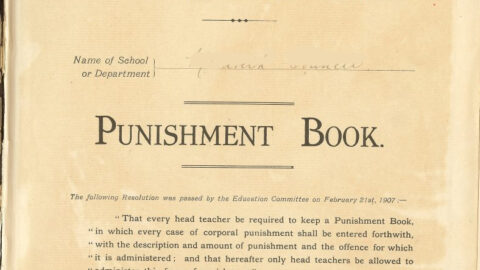
The story provoked much laughter when repeated later in staff rooms and pubs, but in truth there was a curious logic to it. In an era when corporal punishment remained officially sanctioned in many schools, there was remarkably little formal guidance regarding its use. Teachers were expected simply to know how these things were done. A practical demonstration, however bizarre it now appears, may have been one of the few safeguards against genuine injury.
Indeed, despite coming from a family steeped in education — mother, father, brother and sister all teachers — I never once heard of any official training in corporal punishment. It seemed to belong instead to a shadow world of inherited customs, staff-room folklore, and private understandings passed quietly from one generation to the next.
Some of the most revealing glimpses into that world came indirectly. At one time, my girlfriend happened to be the daughter of our school secretary, a formidable and well-informed woman who hosted lively Friday evening gatherings attended by much of the teaching staff. For a schoolboy, the intelligence filtering back from these occasions was priceless. One learned which masters drank too much, who was rumoured to be appearing in court the following week, and which romances were flourishing disastrously behind departmental doors.
Among these treasures of gossip came the curious case of Anya, the Russian teacher.
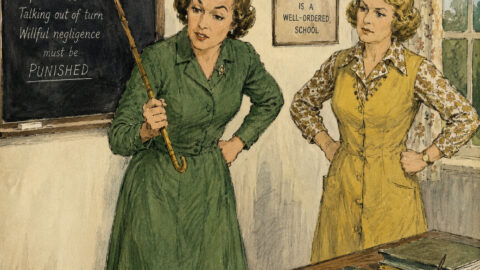
Anya had arrived at the school full of progressive ideals and deeply pacifist convictions. At first she regarded corporal punishment with visible distaste, considering it a barbaric relic best abandoned to history. Yet after a year attempting to control classes of loud, insolent English teenage boys, her views began, rather dramatically, to change.
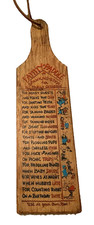
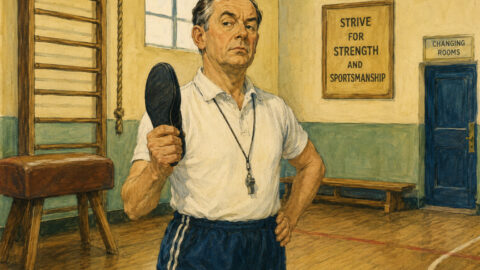
The school itself maintained two principal instruments of discipline. Slippers — generally applied to the backside — were usually improvised from lost property or confiscated gym kit. The straps, however, were official equipment, ordered from a supplier somewhere in Ireland and distributed through the school secretary’s office.
According to my informant, Anya was eventually advised to visit the secretary on Monday morning and formally sign for a strap of her own.
What followed, apparently after several drinks one Friday night, was a spirited discussion among staff regarding the practicalities of its use. Anya confessed that she disliked the idea of striking pupils across the hands, fearing she might miss in the heat of the moment. Could boys instead be bent over for punishment? How many strokes were considered appropriate? The conversation, lubricated generously with alcohol, evolved into an unlikely seminar on disciplinary technique.
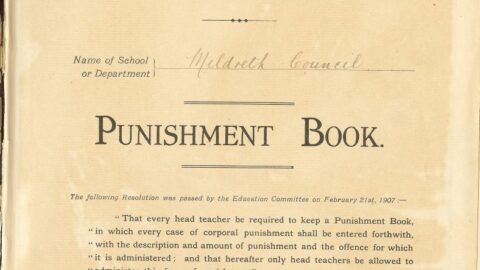
To modern ears, it sounds astonishingly casual. Yet at the time, such discussions occurred within a system that regarded corporal punishment not as exceptional, but administrative — another classroom tool alongside blackboards and report books.
For pupils on the receiving end, however, the experience possessed a ritualistic terror all its own.
One former student vividly described the dreadful choreography surrounding a caning. Any instinctive movement to rub the injured area after a stroke was immediately corrected. “Touch your toes,” the master would bark, forcing the boy back into position and preventing any comforting gesture.
Then came the waiting.
First, the faint double tap of the cane as it was drawn back into position. A pause — two, perhaps three endless seconds — before the swish through the air. Then the crack itself, sharp and explosive, accompanied almost involuntarily by a gasp, a yelp, or teeth biting hard into the lower lip to suppress one.
Another pause followed. Tap-tap. Swish. Silence. Then again: swish — thwack.
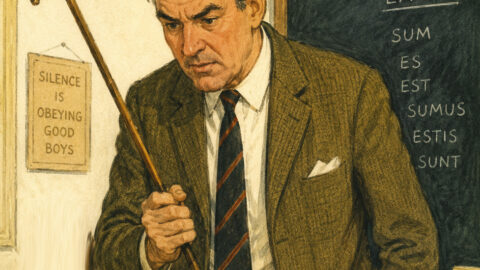
Some headmasters acquired near-legendary reputations for the precision of their methods. One, remembered by generations of boys, approached the entire business with almost scientific deliberation. Several canes hung in a tall cupboard in his study, from which he would carefully select the instrument best suited to the occasion. The condemned boy was instructed to bend over the end of the desk and grip its sides firmly.
Before the first stroke, the headmaster would swish the cane experimentally through the air several times, testing its flexibility and balance. He would then tap lightly at the intended target area — first the upper buttocks, then lower down near the tops of the thighs — as though mapping out the precise distribution of punishment.
The first stroke landed high. The second low. Any remaining strokes, sometimes as many as eight, were spaced evenly between those boundaries with methodical accuracy. Between each came a long pause of thirty or even forty-five seconds, allowing anticipation to build into something almost unbearable.
“I was caned by him only once,” the former pupil recalled many years later. “Once was quite enough.”
Looking back now, what is perhaps most striking is not simply the severity of these punishments, but the extraordinary normality with which they were once regarded. Teachers discussed technique over drinks. Secretaries issued straps like office supplies. Headmasters refined methods with professional pride.
An entire culture existed around school discipline — formal, ritualised, and accepted — which has now vanished almost completely from British life. What remains are the stories: sometimes comic, sometimes unsettling, but always revealing of a world whose assumptions now seem impossibly distant.