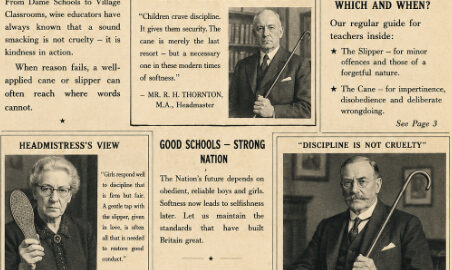
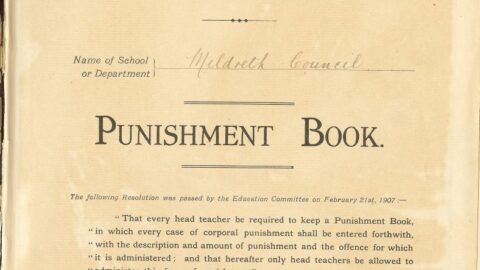
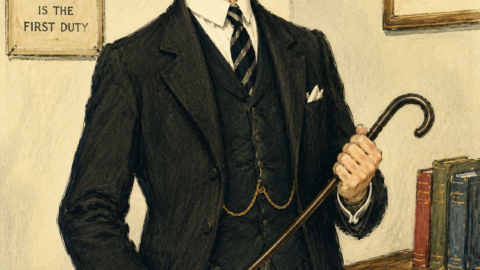
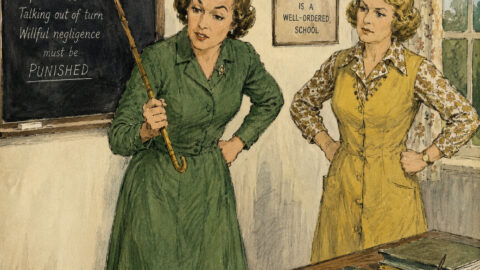
In the hard-edged classrooms and draughty gymnasiums of post-war Scotland, discipline was regarded not merely as part of education, but as one of its chief pillars. Across countless schools in Glasgow, Edinburgh and beyond, the fearsome reputation of the leather tawse loomed large in the minds of pupils. Yet for many former schoolchildren, the implements of punishment were often as memorable as the teachers who wielded them.
One such figure still spoken of with a mixture of disbelief and dark humour is Mrs Gordon, a physical education teacher at Lochend in Glasgow during the mid-1980s. To former pupils, she became something of a legend — though hardly a fond one. While most teachers relied upon the traditional belt or tawse, Mrs Gordon reportedly preferred a far more theatrical instrument: a cricket bat.
Among the girls at Lochend, the bat itself acquired nicknames that now sound almost surreal in retrospect. The broad flat blade was ominously referred to as “Big Bertha,” while the handle earned the title “Wee Bessie.” Such grim schoolyard humour often flourished wherever strict discipline existed, allowing pupils to soften fear through wit and exaggeration. Yet beneath the joking recollections lay genuine anxiety. For many schoolchildren of the era, corporal punishment was an accepted — if deeply resented — reality of everyday life.
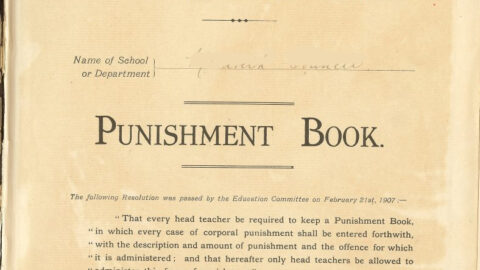
Scotland, of course, held onto corporal punishment in schools longer than many parts of Britain. The tawse — a heavy strip of split leather administered across the palm — was particularly associated with Scottish education. In boys’ schools, grammar schools, and even many primary schools, the ritual was formalised and feared. A summons to the headmaster’s office or the gymnasium changing room could result in a sharp, stinging punishment delivered before classmates or fellow pupils.
Experiences, however, varied greatly depending upon geography and school tradition. One former pupil recalls a conversation during the 1960s with a young woman employed in Edinburgh. Asked whether she had ever received “the belt” during her schooldays, she replied that she had not. She had spent her childhood in England, attending a girls’ school where corporal punishment for female pupils was apparently unheard of. To Scottish ears at the time, this seemed almost remarkable.
She did, however, recount stories from her brother’s boarding school, where discipline took a sterner form. On one memorable occasion, the boy’s housemaster abandoned the customary cane in favour of a cricket bat, delivering several humiliating blows across the seat of the trousers. Though such incidents were not commonplace, they reflected the extraordinary latitude granted to certain teachers and masters during that era.
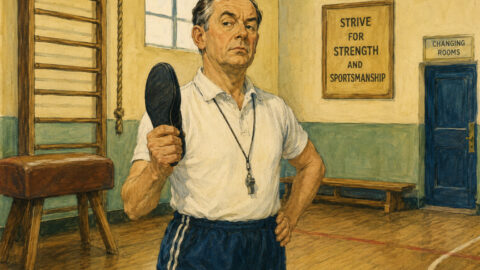
Games teachers in particular often cultivated reputations for severity. In many schools, the PE department existed as a world unto itself — a domain of shouted orders, icy showers, military routines and rough justice. One former pupil remembers his own PE master relying chiefly upon a thick leather strap or occasionally a gym slipper. Yet even he abandoned convention from time to time. During school cricket matches, boys who argued, swore, or failed to follow instructions might find themselves abruptly disciplined with the very bat used moments earlier in the game.
Such punishments were usually carried out on the spur of the moment, often before teammates and spectators alike. The humiliation could sting as sharply as the blow itself. While some former pupils dismiss these incidents today as “part of growing up,” others remember them with lingering resentment and discomfort.
Looking back from the modern age, these stories seem to belong to another world entirely — one where authority was rarely questioned and physical punishment was woven into the fabric of everyday school life. By the late 20th century, attitudes had begun to shift decisively. Campaigns against corporal punishment gathered momentum throughout Britain, fuelled by changing social values and growing concerns about children’s welfare and dignity.
Yet memories endure. For many Scots of a certain generation, the mention of a tawse, a gym slipper, or even a cricket bat is enough to summon vivid recollections of polished corridors, echoing assembly halls and the ever-present tension that discipline might arrive swiftly and painfully. What survives now is not merely nostalgia, but a revealing portrait of an educational culture that once seemed entirely normal — and which vanished far more recently than many people realise.