There are few pleasures more agreeable to the devoted cricket enthusiast than leafing through the yellowing pages of an old sporting volume, rich with anecdotes from a gentler — and sometimes stranger — age of the game. Recently, while immersed in the wonderfully evocative Nottinghamshire Cricket and Cricketers, published in 1923, I came across several stories which reveal not only the character of Victorian cricketers, but also the extraordinary seriousness with which they regarded their sport.
One tale in particular deserves rescuing from obscurity.
The story concerns Tom Davis (1827–1898), a Nottinghamshire player of the mid-nineteenth century whose devotion to cricket bordered on the fanatical. In approximately 1855, Davis committed what every cricketer dreads above almost anything else — he dropped a catch at a crucial moment in the match. The error proved decisive and Nottinghamshire lost the game.
Today, a player guilty of such a lapse might endure little more than a sharp word from the captain, a miserable evening replaying the mistake in his mind, or perhaps an unflattering mention in the sports pages. Victorian cricketers, however, were often cast in sterner moulds.
The contemporary account quoted in the book is remarkable both for its earnestness and for the curious standards of discipline that prevailed at the time:
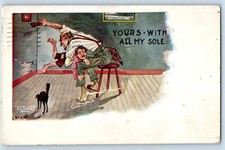
“So keen a cricketer was Tom, that once when he dropped a catch at a critical point of the game, he, after the innings were over, requested one of his own side to inflict corporal punishment on him.
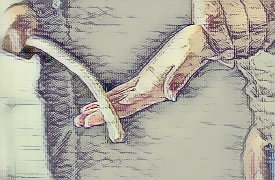
The man he asked to undertake this pleasant duty at first declined, thinking it was in jest. However, when he realized Tom was serious, he gave him such hearty applications with the bat as quite satisfied such an enthusiastic cricketer as Tom.”
It is difficult for the modern reader not to smile at the image: a remorseful county cricketer solemnly presenting himself for punishment like a repentant schoolboy. Yet behind the humour lies something revealing about the age. Cricket in Victorian England was not merely a pastime. It was treated almost as a moral exercise, a test of discipline, courage and character. To fail one’s side was not simply unfortunate — it could be regarded as a personal failing demanding atonement.
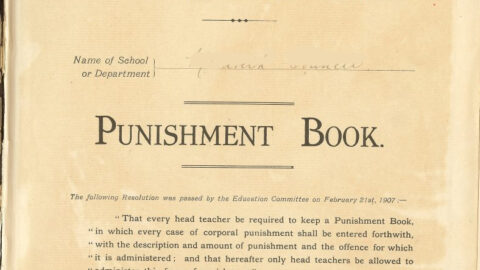
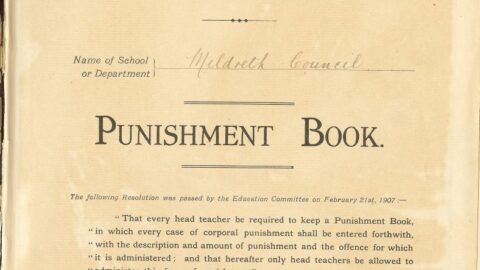
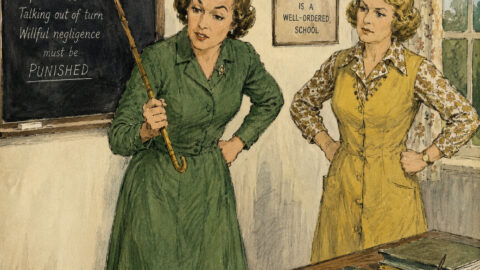
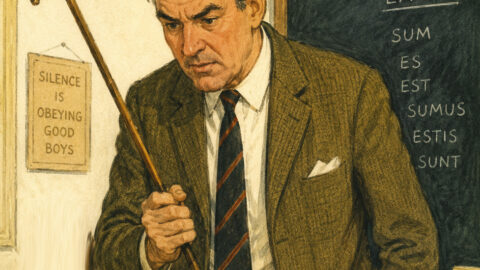
The idea of a player voluntarily submitting himself to a beating with a cricket bat seems astonishing today, though perhaps not entirely surprising in a society where corporal punishment remained commonplace in schools, homes, the military and even public institutions. In that context, Davis’s behaviour, while eccentric, would not have appeared quite as bizarre as it does to modern sensibilities.
Still, even allowing for Victorian attitudes, one suspects that Tom Davis occupied the more extreme end of cricketing devotion.
The book contains lighter moments too. Among its more charming recollections is the story of another Nottinghamshire player, Sherwin, writing around 1890, who was apparently a keen singer with a fondness for the popular American minstrel song “Dem Golden Slippers.” The tune, immensely fashionable during the late nineteenth century, became a music-hall favourite on both sides of the Atlantic.
Quite by coincidence, a reminder of the song survives today in the form of a poster displayed in The Golden Slipper, a public house in York — a delightful old establishment I visited earlier this year. Seeing the poster there provided one of those curious little historical connections that cricket lovers and collectors of sporting trivia treasure so much: a thread linking Victorian county cricketers, Edwardian music halls and the modern pub visitor separated by more than a century.
Reading such anecdotes one is reminded how deeply cricket once permeated English life. County players were not the polished international celebrities of today, insulated by contracts and media advisers. They were often craftsmen, labourers or tradesmen for whom cricket represented pride, identity and local honour. Their stories possess a rough humanity that can sometimes feel absent from the modern game.
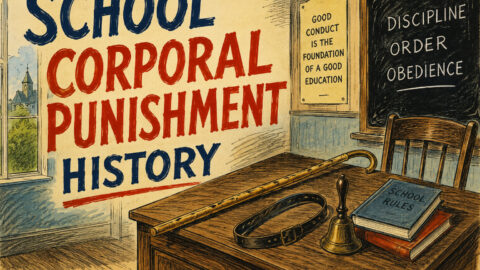
As for the curious matter of corporal punishment with a cricket bat, it certainly sounds more alarming than practical. I cannot recall any such punishments being administered at my own school, though others may have different memories. In truth, a cricket bat would make a particularly unsuitable instrument for such purposes. Unlike the lighter canes or straps historically associated with school discipline, a cricket bat is heavy, rigid and capable of causing severe bruising or injury if used with any real force.
Historically, implements associated with corporal punishment were generally selected — at least in theory — to inflict pain without causing lasting physical harm. A cricket bat, designed for driving leather balls at speed rather than chastising errant fielders, could scarcely be considered safe in that regard.
Nevertheless, the image of poor Tom Davis stoically accepting “hearty applications with the bat” after costing Nottinghamshire a match remains one of those unforgettable cricketing stories that illuminate not only the game itself, but the peculiar and often astonishing character of the age in which it was played.
And perhaps that is why old cricket books remain so endlessly fascinating. Beneath the scorecards and statistics lie human stories — comic, tragic, eccentric and thoroughly English — waiting to be rediscovered.