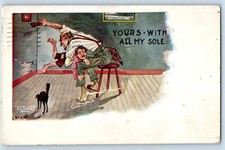
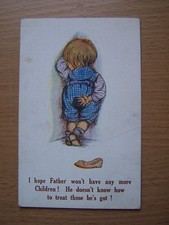
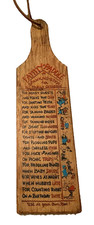
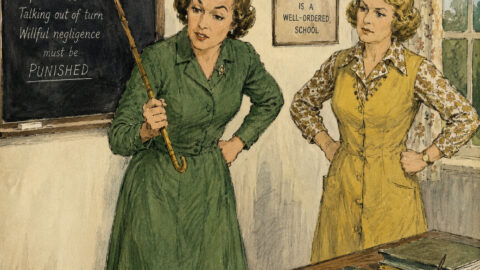
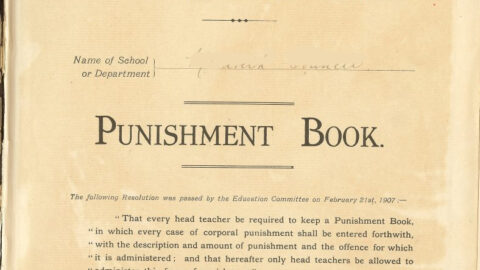
I cannot recall any status attaching to receiving CP at either my Junior School or my Secondary School, with one exception. As I’ve mentioned before, the Form Master in my first year at Secondary School, a very large and muscular young man, wielded a size 12 leather-soled sandal instead of the more traditional gym shoe. The application of this implement could cause even 12-year-old boys to shed a tear.
However, one boy elicited a degree of admiration from those who’d sampled the sandal by taking his whacks without any visible sign of distress. This was the early 1950s and he’d previously been a boarder at a local Prep School notorious for CP while his parents were abroad for a period. When asked the secret of his apparent immunity from pain he said that when you’d had six of the best on the bare with the cane the sandal didn’t hurt much.
In reality, he was a pretty tough customer. We both came from the coal mining area north of the city and spent a lot of time together out of school. He was not a lad you’d sensibly pick a fight with.
Looking back, there was undoubtedly a hierarchy of punishments in the minds of most boys at the time. The gym shoe or sandal was unpleasant and humiliating enough, but the cane still carried a particular psychological weight. Even boys who tried to appear fearless tended to speak of canings with a certain respect, especially when administered on the bare at Preparatory Schools or boarding establishments where traditional discipline remained deeply entrenched well into the post-war years.
In many northern working-class communities corporal punishment was accepted as an ordinary part of growing up, both at school and at home. Few parents questioned it, and many masters believed sincerely that firmness and physical discipline built character, resilience, and respect for authority. Whether that was true is open to debate, but at the time most boys simply accepted it as part of school life.
That said, reactions varied considerably. Some boys dreaded punishment intensely and could be reduced to tears before the first stroke landed, while others cultivated an outward toughness, particularly in environments where showing pain invited ridicule from classmates. The bravado displayed in the playground often concealed genuine fear, especially when rumours circulated about particularly severe masters or especially painful implements.
The contrast between Junior School and Secondary School discipline could also be striking. Junior School punishments were generally more routine and less ceremonious, whereas at Secondary School certain masters cultivated reputations that added an element of theatre and intimidation to the process. A large master carrying a shoe or sandal into the classroom could silence a room instantly without saying a word.
Even so, genuine admiration for boys who could endure punishment without outward reaction was relatively rare. Most pupils viewed corporal punishment simply as something to avoid if possible. In the case of my friend, however, his background at a notoriously strict Prep School, combined with his natural toughness, gave him an aura that set him apart from the rest of us.
With the passing of time it is easy to forget how normal all this once seemed in British schools. Practices that would now provoke outrage were then largely unquestioned by staff, parents, and often pupils themselves. Memories of school discipline remain vivid not only because of the pain involved, but because they formed part of the wider culture and social attitudes of that era..