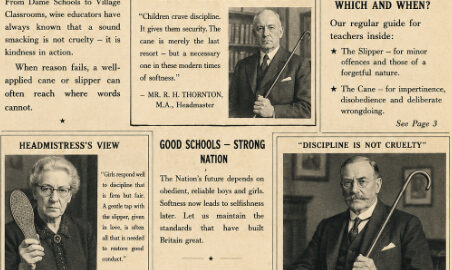
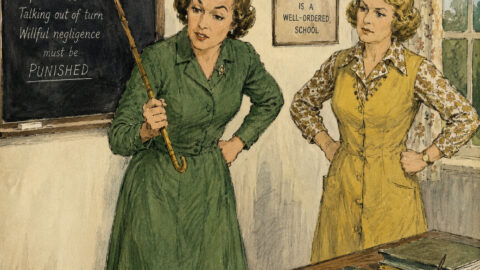
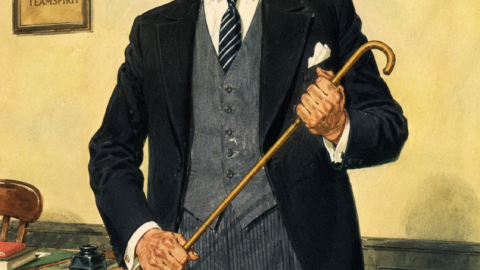
Although I wouldn’t have known it at the time, if I’d been caned I might now be able to contribute more confidently to discussions about traditional school discipline and corporal punishment. Those who experienced the ritual often describe it as a defining feature of school life in certain British public schools, bound up with ideas of authority, hierarchy, endurance, and discipline.
Supporters of the cane argued that it provided an immediate and unmistakable punishment without the need for lengthy detentions or suspensions. Once administered, the matter was considered closed. In theory at least, the offender took the punishment and moved on without further repercussions from masters or classmates.
At some schools the cane was seen as part of a wider system of responsibility and self-government. Prefects, entrusted with maintaining order, exercised disciplinary authority over younger boys. Advocates claimed this encouraged leadership, accountability, and respect for school traditions. The existence of both Prefects’ canings and Headmaster’s canings reflected a strict hierarchy within the institution.
Some former pupils later reflected that the fear of the cane acted as a strong deterrent. The possibility of public disgrace, combined with the anticipation of pain, often ensured that rules were obeyed. In an era when corporal punishment was widely accepted in schools and homes alike, many regarded it as entirely normal.
Against
Very undignified. In the case of both Prefects and Headmaster, touching toes — or as near as could be enforced — was required. The position itself was deliberately humiliating, designed to place the offender in a submissive posture. In the case of the Prefects there was also an audience consisting of any other Prefects who happened to be in their common room at the appointed time, adding an additional layer of embarrassment and intimidation.
Painful, perhaps even very painful. I never heard anybody who was caned at that school claim it didn’t hurt. Accounts from former pupils commonly describe the sharp sting of the cane, followed by lingering soreness that could last for hours or even days. Anxiety beforehand was often considerable, especially when boys had to wait outside the study or common room listening for the strokes being administered to someone else.
Inconveniently time-consuming. A Prefect’s caning took about fifteen minutes, what with the imposed waiting, all attendant ceremonies, and trekking up (and then down) several flights of stairs to get to the Prefectorial eyrie at the top of the school’s tower. A Headmaster’s caning might well take longer, with even more imposed waiting, an associated lecture, formal questioning, and the general atmosphere of solemnity that surrounded such occasions. Both ate into valuable free time at lunchtime.
A Headmaster’s caning went on your report and your school record, potentially following a boy throughout his school career and influencing how masters regarded him thereafter. However, a Prefect’s caning usually stayed between the boy and the Prefects unless he chose to appeal against it to the Headmaster. This distinction meant that some boys preferred to accept punishment from Prefects rather than risk official involvement from the school authorities.
There was also the wider issue of fairness. Much depended upon the temperament of the individual Prefect or master administering punishment. Some were considered measured and restrained, while others acquired reputations for severity or unpredictability. The same offence could sometimes attract very different treatment depending on who happened to be dealing with the matter.
Critics of corporal punishment argued that fear and humiliation were poor foundations for discipline and education. While some boys accepted caning as part of school life, others found it degrading, anxiety-inducing, or deeply resented it long afterwards. By the late twentieth century changing attitudes toward children, education, and authority increasingly led many people to question whether physical punishment had any proper place in schools at all.
In retrospect, the cane belonged to a very particular educational culture — one rooted in hierarchy, obedience, ritual, and tradition. To some it represented firmness and order; to others, unnecessary pain and humiliation dressed up as character-building. caning might well take longer with even more imposed waiting, associated lecture etc. Both ate into available free time at lunchtime.A Headmaster’s caning went on your report and your school record. However a Prefect’s caning stayed between you and the Prefects, unless you appealed against it to the Headmaster.