In the curious underworld of post-war British eccentricity, few figures were more puzzling — or more unsettling — than Eric A. Wildman, a man whose strange crusade for the preservation of corporal punishment transformed him into one of the capital’s most controversial private campaigners. To dismiss him merely as an oddity would be too simple. To regard him as a serious reformer would be impossible. Yet for sociologists, criminologists, and students of human behaviour, Wildman remains an intriguing specimen of the obsessive reformer whose private fixation hardened into public mission.
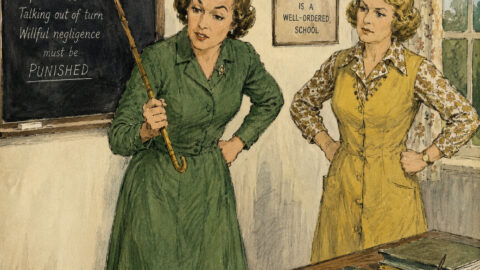
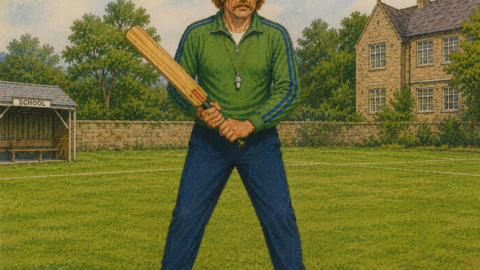
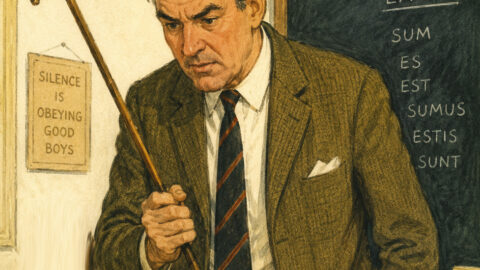
During the 1950s and early 1960s, when Britain was steadily abandoning many of its harsher Victorian traditions, Wildman moved stubbornly against the tide. At a time when educators, magistrates, and clergy debated more humane approaches to discipline, he devoted his life — with remarkable energy and unwavering conviction — to defending the cane, the birch, and the strap. To his followers, sparse though they were, he represented the last defender of “traditional discipline.” To his critics, he was a fanatic operating on the fringes of respectability.
Wildman founded and directed the League for the Retention of Corporal Punishment, together with its associated enterprise, the Corpun Educational Organisation Limited. The titles themselves possessed an almost comic officialdom, suggestive of government departments or learned institutions, though the reality was far humbler. From cramped offices scattered across London, Wildman managed a small but industrious operation devoted almost entirely to the advocacy and manufacture of punitive instruments.
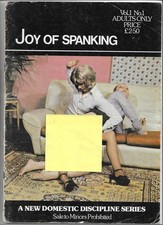
His literary output was prodigious if hardly distinguished. He edited a fortnightly review entitled The Retentionist, in addition to producing the League’s regular bulletin and a succession of pamphlets defending judicial and educational flogging. The publications themselves were memorable less for scholarship than for their extraordinary repetitiveness. Poorly duplicated and often riddled with identical spelling mistakes from issue to issue, they circulated among a tiny but loyal readership fascinated by the subject of discipline and punishment. Anecdotes, letters from supporters, denunciations of “modern permissiveness,” and lengthy arguments in favour of the cane appeared with ritual regularity.
Even so, there was something undeniably compelling about the sheer persistence of the enterprise. Wildman laboured with missionary zeal, as though convinced that the moral fibre of Britain rested precariously upon the survival of the birch rod.
His pamphlets, somewhat more professionally printed than the newsletters, carried much the same tone. Eventually, however, the authorities began to take an interest in the material he distributed. What had once been dismissed as merely eccentric agitation gradually drifted into territory the police considered objectionable, and the affair would ultimately end in public disgrace — a collapse that shocked even some of his sympathisers.
Yet Wildman’s true occupation was not publishing but manufacturing. Visitors to his premises encountered what seemed less an office than a bizarre arsenal of chastisement. Here, among bundles of rattan and lengths of leather, Wildman carried on what amounted to a full-time trade in punitive implements. He claimed customers as far afield as America and the Gold Coast, though the precise extent of his international commerce remains uncertain.
What is beyond doubt is the scale of his devotion. Those who visited him frequently recalled the same unforgettable scene: Wildman seated amid heaps of canes and straps, calmly conversing while applying the finishing touches to a newly prepared implement. Parcels waited for dispatch on crowded tables. Card indexes were meticulously maintained. Duplicating machines rattled in corners beside stacks of circulars and invoices.
The surroundings possessed an atmosphere at once theatrical and faintly disturbing. The walls were lined with instruments of punishment hung in elaborate displays — canes polished to varying shades, braided whips, tawzes, straps, and birches arranged almost ceremonially. To the average visitor the effect was startling, less like a commercial office than the tent of some tribal executioner or the armoury of a forgotten penal colony.
Wildman’s premises shifted repeatedly across London, as landlords and neighbours grew uneasy about the nature of his business. He began in the Oxford Circus district, where the combination of sensational advertising and curious visitors soon exhausted local tolerance. From there he moved to Kensington, hoping perhaps for greater discretion, though his stay proved equally brief. Eventually he settled in the harsher commercial surroundings of City Road, which became the final headquarters of his strange campaign.
Each relocation, however, reproduced the same peculiar world. The canes strewn across the floor. The carefully wrapped parcels awaiting shipment. The orderly card files documenting customers and correspondence. Above all, the walls crowded with instruments in every conceivable variation of size, shape, flexibility, and severity.
For Wildman was not merely a supplier; he was, in his own peculiar fashion, a connoisseur. His catalogues displayed an astonishing range of disciplinary devices designed to satisfy every imaginable preference. There were slender school canes and heavy judicial varieties, broad leather straps and intricately plaited tawses of Scottish design. Weight, balance, elasticity, and finish were all described with near-scientific seriousness. The diversity suggested not merely commerce but obsession.
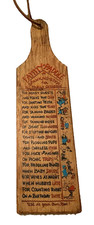
The taws, in particular, became one of his specialities. This traditional Scottish implement — a split leather strap once widely used in schools — fascinated Wildman, who offered numerous versions differing in thickness, length, and suppleness. Customers, it seemed, could choose according to highly specialised requirements.
The bulk of the trade, however, remained in simpler articles: canes, belts, and straps of the sort once familiar in schools and households across Britain. To modern eyes the entire enterprise appears deeply strange, a relic from an age when discipline and physical punishment were discussed with alarming casualness. Yet Wildman himself clearly saw his work not as grotesque but as socially necessary. In his mind he was preserving standards, defending order against what he regarded as moral decline.
And therein lies the fascination of the man. Eric A. Wildman was neither wholly charlatan nor entirely crank. He occupied that ambiguous territory where private obsession, moral certainty, and entrepreneurial zeal intersect. His activities, though ultimately ending in scandal, illuminate a curious chapter in Britain’s cultural history — a moment when old ideas of punishment were dying, but not yet dead, and when one determined eccentric devoted his entire existence to resisting the march of change.
Today, his publications survive mostly in obscure archives and private collections, their faded pages bearing witness to a campaign that now seems almost surreal. Yet they remain valuable documents for anyone interested in the psychology of authority, punishment, and social anxiety in post-war Britain. For behind the duplicated pamphlets and polished canes stood a lonely figure engaged in a hopeless struggle against the modern world — a man attempting, quite literally, to keep the rod alive.