There are certain implements which, by their very nature, seem wholly unsuited to the administration of corporal punishment. The full-sized cricket bat is undoubtedly one of them. Solidly built, heavily weighted and designed to dispatch a leather ball toward the boundary ropes with formidable force, it would appear far too cumbersome and potentially dangerous for any disciplinary purpose. On this point, most sensible observers would surely agree.
Yet the curious ingenuity of schoolroom folklore and domestic discipline has long inspired experimentation with objects never originally intended for such use. Among these, the miniature cricket bat occupies an intriguing and rather unexpected position. Commonly sold at county grounds and sporting shops as novelty souvenirs — typically between twelve and eighteen inches in length and emblazoned with the printed signatures of famous players — these diminutive bats were designed merely as keepsakes for the cricket enthusiast. Nevertheless, their compact proportions and surprising sturdiness have led some to regard them as practical improvised paddles.
I recall, many years ago, examining one of these miniature bats with precisely this thought in mind. Unfortunately, the item itself has long since disappeared from my possession, and so I cannot now verify its exact measurements. Recently, however, I encountered an advertisement for a similar example in which the boxed weight was listed as approximately 180 grams — roughly six ounces in old money. Such dimensions suggest an implement neither excessively heavy nor unwieldy, but rather one possessing the balance and firmness traditionally associated with light disciplinary paddles.
The subject inevitably invites comparison with practices abroad, some of which reveal a startling disregard for moderation. During the course of my research into corporal punishment in South Korea, I was genuinely appalled to discover reports of teachers employing baseball bats, billiard cues and even golf clubs in the chastisement of pupils. Such methods seem not merely severe but recklessly hazardous. One struggles to understand why anyone would resort to instruments capable of causing serious injury, particularly in a country where a vast assortment of purpose-made disciplinary canes and paddles could readily be obtained.
Indeed, this distinction between severity and suitability lies at the very heart of the matter. The traditional philosophy behind school discipline — however controversial it may now appear to modern sensibilities — generally emphasised control, ritual and measured correction rather than brute force. An implement intended for punishment was expected to deliver discomfort without inflicting lasting harm. The oversized cricket bat plainly fails that test; the miniature version, by contrast, possesses a degree of restraint in both weight and scale.
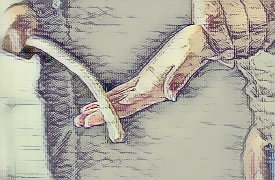
For those familiar with the old-fashioned “across-the-knee” style of punishment, the smaller bat was often considered remarkably effective. Compact enough to handle easily and broad enough to produce a sharp sting without undue concentration of force, it occupied a curious middle ground between the household slipper and the formal school paddle. Moreover, its innocent sporting appearance offered a certain practical discretion. One could purchase such an item quite openly at virtually any cricket ground gift stall without inviting the slightest suspicion as to its intended secondary purpose. Displayed alongside scorecards, pennants and autograph books, the little bat appeared entirely harmless — merely another cheerful memento of an English summer afternoon at the cricket.
Even today, these souvenir bats remain readily available. County grounds throughout Britain continue to sell them adorned with the signatures of current players and championship-winning sides. I expect to encounter dozens of them myself when I travel to Trent Bridge in a fortnight’s time for the season’s concluding fixture. Whether Nottinghamshire County Cricket Club can still contrive to seize the Championship remains, I fear, rather doubtful — though cricket supporters are eternal optimists by nature.
Still, one suspects that among the crowds purchasing souvenirs and programmes that afternoon, very few will pause to consider the curious and rather eccentric alternative use once imagined for the humble miniature cricket bat.