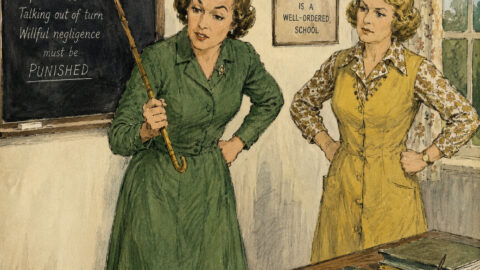
At Tweedmouth Modern School in Berwick, former pupils recalled the formidable reputation of Miss Buglass, remembered both for the use of the strap and the cane. One former student described the severity with which punishments were administered, while another remembered receiving six strokes of the belt after making an error during a cookery lesson. Others recalled frequent punishment simply for talking during lessons.
At Two Trees Comprehensive School in Manchester, several former pupils remembered strict disciplinary methods involving the slipper. Mrs Smith, a drama teacher, was regarded with considerable apprehension by many students. Former pupils also described punishments for talking in class, while one recalled a “slipper club” held during break times. The headmistress, Mrs Barker, was remembered as a particularly intimidating authority figure.
At Walshaw High School in Burnley, one former pupil recounted being struck for arriving late to class, while another recalled disciplinary incidents occurring during a residential trip away from school.
Former pupils of Warbreck High School in Blackpool remembered teachers who employed the cane for relatively minor infractions, such as classroom mischief. Similar recollections emerged from Wards Bridge High School in Wolverhampton, where one former student remembered receiving the cane on two occasions despite otherwise enjoying school life.
At Watlands School in Newcastle-under-Lyme, Miss Morris was remembered for her commanding voice and readiness to use the cane, which some former pupils believed reflected the harsher attitudes of the period.
Accounts from Wattville Road Secondary School in Birmingham described punishments carried out publicly before assemblies or classes, adding an element of humiliation alongside the physical punishment itself. One former pupil observed that the embarrassment often proved more distressing than the punishment.
At Wentworth High School in Cheshire, memories centred upon the use of the slipper by Mrs Clegg, while at Westlands Girls’ School in Ashton-under-Lyne, former pupils recalled teachers administering physical punishments for classroom misdemeanours.
At Westoe Comprehensive School in South Shields, one former pupil described how her sister received the cane after a teacher mistakenly believed she had been smoking. Others recalled frequent truancy and harsh disciplinary measures, including severe canings that allegedly resulted in injury.
Former pupils of West Hill High School in Stalybridge and West Park Girls’ High School in Leeds similarly remembered the use of the slipper and physical punishments administered by strict teaching staff.
At Whelley School in Wigan, the headmaster, Mr Miller, inspired considerable fear among pupils, many of whom vividly remembered waiting outside his office to receive the cane. Such recollections were often accompanied by remarks suggesting that, despite the severity, these methods were accepted as normal at the time.
Whitton School in Twickenham was remembered by one former pupil as a place where corporal punishment was commonplace. She described an unusual disciplinary method in which several pupils were caned simultaneously, resulting in varying degrees of pain depending upon where they stood in line.
At Willows High School in Cardiff, former students recalled receiving the cane on multiple occasions from a teacher remembered for her severity. Similar accounts came from Windsor County Grammar School, where one former pupil vividly remembered the distress caused by witnessing another girl publicly punished on the school stage. The incident, she reflected, left a lasting emotional impact upon many of those present.
Former pupils from Wingfield Comprehensive School in Rotherham remembered strict teachers who regularly employed both the slipper and the cane. One woman remarked that the female staff responsible for discipline were particularly feared by girls who found themselves in trouble.
At Wisewood Secondary School in Sheffield, memories centred upon a head of girls reputed for administering severe canings. Meanwhile, at Yeomans Bridge School in Aldershot, one former pupil recalled a girl receiving the cane after inappropriate behaviour during games lessons.
Accounts from Yohden Hall Comprehensive School in Northumberland and Woodchurch High School in Cheshire similarly reflected the widespread use of corporal punishment during the period. Former pupils described teachers who maintained supplies of canes and administered punishments frequently, sometimes for relatively minor offences.
Taken together, these recollections illustrate an educational culture very different from that of modern Britain. Corporal punishment, abolished in state schools in the mid-1980s, was once viewed by many educators as an ordinary and necessary means of maintaining discipline. Yet the memories retained by former pupils suggest that the experience often left emotional as well as physical impressions that endured long after schooldays had ended.