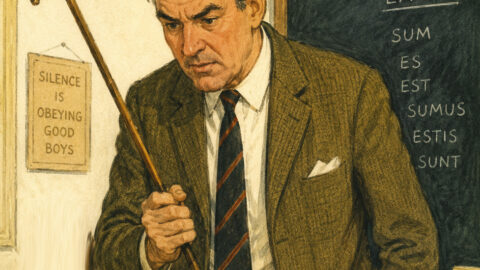
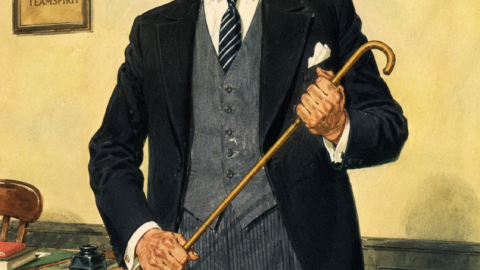
Accounts from former pupils across Britain reveal the extent to which corporal punishment formed part of everyday school life during the post-war decades. Recollections from former students describe a wide range of disciplinary practices, many of which remain vivid in memory years later.
At Joseph Whitaker School in Mansfield, one former pupil recalled an entire class being caned after a fire door was opened and no individual admitted responsibility. The same former student also remembered receiving punishment for smoking in the lavatory despite maintaining innocence.
Former pupils from schools throughout the country frequently recalled individual teachers associated with strict discipline. A former pupil remembered Mrs Johnson with mixed feelings, reflecting that while corporal punishment seemed ineffective at the time, maturity had brought a different perspective.
At Kelvin High School in Belfast, memories centred upon Mrs McKay, a science teacher remembered as one of the few female teachers who personally administered corporal punishment. Female pupils who misbehaved were frequently sent to another teacher, known as Mrs Gallagher, whose disciplinary reputation was well known among pupils. Another former student recalled a science teacher named Miss Pollock, remembered particularly for the cane, wrapped with string and tape, which hung beside the classroom blackboard.
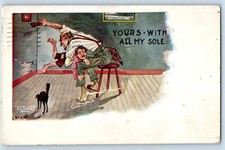
Former pupils of Keresley High School in Coventry remembered Miss Marsden less for the cane and more for a wooden slipper used for discipline. One former pupil remarked that the implement was used so frequently it seemed almost personalised.
At Kings Hill Secondary Modern in Wednesbury, memories included punishment for talking during mathematics lessons, while at Kingsleigh Secondary School former pupils remembered both Mrs Royston and Miss Vardey as particularly strict members of staff. One former pupil recalled receiving punishment after admitting involvement in deflating bicycle tyres.
At Kings Meadow Comprehensive School in Gateshead, one former student remembered receiving the strap for leaving school grounds through a hole in the fence in order to catch a bus home.
Former pupils from Kingstamerton Secondary School in Plymouth recalled differing disciplinary styles among staff. While some teachers rarely punished pupils, others were remembered for frequent use of the cane. One former student remembered six pupils being caned together at the front of a classroom for persistent talking.
Ladywood Comprehensive School in Birmingham produced memories of Mrs Haywood, remembered for punishing pupils involved in fighting.
At Larne High School in Northern Ireland, pupils recalled strict physical education teachers and punishments administered for offences as minor as walking on the grass.
Former pupils from schools including Lavant House in Chichester, Lee Park and Gateacre School in Liverpool, Lighthall School in Solihull, Lime House School in Carlisle and Littlemead Grammar School in Chichester all recounted experiences involving slippers, rulers or canes administered for offences ranging from smoking to running along corridors.
At LVS Ascot, pupils remembered occasions when entire classes received punishment together. Meanwhile, at Manor Secondary School in Aldershot, one former pupil described the headmistress as governing with exceptional strictness, recalling two separate occasions when corporal punishment was administered.
Former pupils from Mansfield High School in Burnley remembered punishment for smoking, while at Marr College in Troon one former pupil recalled returning to class in tears after receiving the belt.
At Marshland High School in Wisbech, memories included a teacher who allowed pupils to choose which hand would receive punishment. At McAuley High School in Doncaster and Mesnes High School in Wigan, pupils remembered teachers who punished regularly but were nevertheless remembered with a degree of affection.
For some, memories were more troubling. One former pupil from Moat Mount School in Brent described certain experiences as lasting sources of distress, recalling punishments involving both slippers and rulers.
Former pupils from Monkseaton High School in Whitley Bay remembered teachers whose disciplinary methods sometimes missed their intended target, while memories from Moorside High Schools in Manchester and Stoke included punishment for minor matters such as cosmetics or skirt length.
These recollections, gathered from former pupils across many regions, illustrate an educational era in which corporal punishment was widely accepted and deeply embedded in school culture. For some, the memories are viewed with humour or nostalgia; for others, they remain far more difficult to forget.