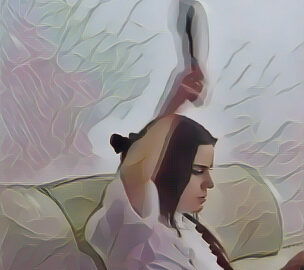
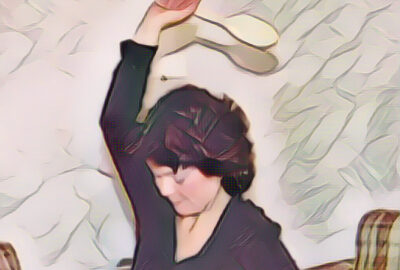
(gap: 2s) In the gentle hills of Arkansas, during the 1950s, I spent my childhood in a house where the air was sweet with honeysuckle and the rules were as firm as the oak trees in the garden. My mother, a woman of unwavering resolve and high expectations, believed that the proper upbringing of children required both order and consequence. She was convinced, with the certainty of a judge, that the discipline of children was a mother’s solemn duty, and she carried out this responsibility with a regularity that made it as much a part of our lives as the rising of the sun or the ringing of the supper bell. In our lively household—two brothers, two sisters, and myself—there was rarely a day when one of us did not find ourselves reflecting on our misdeeds, the memory of Mother’s discipline lingering long after the pain had faded.
When we were very young, Mother’s hand was the instrument of justice. Her palm, broad and strong from years of diligent work, would descend upon our backsides with a sharp, resounding smack that left us breathless and blinking away tears. But as we grew older, so too did the seriousness of our punishments. By the time we reached the age of seven or eight, Mother set aside her hand and took up the belt. This was not an ordinary belt, but an old, cracked leather one belonging to Father, kept hanging on a hook in the pantry, reserved solely for the purpose of discipline. Most mothers in our neighbourhood would ask, in a gentle, almost musical tone, “Do you want a spanking?” when their children misbehaved. Not my mother. Her question was always delivered in a low, unwavering voice: “Do you wish for a taste of the leather?”
Of course, none of us ever wished for such a thing. But our desires mattered little in the face of Mother’s sense of justice. The punishment was always public, a lesson for the entire family to witness. I can still recall the way the room would fall silent, the air heavy with anticipation and dread, as Mother entered, belt in hand, her eyes fixed upon the guilty child. The culprit—whether it was I, my brother Tom, or my sister Ruth—would already be sniffling, the tears beginning before the first blow had even landed.
“Bend over,” she would command, her voice leaving no room for argument. The chosen child would shuffle forward, trembling, and present their backside, the fabric of their shorts or dress stretched tight. Mother would step behind, and I remember the cold, almost ceremonial way she would lay the belt across our buttocks, measuring her aim. There was a moment—a single heartbeat—when the world seemed to hold its breath. Then, with a sudden, terrifying swish, the belt would whistle through the air and land with a crack that seemed to shake the very walls.
The pain was immediate and overwhelming, a hot, stinging tide that flooded your senses and left you gasping. Each lash was a line of fire, burning across your skin, and the number was always the same: twelve. A round dozen, delivered with the precision of a clockmaker. Mother would pause between each stroke, letting the pain settle in, so that each smack was felt in its entirety. Sometimes, during these pauses, she would lecture us, her words as sharp as the belt itself: “Are you ever going to do something like this again?” she would ask, her voice ringing with authority. There was only one answer, and it was always choked out between sobs: “No, Mother, never again!”
The sensation was not merely physical. There was a dreadful anticipation before each blow, a tightening in the stomach, a prickling of the skin. The sound of the belt—its whistle, its crack—echoed in your ears long after the punishment was over. The pain would bloom, red and hot, then settle into a deep, throbbing ache. Sometimes, the skin would welt, raised and angry, and the marks would change colour over the days: first crimson, then purple, then a sickly yellow-green. Sitting down for supper was a trial, the hard wooden chairs unforgiving against our tender skin. Sometimes, if the offence was grave, we were sent to bed without supper, forced to lie on our stomachs, the throbbing in our backsides a constant reminder of Mother’s justice.
After the whipping, the punished child was sent to stand in the corner, their face burning with shame as much as pain. The rest of us would watch, silent and wide-eyed, the lesson etched into our memories. The beltings were not mere threats; they were real, and they left their mark—red, then purple, then yellow-green bruises that lingered for days.
Yet, in the peculiar way of families, we accepted these punishments as part of the order of things. The spankings were always deserved, or so we believed, and they kept our unruly brood in line. But as we grew older, the memories became more complicated. There was a certain grim pride in having survived a dozen of Mother’s best, and a strange, unspoken bond between us siblings, forged in the fires of shared discipline. Even now, when we gather as adults, we speak of those days with a mixture of laughter and unease, the sting of the belt softened by time but never quite forgotten.
Looking back, I see now that Mother’s discipline was as much about love as it was about order. She ruled our home with a firm hand, but also with a fierce devotion, determined to raise children who knew right from wrong. The lessons were harsh, the punishments real, but they shaped us into the people we became. And though the memory of those spankings still makes me wince, I cannot help but feel a certain gratitude—for the order, for the lessons, and, in some strange way, for the love that lay beneath the leather