Growing up with my brother Andrea in our little brick house in the northeast of Italy, the air always seemed to carry the scent of olive trees and fresh bread. Our father, a stoic man with hands roughened by years of tending the olive groves, was rarely home before sunset. Discipline, as a result, was left entirely to Mama—a woman whose presence could fill a room, and whose voice, when raised, could silence even the most stubborn rooster in the yard.
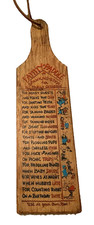
(short pause) Mama’s methods were legendary in our family. She believed in swift, memorable consequences, and her tool of choice was a piece of olive wood, lovingly—if ominously—called ‘La Disciplina’. It was smooth from years of use, the grain darkened by the oils of countless hands and, I suspect, a few tears. I remember the first time I saw it: Mama held it up, her eyes twinkling with a mix of warning and affection. “This,” she said, “is for when words are not enough.”
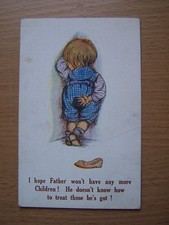
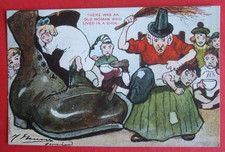
(pause) But there was another implement in her arsenal, one that struck fear into our hearts even more than La Disciplina: her old, worn slipper. The slipper was soft and faded, the sole cracked from years of kitchen work, but in Mama’s hand, it became a symbol of justice. The sound it made—an unmistakable slap—echoed through the tiled halls and out into the garden, where Andrea and I would sometimes freeze mid-game, glancing at each other with wide eyes.
(short pause) I remember one summer afternoon, the air thick with the hum of cicadas, when Andrea and I decided to sneak into the pantry. The forbidden treasure: a bar of chocolate, hidden behind jars of preserved tomatoes. We thought ourselves clever, tiptoeing like little thieves. But Mama’s senses were sharper than any watchdog’s. The moment the wrapper crinkled, she appeared in the doorway, arms crossed, slipper dangling from her fingers.
“Andrea! Giulio! What are you doing?” she demanded, her voice sharp as the snap of a twig. We froze, chocolate halfway to our mouths. Andrea, always the braver of us, tried to hide the evidence behind his back. I, on the other hand, felt my cheeks burn and my heart thump so loudly I was sure she could hear it.
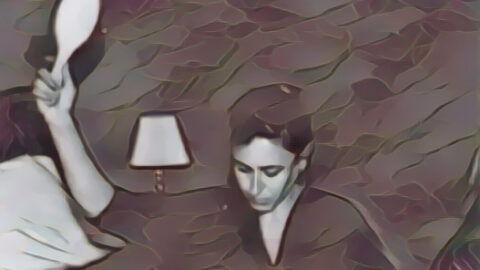
(pause) “Give it here,” she said, holding out her hand. We obeyed, heads bowed. Then came the lecture—about honesty, respect, and the importance of asking. But we both knew what was coming. Mama sat on her kitchen chair, patted her lap, and called Andrea over first. The slipper, though soft, delivered a sting that made Andrea yelp. I watched, torn between relief and dread, knowing I was next.
(short pause) The ritual was always the same: over Mama’s knee, a few sharp smacks, and then the tears. But what stung more than the slipper was the shame. On that day, as Andrea sniffled and wiped his eyes, the kitchen door swung open and in walked Signora Bianchi, our neighbor, with her little daughter Lucia in tow. The look on Andrea’s face—red, tear-streaked, and mortified—was something I’ll never forget.
(pause) “Ah, discipline day, I see!” Signora Bianchi chuckled, giving Mama a knowing nod. Lucia stared, wide-eyed, clutching her mother’s skirt. Mama, unfazed, finished Andrea’s punishment and turned to me. “Your turn, Giulio,” she said, her tone gentle but firm. I wanted to disappear, but there was no escape. The slipper found its mark, and I joined my brother in the corner, both of us sniffling, our pride as bruised as our bottoms.
(short pause) Afterward, Mama would always make us stand facing the wall, our backs to the room, the sting of the slipper lingering. Sometimes, she’d hum softly as she put away her implements, the kitchen filling with the aroma of fresh coffee and cake. The adults would chat as if nothing had happened, while Andrea and I exchanged glances, silently vowing to be better—or at least, to be sneakier next time.
(pause) Looking back, I realize those moments were about more than punishment. They were lessons in humility, honesty, and the strange comfort of family rituals. The slipper, La Disciplina, even the embarrassment—they all became part of the tapestry of our childhood. And though we dreaded Mama’s discipline, we never doubted her love. In fact, I think we craved the structure, the certainty that came with knowing exactly where the lines were drawn.
(short pause) Years later, Andrea and I would laugh about the slipper incident, mimicking Mama’s stern voice and the exaggerated yelps we made. But in those moments, as the sun set over the olive groves and the kitchen filled with laughter and the clink of coffee cups, we understood that childhood is made up of such memories—painful, embarrassing, but always, somehow, sweet.