(gap: 2s) My earliest memories are painted in the muted reds and greys of a Kent council estate, late 1960s. The air always seemed tinged with the scent of coal smoke and wet concrete, and the sound of children’s laughter echoed between the blocks. I lost my mother young, and by the time I was nine, my father had remarried. Suddenly, our small flat was filled with new voices, new rules, and a stepmum who was clever, warm, and funny—yet whose love came with a sharp edge.
(short pause) She was the sort of woman who could make a room feel brighter just by walking in, but she also had a way of making you feel two inches tall with a single look. Her flat was always spotless, the floral wallpaper never faded, and the kettle was forever whistling. If you behaved, life was golden—homemade jam tarts, Sunday roasts, and evenings huddled around the black-and-white telly. But for me and my two new step-siblings, the line between laughter and punishment was razor-thin.
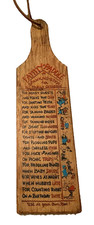
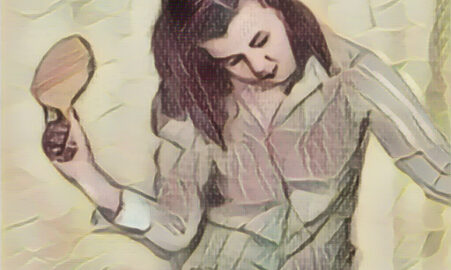
(pause) There was no gentle easing into her world. Just three days after she and Dad returned from their honeymoon in Margate, she inspected my room and declared my attempt at tidying “rubbish.” I remember the way her voice cut through the flat, the way my heart pounded as she fetched her wooden hairbrush from the dresser. That hairbrush was infamous—a family legend, really. I’d seen it on her dressing table, but never imagined it would become such a fixture in my life.
(pause) She didn’t believe in closed doors or private scoldings. Right there in the lounge, with the telly still buzzing and my siblings peeking from behind the sofa, she let loose. Her words stung almost as much as the hairbrush that followed. I’d never seen her so fierce—her eyes steely, her voice unyielding. I was used to the odd smack, but this was different. The hairbrush landed again and again, sharp and fast, until my sobs drowned out the sound of the telly. I begged, I promised, but she didn’t stop until she was sure I’d remember.
(short pause) Afterwards, I was sent straight back to my room, tears still hot on my cheeks, to finish the job “properly.” I don’t think my room was ever cleaner. That night, I lay on my bed, face down, the sting still fresh, and listened to the muffled voices of my siblings in the next room. We didn’t talk about it, but we all knew: the hairbrush was the law.
(pause) Over the years, that hairbrush became a constant presence. I saw it used on my step-siblings, and later, on my twin younger brothers, born a year after the wedding. We developed a silent camaraderie—an unspoken understanding that we were all in this together. Sometimes, we’d compare stories, rubbing our sore backsides and trying to laugh it off, but the fear lingered. Even the threat of the hairbrush was enough to keep us in line most days.
(pause) Our home was a place of contradictions. There was warmth—Sunday afternoons spent baking, the smell of roast chicken filling the flat, the comfort of a mother’s hug when you’d done well. But there was also tension, a sense that any misstep could bring the storm. My stepmum never grounded us, never made us stand in the corner or sit on a ‘naughty stool.’ In her house, there was only one consequence, and it was swift, certain, and stung long after the tears dried.
(pause) Looking back, those years shaped us in ways I’m still trying to understand. We learned to be careful, to read moods, to stick together. The estate outside was our escape—skipping ropes, hula hoops, and the freedom of the courtyard. But inside, we tiptoed, always aware of the hairbrush waiting in the wings. Even now, the memory of that flat, with its faded wallpaper and ever-present sense of order, lingers in my mind—a place of both love and fear, laughter and discipline, and the complicated bonds that made us a family.