(gap: 2s) The world of my childhood was painted in the muted reds and browns of Kent’s council estates, where the air was thick with the scent of coal smoke and the distant laughter of children echoed between the brick walls. The streets were narrow, lined with parked Morris Minors and Ford Cortinas, their chrome glinting in the pale morning sun. Washing lines crisscrossed the courtyards, fluttering with school uniforms and tea towels, while mothers gathered in clusters, their voices weaving a tapestry of gossip and gentle admonishments.
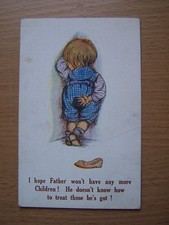
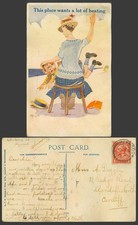
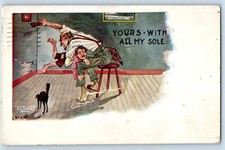
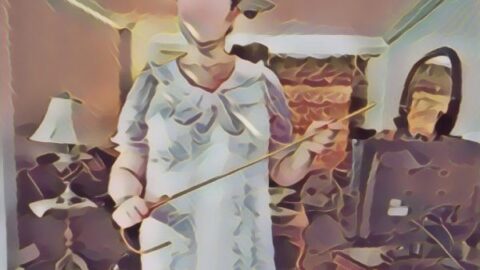
(short pause) In those days, corporal punishment was as much a part of daily life as the clatter of cutlery at tea time. It was not something to be feared in the abstract, but a reality woven into the fabric of our upbringing—firm, almost ritualistic, and, in its own way, reassuringly predictable. The rules were clear: punishment was always delivered on the bottom, never the hand, for safety’s sake. For boys, the ‘slipper’—which, contrary to its name, was usually a thick-soled tennis shoe—was the tool of choice for minor misdeeds, while the cane was reserved for older boys and more serious infractions.
(pause) Detentions were an option, but most boys, myself included, would rather take the sting of a quick slippering than endure the slow torture of a lost afternoon. Even the older boys, those on the cusp of adulthood, would sometimes opt for a brisk punishment over a tedious essay or a long detention.
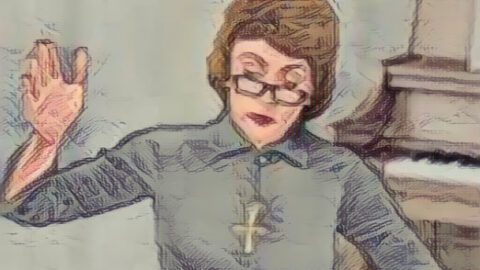
(short pause) For girls, the system was different—essays, lines, and detentions were the norm. Yet, for persistent troublemakers or those who crossed a certain line, corporal punishment was not unheard of. At our school, one of the mistresses was tasked with administering the slipper, a duty she performed with a stern sense of justice. It was rare, but not so rare as to be a myth whispered in the corridors.
Only the most serious offences warranted a trip to the senior mistress, the sole authority permitted to wield the cane on a girl. In all my years at school, I can recall only three or four girls who ever faced that ordeal—a number that seemed both terrifying and oddly comforting in its rarity.
(pause) I must confess, there was a strange fascination for me in witnessing these punishments. The anticipation, the tension in the air, the furtive glances exchanged among classmates—it all stirred something deep within me, a curiosity that would linger long after the echoes of the slipper had faded.
(short pause) Fridays were the day of reckoning. After the final bell, a small, anxious queue would form outside the relevant teacher’s study. The clock ticked slowly toward four o’clock, the corridors gradually emptying as the rest of the school spilled out into the freedom of the weekend. Those of us left behind waited in silence, the air heavy with dread and a peculiar sense of camaraderie.
(pause) Sometimes, as I passed by the closed doors, I would hear the sharp swish of a cane or the dull, meaty thwack of a slipper. The sound was unmistakable, and I found myself drawn to it, unable to resist the urge to see who emerged, rubbing their sore backside and trying to maintain a shred of dignity. If it was someone I fancied, the moment was all the more electric—a secret shared between us, even if only in my imagination.
(short pause) I would make a point of passing by before the punishments began, hoping to catch the eye of a friend or a crush. Later, I’d time my return perfectly, just as the door opened and the punished boy stepped out, cheeks flushed and eyes downcast. I’d walk alongside him, offering a sympathetic smile, eager to hear the details and share in the aftermath.
(pause) Home was not so different. If anything, corporal punishment was more common there, woven into the daily rhythms of family life. I remember a debate in my fourth form general studies class, where we were asked to share our experiences. To the surprise of our teacher, the overwhelming majority preferred the quick sting of corporal punishment to the drawn-out misery of other penalties.
(short pause) When asked who had received corporal punishment at home in the past year, two-thirds of the class raised their hands—three-quarters of the boys, half the girls. Most admitted to being punished on the bottom, usually with a strap, slipper, or cane. It was a shared experience, a rite of passage that bound us together in silent understanding.
(pause) My own family was middle class, not especially strict, but guided by a firm set of principles. I was an only child, generally well-behaved, and in agreement with most of my parents’ rules. But when I did stray—when shame prickled at my conscience—I knew what to expect.
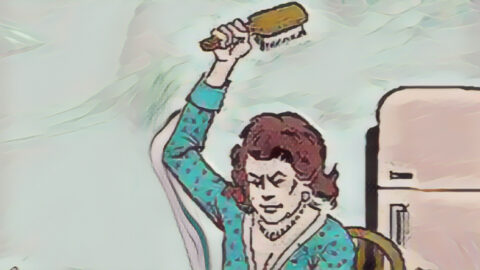
(short pause) My mother was the disciplinarian, her methods a blend of modern reason and old-fashioned tradition. Groundings, loss of privileges, and the withdrawal of pocket money were all part of her arsenal. But corporal punishment was there too, a relic of the past that still held sway in our home.
(pause) The ritual was always the same. If I had truly crossed a line, my mother would inform me of my impending punishment, never delivering it in the heat of the moment. Instead, she would let the anticipation build, giving me time to reflect on my actions and the lesson to come. The wait was often worse than the punishment itself—a slow, gnawing anxiety that settled in my stomach and refused to leave.
(short pause) Friday afternoons became a time of dread. All day at school, I would feel the weight of what was to come pressing down on me. Concentration was impossible; my mind wandered, my hands trembled, and I found myself making frequent trips to the loo, nerves fraying with each passing hour.
(pause) When I finally arrived home, my mother would send me to my bedroom. I would sit at my desk, textbooks open but unread, the anticipation of the coming ordeal making it impossible to focus. The room felt smaller, the air heavier, as I waited for the inevitable call.
(short pause) There was a strange duality to these moments—a mix of fear, shame, and, if I’m honest, a flicker of something else. My bottom, always a sensitive spot, became the focus of my thoughts. I knew the pain would be sharp, the burning intense, but there was a strange comfort in the ritual, a sense of order restored.
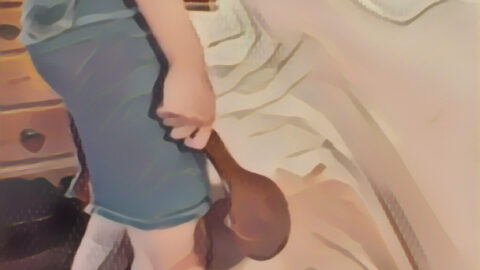
(pause) My mother’s weapon of choice was an old tennis shoe of my father’s, its thick rubber sole worn smooth by years of use. It lived in my wardrobe, a silent reminder of the consequences of misbehaviour. When the time came, I would be told to bend over the bed, presenting my bottom for punishment.
(short pause) My mother was not cruel, but she was thorough. Each stroke was delivered with the full force of her tennis-trained arm, the sound echoing off the bedroom walls. The number of strokes varied, but it was never less than a dozen, and often more. The pain built with each blow, a fiery crescendo that left me gasping and struggling not to cry out.
(pause) Afterwards, she would leave me alone to recover. I would lie on my bed, face pressed into the pillow, tears soaking the fabric as I tried to regain my composure.
(short pause) Sleep came slowly on those nights. I would lie on my front, nightdress and bedclothes pulled up to let the heat escape, the soreness a constant reminder of my transgression. Even the next day, sitting was an ordeal, the pain lingering long after the punishment had ended.
(pause) I often wondered why it seemed to hurt me more than the boys at school. Perhaps a girl’s bottom is more sensitive, or perhaps I simply felt things more deeply. Whatever the reason, the memory of those punishments stayed with me, a vivid thread woven through the tapestry of my childhood.
(short pause) Once, when I was punished midweek, I spent the next day shifting uncomfortably in my seat at school, the hard wooden chairs pressing against my bruised skin. My mother always said that if I wasn’t still sore the next day, she hadn’t done her job properly. The lingering pain was part of the lesson, a physical reminder of the boundaries I had crossed.
(pause) Looking back now, I see those moments not just as episodes of pain or shame, but as part of a larger story—a story of growing up, of learning right from wrong, of understanding the consequences of my actions. The rituals, the anticipation, the aftermath—all of it shaped me, leaving marks that were more than skin deep.
(short pause) There were times, too, when the experience was tinged with embarrassment and even a strange sense of excitement. I was, and am, a rather submissive soul, and the humiliation of punishment, the vulnerability of being exposed and chastised, stirred feelings I didn’t fully understand until much later in life.
(pause) As I grew older, the punishments changed. I outgrew the slipper, but the lessons remained. My mother’s discipline was never arbitrary or cruel; it was a reflection of her love, her desire to see me grow into a responsible, principled adult. And though I dreaded those moments, I never doubted that I deserved them.
(short pause) The memories linger still—the sound of the slipper, the sting of the cane, the quiet comfort of my bedroom after the storm had passed. They are part of who I am, woven into the fabric of my childhood, as real and vivid as the red-brick walls and misty streets of Kent.
(pause) I could share more stories—tales of growing up, of lessons learned and boundaries tested—but perhaps those are best left for another time. For now, I hold these memories close, a bittersweet reminder of a world that shaped me, for better or worse, into the person I am today.