(gap: 2s) In the days when the world was young and Sundays were for best shoes and bracing walks, there was a little boy named Francis who went to the seaside with his family. The year was 1962, and Skegness was a place of laughter, wind-whipped hair, and the promise of adventure. The promenade bustled with families in their holiday finery, and the “Seaview Boarding House” stood proud, its sign creaking gently in the salty breeze.
Francis was a sturdy lad with scuffed knees and a mop of hair that never quite behaved. His little sister, Molly, clung to her threadbare teddy as if it were a treasure. Their mother, Mrs. Brown, was brisk and tidy, always in a neat cardigan and sensible skirt, while Father was quiet, his eyes kind behind thick spectacles. Though times were hard and pennies few, the Browns found joy in the simple things—a warm cup of tea, a boiled egg, and the sound of the sea beyond their window.
Their guesthouse room was small but cheerful, with beds dressed in stripy eiderdowns and wallpaper that told stories of faded roses. The battered suitcase in the corner held all their holiday hopes, and the air was thick with the scent of damp sand and lavender polish. On this particular Sunday morning, the family gathered around the breakfast table, its surface worn smooth by years of happy meals and gentle scoldings.
Mother poured tea from her brown pot, her hands steady even when her eyes looked tired. Father sat at the head of the table, reading his newspaper, while Molly hummed a tune and swung her legs beneath her high chair. Francis, however, was in a mischievous mood. Perhaps it was the excitement of the seaside, or the way the sunlight danced on the linoleum, but he could not sit still. He poked at his breakfast, arranging his soldiers into neat little rows and making his egg wobble like a jelly.
“Francis, do stop your nonsense and eat your food,” Mother said, her voice gentle but firm. But Francis, like many boys his age, was determined to test the boundaries. He grinned cheekily and ignored her warning, delighting in the attention. The room seemed to hold its breath. Molly watched, her spoon paused in mid-air, and even Father’s newspaper rustled as he looked up.
Now, in those days, children were expected to mind their manners, and mothers and fathers believed that a firm hand was sometimes needed to teach right from wrong. Mother’s patience, already stretched thin by the hardships of the times, finally snapped. She stood up, her chair scraping against the floor, and took Francis gently but firmly by the ear.
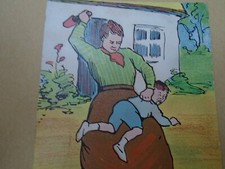
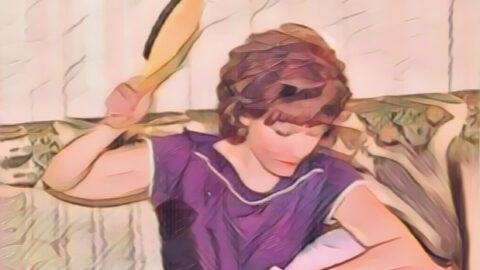
Down the narrow corridor they went, past the faded seaside prints and the battered suitcase, until they reached the little bedroom. Mother sat on the edge of the bed, her face serious but not unkind. She removed her slipper—a sturdy, well-worn thing—and placed Francis across her lap. His heart thumped in his chest, and he could see the blue and cream swirls of the carpet below.
Francis braced himself, cheeks burning with a mixture of fear and shame. The room was quiet, save for the distant sound of gulls and the gentle ticking of the clock.
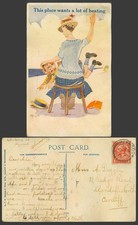
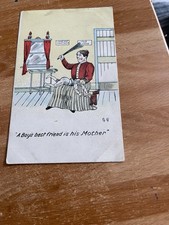
Then came the spanking with Mother’s slipper. Each smack landed with a sharp sound, and Francis kicked and howled, tears streaming down his face. The sting was fierce, and his bottom grew red and hot. But Mother did not waver, for she knew that discipline, though painful, was a lesson in love. Molly listened from the stairs, her eyes wide with worry, and even Father, in the breakfast room, looked solemn.
When it was over, Mother set the slipper aside and hugged Francis close. There was no anger in her eyes—only a tired sort of love, the kind that wishes for children to grow up good and strong. Francis sniffled and wiped his tears, his pride wounded and his bottom sore. Mother spoke softly, “Francis, you must learn that actions have consequences. If you behave like a baby, you will be treated like one.”
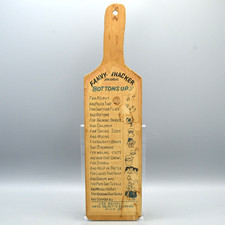
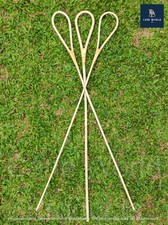
And so, Francis was placed in Molly’s high chair, his bare bottom feeling every hard edge of the seat. The room was quieter now, the only sound the ticking clock and the distant crash of waves. Mother warned him, her voice low and serious, that if he misbehaved again, the cane would be waiting—a lesson both he and Molly knew well.
Francis ate his breakfast in silence, each mouthful a reminder of the morning’s lesson. Molly watched him with sympathy, glad that it was not her turn. The moral was clear: when we are naughty, we must accept the consequences, and sometimes, the things we think are fun can lead to trouble.
Soon, the neighbour from next door arrived, her children peering curiously into the breakfast room. They saw Francis, a big boy in a baby’s high chair, his face blotchy from tears. “Why is Francis in the high chair?” they asked, giggling behind their hands.
Mother, never one to hide the truth, replied briskly, “Francis has been a naughty boy. He’s had his bottom smacked, and because he acted like a baby, he’s been put in the high chair like a baby, too.” The neighbour’s children stared, and Francis’s cheeks burned hotter than ever. The shame of being seen, of having his punishment made public, was a lesson he would not soon forget.
And so, dear listeners , Francis learned that day that discipline, though it may sting, is always wrapped in love. The boundaries set by mothers and fathers are there to keep us safe, even when we do not understand. The memory of that bracing Sunday in Skegness, with its mingling of laughter, tears, and the salty wind, became a cherished lesson—a small but important chapter in the story of growing up.