In every well-ordered home, the question of discipline is one that every mother must consider with care and compassion. As I reflect upon my own childhood, I am reminded of the patchwork quilts that adorned the beds in our modest guesthouse—each square a memory, some soft and comforting, others more bracing, yet all stitched together by the steady hand of loving authority. In the gentle hush of evening, as the sea breeze whispered through the lace curtains, I would listen to the stories of my elders, their voices weaving lessons of duty, respect, and the importance of a firm yet loving hand.
(pause) Many women of my acquaintance, now graced with silver in their hair, recall with fondness the days when a gentle reprimand or a well-administered spanking served to maintain harmony in both home and school. “It never did me any harm,” they often say, their eyes bright with the wisdom of experience. The mere presence of a cane or slipper, resting quietly in its place, was often enough to remind children of the boundaries set for their own good. Yet, there are others whose memories are tinged with sadness, for whom the recollection of discipline brings not comfort, but sorrow. It is for us, as mothers and guardians, to ensure that discipline is always tempered with understanding and love.
(short pause) The discussion surrounding corporal punishment is as lively as a summer’s day on the Skegness promenade, with opinions as varied as the colours of the windbreaks along the sand. Some believe that those who advocate for discipline are harsh, but in truth, most mothers simply wish to instil respect and order in their children. It is important to remember that discipline, when administered with care, is not cruelty, but a necessary part of a child’s moral upbringing.
(pause) Over the years, the approach to discipline has changed, swinging from strictness to leniency and back again. In my own childhood, I was fortunate to experience a balance—firmness when needed, but always with kindness close at hand. My father, a man of steady character, believed that rules should be followed, but that compassion must never be forgotten. The home, like the school, flourished when discipline was fair and consistent.
(short pause) The celebrated author Roald Dahl, whose stories have delighted so many, wrote candidly about the canings and slipperings of his youth. He was so opposed to the practice that he declined the honour of becoming a prefect, stating, “I shan’t cane the younger boys, sir.” His principled stand was not rewarded, but his distaste for corporal punishment found its way into his tales, where justice and courage always triumphed over cruelty. His example reminds us that discipline must never become harshness for its own sake.
(pause) My own father attended a preparatory school where, on one occasion, the headmaster caned the entire class for a single failing. He remembered not the pain, but the sense of injustice—the swish of the cane, the solemn silence, and the sunlight glinting on the polished floor. Later, as a prefect himself, he was entrusted with the authority to discipline, but always with the admonition: “Discipline must be kept, but never abused.” He believed that a firm hand, when guided by fairness, allowed the school to run smoothly and the boys to grow into responsible young men.
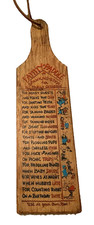
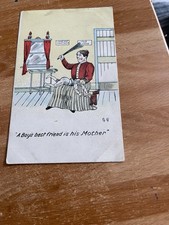
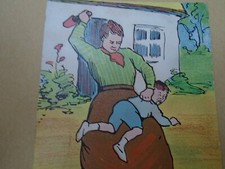
(short pause) I recall most vividly the day my dear sister was spanked by Mother with a light kitchen spatula. The kitchen was filled with the aroma of stewing apples, and the gentle clatter of crockery provided a homely backdrop. My sister, ever spirited, declared, “It does not hurt! It does not hurt!”—her voice echoing down the hallway. Mother, usually so gentle, wore a look of quiet resolve as she administered several firm but measured smacks to my sister’s bottom. The lesson was not in the pain, which was mild, but in the understanding that actions have consequences. Mother’s discipline was always followed by a loving embrace, and we learned that true love sometimes requires firmness.
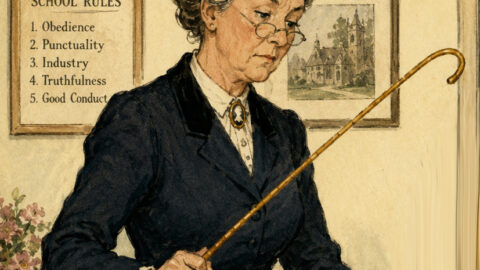
(pause) My own experiences with corporal punishment were mostly at school. At my small private primary, the headmistress—a dignified lady with a tightly wound bun—once rapped a boy’s knuckles with her ruler for carelessness. The sharp sound startled us all, but it was the breaking of the ruler, not the pain, that brought tears to the boy’s eyes. She spoke gently, “Let this be a lesson in care and consequence.” The classroom, with its high windows and rows of wooden desks, seemed to pause, as if the very air understood the importance of the moment.
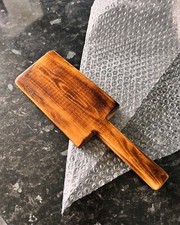
(short pause) The following year, I attended a private preparatory school where discipline was more formal. The headmaster, a man of commanding presence, reserved punishment for serious offences. Only boys, never girls, were summoned to his study, where the legendary ‘basting spoon’ awaited—a long-handled wooden implement, polished by years of use. When a boy was called, he was instructed to bend over, and the headmaster delivered three firm smacks to the seat of his trousers. The punishment was always administered with dignity and restraint, serving as a clear reminder of the importance of obedience and respect.
(pause) I remember the tension as the headmaster descended the stairs, his footsteps echoing through the corridors. The boys, often guilty of minor mischief such as throwing paper balls or speaking out of turn, would receive their punishment with stoic resolve. Looking back, I wonder if some of these boys struggled with challenges we now understand better, but in those days, all misbehaviour was treated as naughtiness, and discipline was applied accordingly.
(short pause) The punishment, though it stung, was brief—a “short, sharp shock,” as the headmaster described it. There were no lasting marks, only a smarting bottom and a lesson learned. Afterwards, the boys would speak of it in hushed tones, united by the shared experience and the knowledge that justice had been served. The sense of camaraderie and mutual respect was strengthened by these moments of discipline.
(pause) The most memorable incident during my time there occurred when four boys were discovered eating sweets at the bus station while still in their school uniforms. The next morning, they were summoned to the headmaster’s study, and each received a measured application of the basting spoon. The offence may have seemed minor, but the lesson was clear: rules exist for a reason, and to break them is to invite consequences. The headmaster’s words, “Let this be a warning to you all,” were heeded by every pupil present.
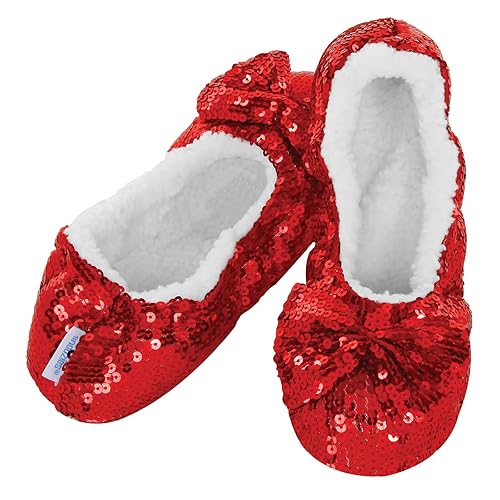
(short pause) When my father changed employment and we moved house, my sister and I attended a state primary school for a brief period. The school, with its red-brick buildings and echoing corridors, was a place where discipline was more frequent, but less severe. The form masters’ slippers—simple plimsolls—each had a name, and mine was ‘Archie’. When a boy misbehaved, he was called to the front, asked to bend over, and given three brisk smacks. The sting brought tears, but the atmosphere was lightened by the camaraderie among the children, and the incident was soon forgotten.
(pause) I remember the first time I was called out. My heart pounded as I walked to the front of the class, my friends offering quiet words of encouragement. The slipper landed with a firm smack, and I returned to my seat, cheeks flushed but dignity intact. The lesson continued, and by lunchtime, the matter was behind me, replaced by the innocent pursuits of childhood.
(short pause) Only once did I witness a master truly angered—when two boys were caught using improper language in the corridor. The resulting slippering was more severe than usual, and the boys were subdued afterwards. The lesson was clear: words, like actions, have consequences, and discipline, when necessary, must be administered with fairness and resolve.
(pause) It is worth noting that the girls at school were never spanked. Perhaps they were better behaved, or perhaps the rules were different for them. For the boys, however, the possibility of punishment was ever-present, a gentle reminder to conduct oneself with propriety and respect.
(short pause) After another move, I spent a year at a different state primary, where corporal punishment was rare. I heard whispers of a boy being slippered for insolence, but I never witnessed it myself. The school was quieter, the rules less strictly enforced, and I found myself missing the sense of order that discipline had once provided. The days passed gently, the sharp edges of discipline softened by a more forgiving routine.
(pause) As I look back upon these experiences, I am reminded that discipline, when administered with love and fairness, is a vital part of a child’s upbringing. A well-timed spanking, delivered calmly and with explanation, can teach a lesson that words alone may not convey. It is the duty of every mother to guide her children with a steady hand and a loving heart, ensuring that they grow into responsible, respectful adults. In this way, the moral fabric of the home—and indeed, of society itself—is preserved for generations to come.