(gap: 1s) In the tranquil heart of Chailey, Sussex, during the late 1960s, I was privileged to witness a scene that, though private, offers a valuable lesson in the art of motherhood and the moral upbringing of children. The village, with its green alive with the laughter of well-dressed children and the gentle murmur of mothers in conversation, seemed untouched by the haste of modernity. It was here, amidst the scent of cut grass and the sight of flint-walled cottages, that I was reminded of the importance of discipline, tempered always by love.
(short pause) My acquaintance with Mrs. Audrey was, until that day, a matter of polite nods and brief exchanges. She was a woman of admirable efficiency, always accompanied by her children, and a regular presence at St. Peter’s Church. I, by contrast, preferred the quiet company of my roses on Sunday mornings. Our paths crossed only occasionally, and I had never anticipated being welcomed into her home.
(pause) On the evening in question, I was engaged in gathering signatures for a petition to preserve the character of our beloved village. The prospect of a new housing estate filled many of us with concern. By the time I reached Primrose Cottage, with its inviting sign and the evidence of family life at the threshold, I was weary and in need of refreshment.
Mrs. Audrey greeted me with characteristic briskness, her hair neatly arranged and her skirt dusted with flour. “Barbara, you look quite exhausted. Please, do come in. I shall sign your petition, and you must allow me to offer you a cup of tea.” Her manner, though efficient, was not without warmth.
(short pause) The interior of the cottage was a haven of domestic order: floral curtains, the gentle aroma of stewing apples, and the comforting tick of a mantel clock. Her children, Sarah and Peter, sat at the table, their supper of fish fingers and peas before them, their legs swinging in innocent contentment.
Mrs. Audrey placed a cup of tea before me and explained, “My husband is working late, so we shall dine together later.” She turned her attention to Peter, who seemed uncharacteristically subdued. “What troubles you, my dear? You are not usually so particular about your food. Are you feeling unwell?”
Peter replied in a small voice, “A bit, I suppose. May I be excused? I am finished.”
With a mother’s gentle concern, Mrs. Audrey instructed, “Go to your room and rest for half an hour. I shall keep your tea for you if you wish it later.” There was both kindness and a hint of suspicion in her tone.
Peter departed, his shoulders drooping. I watched him ascend the stairs, recalling my own children at that age—their secrets and their silences. Mrs. Audrey and I conversed quietly about village matters, while Sarah ate her meal with quiet determination, her gaze shifting between her mother and myself.
Suddenly, Sarah spoke with the clear honesty of youth: “Peter did not want his tea because he had a chocolate bar.”
Mrs. Audrey’s attention sharpened. “Are you certain, Sarah? Please tell me the truth.”
Sarah nodded solemnly. “Yes, Mother. I saw him hide the wrapper in his pocket before we came down.”
Mrs. Audrey’s lips pressed together in a line of resolve. She rose and went to the larder, her movements precise. There, she discovered the evidence: a torn multipack of chocolate, the wrappers concealed behind a tin. Her expression darkened, but her actions remained measured.
“Excuse me, Barbara. There is a matter I must address.” Her voice was composed, though her eyes conveyed regret at the necessity.
Mrs. Audrey ascended the stairs, her footsteps firm. I remained in the kitchen, my heart heavy with the knowledge of what was to come. From above, I heard her voice—calm, yet resolute—explaining to Peter the gravity of his actions. She spoke of honesty, of the importance of truthfulness in a household, and of the disappointment that deceit brings to a mother’s heart.
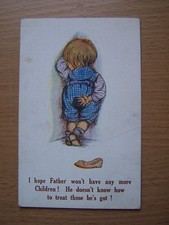
She led Peter to his bedroom, where the lesson would be administered. With dignity, she explained that a spanking was necessary—not out of anger, but as a consequence for dishonesty. She removed her slipper, her face composed, and instructed Peter to lie across the bed. With measured firmness, she delivered several sound smacks to his bottom, each one accompanied by a gentle reminder: “This is to help you remember, my dear, that truth is always best.” Peter wept quietly, his tears a sign of both pain and remorse.
When the punishment was concluded, Mrs. Audrey comforted her son, assuring him of her love and her hope that he would learn from this experience. She reminded him that every mother’s duty is to guide her children toward virtue, even when it requires difficult measures.
Peter was sent to bed, his lesson learned. Mrs. Audrey returned to the kitchen, her composure restored, though her eyes glistened with unshed tears. She placed the slipper away and resumed her duties, her actions a testament to the strength and tenderness required of mothers.
Sarah, meanwhile, continued her meal in silence, her hands clasped tightly in her lap. She had witnessed her brother’s correction and, I believe, understood the seriousness of the matter. Such moments, though difficult, are essential in the moral education of children.
The kitchen was quiet, save for the ticking of the clock and the gentle hum of the kettle. I longed to offer words of comfort, but found myself silent, reflecting on the responsibilities we bear as mothers and the quiet burdens we carry.
At last, Mrs. Audrey turned to me, her smile gentle but tinged with sadness. We resumed our conversation, but the atmosphere had changed. I soon took my leave, stepping out into the cool evening air, the village green bathed in golden light.
As I walked home, the petition in hand, I pondered the events I had witnessed. Discipline, when administered with love and fairness, is a mother’s gift to her children—a lesson that will serve them throughout their lives. In the privacy of our homes, we shape the character of the next generation, teaching them honesty, respect, and the value of truth. It is not always easy, but it is always necessary.
Let us remember, dear readers, that the gentle hand of discipline, guided by love and wisdom, is one of the greatest acts of motherhood. In this way, we nurture not only our children, but the very fabric of our communities, ensuring that the virtues we hold dear endure for generations to come.