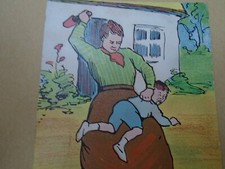
In the early 1960s, it was not uncommon for parents to emulate the disciplinary measures employed in schools, believing that such practices would instil in their children the virtues of obedience and self-restraint. Within our community, the phrase “received the cane at home” was spoken in hushed, respectful tones, for it signified a household where standards were maintained with unwavering resolve.
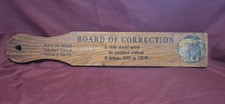
In England, many families of good standing kept a cane within the home, often displayed in a place of quiet prominence. I recall with clarity the slender rattan rod that hung behind our kitchen door, its surface polished by the passage of time and the anxious hands of those who awaited its use. The cane was not merely an implement; it was a symbol of the values to which our family aspired.
The decision to employ such measures was not made lightly. Parents, motivated by a sincere desire to guide their children towards uprightness, believed that firmness was a necessary component of loving care. Amongst the children, those whose parents maintained strict discipline were regarded with a certain respect, for it was understood that such upbringing would prepare one for the rigours of adult life. My friend Peter, for example, would sometimes reveal the faint marks upon his legs, not as a source of shame, but as evidence of the high standards to which he was held.
For many mothers and fathers, the pursuit of respectability was paramount. The English class system, still very much in evidence, encouraged families to adopt the customs of their social betters, including the use of corporal punishment. The ever-present concern—“What will the neighbours think?”—served as a constant reminder that a family’s reputation was a precious asset, to be safeguarded through diligent parenting.
Thus, it became customary for parents to model their disciplinary practices on those of the esteemed private schools, where the cane was administered with regularity. It was widely believed that a well-disciplined child reflected credit upon the entire household, and that the temporary discomfort of correction was a small price to pay for the enduring benefits of a good name.
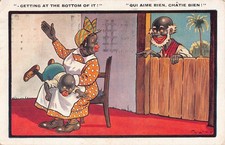
My own mother, guided by these principles, acquired a proper rattan cane for the purpose of correction. Its use was reserved for serious infractions, particularly as I entered my teenage years. As a younger child, I was subject to the more familiar method of a firm smack upon the seat, administered over my mother’s knee in the privacy of our parlour. The ritual was conducted with solemnity: my mother would explain the nature of my misdeed, and, after a brief pause for reflection, deliver several brisk smacks to my lower person. The sting, though sharp, was always accompanied by words of reassurance and a gentle embrace, reinforcing the lesson that discipline was an act of love and guidance.
As I grew older, the formality of the cane was introduced. On such occasions, I would be instructed to lower my trousers and bend over the bed, while my mother, with a composed and resolute manner, would administer several strokes across the seat of my undergarments. The sound of the cane, swift and unmistakable, was followed by a period of quiet reflection, during which I was encouraged to consider the consequences of my actions. The discomfort, though considerable, served as a lasting reminder of the importance of self-control and respect for authority.
It is important to note that my mother approached these duties with a sense of responsibility and care. She believed, as did many women of her generation, that a child’s character was shaped as much by correction as by affection. Her oft-repeated maxim, “Better a moment’s pain than a lifetime of regret,” encapsulated the prevailing wisdom of the era. Each act of discipline was intended not to punish, but to instruct—to guide the child towards virtue and to preserve the family’s good standing within the community.
In retrospect, the lessons imparted through these formative experiences have endured. The gentle clatter of breakfast plates, the soft murmur of familial voices, and the quiet dignity of a well-ordered home remain vivid in my memory. Discipline and respectability were woven into the fabric of our daily lives, shaping us into individuals capable of meeting the world with confidence and grace. Though the cane has long since vanished from our household, its legacy endures—a testament to the values and standards that defined a generation of English families.