In the gentle countryside of Kent, where the morning mist lingers over red-brick cottages and the air is sweet with the scent of coal smoke and wild primroses, there lies a village called Little Wingham. Here, in the early years of the 1960s, children grew up in a world both safe and orderly, where each day unfolded with the steady rhythm of the old clock upon the mantelpiece. The village green, with its weathered wooden swing and battered football, was the heart of our small world, and the laughter of children in hand-me-down jumpers and corduroy trousers rang out beneath the watchful eyes of mothers gathered by the corner grocer.
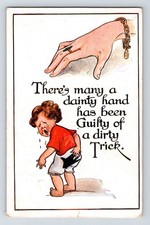
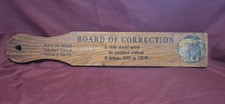
In those days, children were taught the virtues of obedience, respect, and honesty. Mothers, wrapped in headscarves and sturdy coats, would pause in their errands to share news and gentle admonishments, for it was understood by all that a well-mannered child was a credit to his family. Yet, even in such a kindly place, there existed the ever-present knowledge that mischief would not go unpunished. To be naughty was to risk a sound smacking, a lesson in humility and the importance of learning from one’s mistakes.
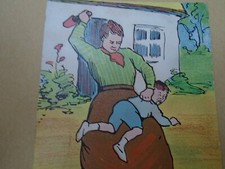
The prospect of a spanking was not regarded as cruelty, but as a necessary part of a child’s upbringing—a moral punctuation, as it were, to remind the young that actions have consequences. I, myself, was a dutiful boy, eager to please my dear mother, and my heart would swell with pride at her words of praise. Yet, even the most obedient child sometimes wonders, in the quiet of his heart, what it might be like to receive a proper smacked bottom, and to learn, through a little discomfort, the value of right conduct.
One afternoon, as the school bell rang and children poured from the classroom in a flurry of excitement, I found myself at my mother’s side. My teacher, a kindly gentleman with a twinkle in his eye, paused to speak with her about my progress. Their conversation was warm and encouraging, as is the way in a small village school. Then, with a gentle smile, my teacher turned to my mother and said, “Should he ever be naughty, you may send him to me.” With that, he gave me a firm, yet not unkind, smack upon the seat of my shorts. The sound was sharp, and I felt a brief sting, but there was no anger in his manner—only the clear message that good behaviour is always to be preferred.
In those days, such discipline was accepted as part of life. A spanking, delivered with fairness and love, was understood to be a lesson in self-control and respect for others. As we left the playground, my small hand in my mother’s, I glanced back at my teacher, feeling a curious mixture of embarrassment and pride. I rubbed my bottom, more for show than from pain, and resolved to be especially well-behaved in future.
Though I was seldom in trouble, the idea of a spanking became, for a time, a secret fascination. In the quiet of my modest bedroom, with its twin iron beds and crocheted eiderdowns, I would sit at my desk, pretending to do my lessons, but imagining myself in disgrace, awaiting the arrival of justice. My heart would beat quickly as I pictured my mother entering, slipper in hand, her expression stern but loving. In my mind, she would explain, in gentle tones, why my actions had been wrong, and then, with a swift motion, deliver a few firm smacks to my bottom. The lesson would be clear: to disobey is to invite correction, but to accept one’s punishment bravely is the first step towards becoming a better person.
In truth, my mother’s discipline was always gentle, her love unwavering. Though I sometimes longed for the certainty of a well-deserved spanking, I learned instead the subtler lessons of remorse and forgiveness. Looking back, I see now that the true moral of those days was not found in the slipper or the stern word, but in the quiet understanding that to be good is its own reward, and that the boundaries set by loving parents are not cages, but the very framework of our freedom. (long pause) And so, as dusk falls over my memories and the fairy lights twinkle on the village green, I am grateful for the gentle lessons of my childhood, and for the knowledge that, sometimes, the greatest kindness is found in loving correction and the opportunity to begin anew.