(gap: 2s) Once upon a Sunday morning, in the gentle heart of Little Wingham, the village awoke beneath a sky brushed with the palest blue. The air was brisk and clean, tinged with the comforting scent of coal smoke and the delicate perfume of wild primroses that peeped from the hedgerows. Children, clad in jumpers lovingly darned and trousers patched at the knee, spilled onto the green, their laughter as bright as the morning sun. Mothers, wrapped in sensible coats and headscarves, gathered by the red telephone box, their voices weaving a gentle chorus of news and neighbourly advice.
(short pause) In those days, the world was a smaller, safer place, and the rules of childhood were as clear as the hopscotch squares chalked on the pavement. A sharp smack to the back of the legs or a brisk swat to a well-clothed bottom was as much a part of growing up as the tolling of the church bell or the rattle of the milkman’s cart. If a child’s temper flared or a tantrum erupted, it was met not with endless discussion, but with a firm hand and a steady word, often in full view of the village.
(pause) I, too, was no stranger to these swift, instructive lessons. I recall, as if peering through a frosted window, the sharp sound of a smack echoing in the grocer’s, or the sight of Mother’s slipper, poised in warning. Sometimes, I wondered if those public scoldings were but the beginning, and if, behind closed doors, sterner lessons awaited—a sore bottom and a pillow damp with tears.
(short pause) My own mother, brisk and efficient, with a heart as warm as the coal fire in our parlour, believed in the value of a well-timed spanking. It was her principal tool for keeping me and my younger brother in line, and though many such occasions have faded like the patterns on our old linoleum, a few remain as clear as the day they happened.
(pause) One such memory stands out, painted in the golden light of a summer evening when I was about ten. My brother, four years my junior, and I were playing in the garden, our imaginations turning the coal bunker into a castle, a pirate ship, or a mountain to be conquered. The coal man had just been, leaving behind the familiar scent of dust and the promise of warmth for the week ahead.
(short pause) Whether by accident or a moment’s mischief, my brother tumbled from the bunker, landing with a thud and a wail that pierced the stillness. I froze, heart pounding, as his cries grew louder, drawing our parents from the house in a flurry of concern and alarm.
(pause) Father, tall and serious in his shirtsleeves, knelt beside my brother, gently cradling his arm. Mother’s face, usually so composed, was etched with worry as she examined the awkward bend in his forearm. “Oh, my poor boy!” she exclaimed, her voice trembling. “What happened here?” I stood atop the bunker, guilt and fear warring inside me, as the grown-ups exchanged glances heavy with meaning.
(short pause) “Down you come this instant!” Mother called, her tone brooking no argument. As I slid from my perch, she fixed me with a look that could curdle fresh milk. “Into the kitchen with you, and wait there. I shall deal with you presently.” The words hung in the air like a thundercloud, and I trudged inside, the linoleum cool beneath my bare feet, dread settling in my stomach.
(pause) Behind me, the drama continued. Father fetched the car, its engine coughing to life, and soon my brother was whisked away to the hospital, his cries fading into the distance. The house felt impossibly quiet, the ticking of the clock loud in my ears as I waited, shifting from foot to foot, rehearsing explanations that I knew would fall on deaf ears.
(short pause) When Mother returned, her cheeks flushed and her eyes bright with a mixture of worry and anger, she wasted no time. “What on earth were you thinking?” she demanded, her voice sharp as the snap of a starched sheet. “You are the eldest—you must look after your little brother, not send him to hospital! I expect better from you, young man.”
(pause) As she scolded, she pulled a sturdy wooden chair from the table and set it squarely before the fireplace, the coal fire crackling in the grate. She wore her favourite knee-length apron, tied neatly over a red tweed skirt and crisp white blouse, her hair pinned back with military precision. With a practiced motion, she smoothed her lap, her eyes never leaving mine.
(short pause) “But Mum, it was an accident!” I pleaded, my voice small and desperate. “I didn’t mean—” “Enough!” she interrupted, her tone as firm as the oak sideboard. “You must learn to be careful, and to take responsibility for your actions.”
(pause) With a firm grip, she took my arm and guided me over her lap, my nose nearly touching the square patterns of the linoleum. The world shrank to the warmth of her lap, the roughness of her apron, and the knowledge that my fate was sealed. My shorts and pants were tugged down with brisk efficiency, and I felt the cool air on my skin, my bottom exposed and vulnerable.
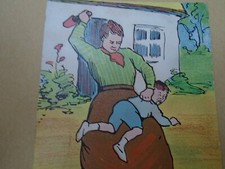
(short pause) The spanking began without ceremony. Mother’s hand, strong from years of scrubbing floors and kneading dough, landed again and again on my lower cheeks, each smack ringing out like a metronome. I wriggled and kicked, but her arm held me fast, and my cries mingled with the crackle of the fire and the distant coo of wood pigeons outside. Each smack was a lesson, each sting a reminder that carelessness has consequences.
(pause) The pain built with each smack, a fiery sting that seemed to travel all the way to my toes. Tears streamed down my face, and I buried it in my arms, the patterns of the linoleum blurring as I sobbed. Still, Mother did not relent, her voice steady as she delivered her lesson: “You must look after your brother. You must think before you act. This is for your own good.”
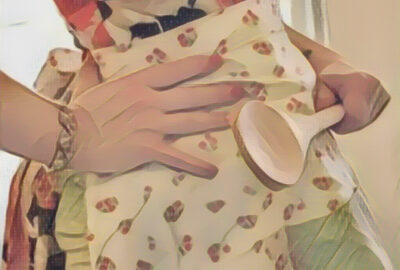
(short pause) At last, the smacks slowed, and I thought it was over. But then I felt her reach for something on the sideboard—a long wooden spoon, smooth and worn from years of stirring porridge and jam. The first smack with the spoon was sharper, more biting, and I yelped in surprise. Mother delivered a few deliberate, measured spanks, each one a punctuation mark in her lecture. “Let this be a lesson to you,” she said, her voice gentler now but still firm. “You must learn to be careful, and to think of others.”
(pause) A few final smacks landed on my upper thighs, and then, at last, it was over. I was released, my bottom burning and my pride in tatters. “Step out of those shorts and pants,” Mother instructed, her tone brooking no argument. I obeyed, sniffling, and received a final, stinging smack for good measure. “Off to bed with you, and let us hope you remember this lesson.”
(pause) I climbed the stairs, each step a reminder of my punishment, and crawled beneath the crocheted eiderdown on my narrow iron bed. The room was filled with the soft glow of evening, and my stuffed rabbit watched over me from the pillow. As I lay there, the pain in my bottom slowly fading, I thought about what had happened, and about the responsibility that came with being the eldest.
(short pause) Downstairs, I could hear the comforting clink of teacups and the low murmur of my parents’ voices. When my brother returned, his arm in a sturdy white cast, he was greeted with gentle hugs and a promise of extra pudding for being so brave. I, meanwhile, nursed my sore bottom and my wounded pride, vowing never to climb the coal bunker again.
(pause) Even now, when I visit that old garden, the bunker still stands, mossy and weathered, a silent monument to a lesson learned the hard way. And though the world has changed, and such punishments are now a thing of the past, I remember that day with a strange fondness—a reminder of a time when love was sometimes expressed with a firm hand, and every mistake was a chance to grow a little wiser.
(long pause) And so, dear reader, let us remember: in every tumble and every tear, there lies a lesson. For it is through our stumbles that we learn to stand tall, and through our mistakes that we grow into kind, careful, and responsible people—just as Mother always hoped we would.