(gap: 2s) In the gentle days of yesteryear, when the world was painted in the softest watercolours and the air was sweet with the scent of coal smoke and wild primroses, the village of Little Wingham bustled with the kindly order of English life. Children’s laughter rang out across the green, mothers exchanged news by the red telephone box, and the clatter of prams and bicycles was as familiar as the toll of the church bell. In those times, rules were clear, consequences certain, and the lessons of childhood were learned with a firm but loving hand.
(short pause) One particular Sunday stands out in my memory, as bright and sharp as the red-brick cottages and the misty lanes of our Kentish home. The year was 1980, but the spirit of the village belonged to an earlier, sterner age, when mothers and fathers believed that a child’s character was shaped by discipline and respect.
(pause) That morning, Mother announced a special treat: a visit to the swimming baths. She was ever practical, her cardigan buttoned and her brooch shining, and my little brother and I followed her eagerly, our hair still tousled from sleep. Our neighbours joined us—cheerful Jenny and her daughter in a hand-me-down duffle coat, and kindly Felicity, whose son always bore a sticky smudge of jam. The houses we lived in were grand in their own way, divided into flats, each floor a world of its own, but united by the clatter of footsteps and the aroma of stewing apples drifting up the stairwell.
(pause) The swimming baths were a wonder to us children—tiles echoing with shouts, the sharp tang of chlorine, and the promise of adventure. We splashed and shrieked, our cheeks rosy, our eyes stinging, our hearts light as we played at being dolphins and sea monsters. When our fingers were wrinkled and our energy spent, we tumbled into the little café, hair dripping, skin tingling, and eyes still dazzled by the blue of the water.
(short pause) The café was a magical place: Formica tables, the hum of vending machines, and the sweet, sticky scent of hot chocolate and jam tarts. We pressed our noses to the glass, choosing our treats, while the mothers gathered at a corner table, their voices weaving a tapestry of gossip and gentle admonition. My brother and I, as ever, were drawn to mischief like moths to a flame. We jostled and teased, our laughter growing louder, our games more boisterous.
(pause) “Mind yourselves, boys,” Mother warned, her voice gentle but edged with steel. “Let’s not have any nonsense.” But the warning was lost in our excitement, and soon enough, disaster struck. My brother, in a fit of giggles, knocked over a cup of hot chocolate. The brown liquid spread across the table, threatening to soak Felicity’s skirt. She gasped, leaping back, and the mothers sprang into action, dabbing at the spill with napkins, their faces a mixture of exasperation and amusement.
(pause) Mother’s eyes narrowed. “Do you want me to pull your pants down right here?” she asked, her voice low but carrying the weight of a thousand warnings. It was a phrase we knew well, a threat that conjured images of red faces and stinging bottoms. The very thought was enough to make us squirm in our seats, but until that day, it had always been just that—a threat.
(pause) Emboldened by the presence of friends, I made the grave mistake of answering back, my words sharp and careless. “Oh, shut up, you little idiot!” I snapped at my brother, the words hanging in the air like a challenge. The café seemed to fall silent, the clink of cups and the hum of conversation fading as Mother’s gaze fixed on me.
(pause) “That’s quite enough,” she said, her voice cold as the winter wind that rattled the cottage windows. “Come here, now.” There was no room for argument, no hope of escape. My heart thudded in my chest as I shuffled towards her, the eyes of Jenny, Felicity, and their children following my every step.
(pause) I expected a scolding, perhaps another warning, but Mother’s hands were swift and sure. In one motion, she pulled me over her knee, her grip unyielding as iron. I felt the blood rush to my cheeks as she reached for the waistband of my trunks. “No, Mum, please!” I whispered, my voice trembling, but she was resolute. Down came my trunks, and with them, the last shreds of my dignity.
(pause) The world seemed to shrink to the size of that little café, the Formica table, the sticky floor, the faces of my friends and neighbours frozen in a mixture of shock and fascination. I tried to cover myself, my hands fluttering in a desperate attempt to shield my bare bottom from view. “Let go, young man,” Mother said, her tone brooking no argument. She brushed my hands aside with the ease of long practice.
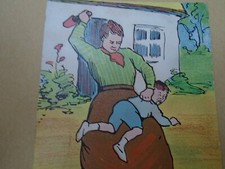
(pause) Then, with a firm and measured hand, Mother delivered the spanking she had so often promised. The first smack rang out, sharp and clear, echoing off the tiled walls. I bit my lip, determined not to cry, but the sting was fierce, and the humiliation fiercer still. Each slap was a lesson, a reminder that actions have consequences, that words can wound, and that respect is not just a rule, but a bond that holds a family together. Mother’s hand was steady, her resolve unwavering, and though the pain was sharp, it was never cruel. She paused between each smack, allowing the lesson to settle, her voice calm and instructive: “You must learn to mind your tongue, and treat your brother with kindness.”
(pause) Jenny and Felicity watched, their faces unreadable, their children wide-eyed and silent. The world outside the café seemed impossibly distant, the laughter of the village green replaced by the sound of my own shame. When at last it was over, Mother pulled up my trunks and set me gently on the bench beside her. My face burned, my eyes fixed on the floor, my pride in tatters.
(pause) “You’ll think twice before you use language like that again,” Mother said quietly, her hand resting on my shoulder. There was no anger in her voice now, only a weary sadness, as if she too wished the lesson could have been learned another way.
(pause) The others returned to their tea and conversation, the moment already fading into the tapestry of village life. No one spoke of it again, and in time, the sting faded, replaced by a deeper understanding. Our neighbours, social workers all, saw nothing amiss—such was the way of things then, when discipline was as much a part of childhood as scraped knees and muddy boots.
(pause) That day, I learned more than the pain of a smacked bottom. I learned that words have power, that respect is earned and kept, and that a mother’s love, though sometimes stern, is always rooted in care. The lesson was harsh, but it was lasting, and in the years that followed, I never again gave Mother cause to repeat it.
(long pause) Now, more than forty years on, I remember that Sunday with a mixture of embarrassment and gratitude. The world has changed, the village green quieter, the rules softer, but the lessons of that day remain. For in the end, it was not the sting of Mother’s hand that stayed with me, but the knowledge that actions have consequences, and that love, even when it is firm, is the truest guide of all. And so, dear children, remember: mind your words, treat others kindly, and trust that those who love you most will guide you, even when the lesson is a hard one.