(gap: 2s) It was a bright and bracing Sunday morning in the year of 1954, and the village of Little Wingham was alive with the gentle bustle of families preparing for church and the distant peal of bells. I, William Brown, together with my loyal Outlaws—Ginger, Henry, and Douglas—stood at the edge of the green, our boots muddied from an early game of football, our jumpers slightly askew, and our faces aglow with the promise of mischief. The air was crisp, scented with coal smoke and the faint aroma of Mrs. Bott’s baking, and the world seemed, for a moment, perfectly ordered.
(short pause) As we lingered by the red telephone box, plotting our next grand adventure, a sudden and unmistakable sound shattered the morning’s tranquillity. It was the sharp, resounding crack of a spanking—so clear and so familiar to every child in the village that we all fell silent at once. The sound echoed across the green, as if to remind us that, in Little Wingham, discipline was as much a part of life as the changing of the seasons.
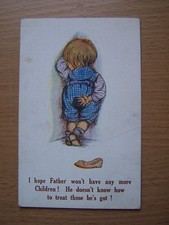
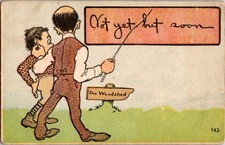
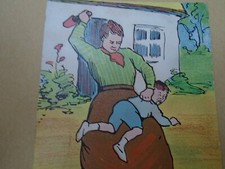
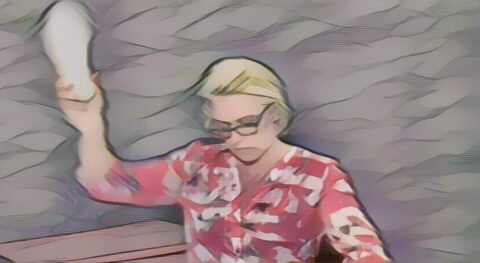
(pause) Our attention was drawn to the narrow lane beside the grocer’s, where a small crowd had gathered. There, in full view of neighbours and passers-by, stood Mrs. Carter, a lady of formidable bearing, her hair neatly pinned and her coat buttoned to the chin. Seated upon the low stone wall, she had her son, Edward, draped across her lap, his face crimson with shame and his eyes brimming with tears. Mrs. Carter’s hand, gloved and unyielding, rose and fell with unwavering purpose, each smack delivered with a severity that brooked no argument.
(pause) The sound of each slap was sharp and decisive, echoing off the brickwork and mingling with Edward’s plaintive cries. “You will not steal from Mr. Jenkins’ sweet jar again,” Mrs. Carter declared, her voice calm but resolute. “You know perfectly well the difference between right and wrong, and I shall see to it that you remember.” With every word, her hand descended, and though the punishment was harsh, there was no malice in her manner—only the stern affection of a mother determined to set her son upon the proper path.
(short pause) Edward’s legs kicked helplessly, his hands clutching at his mother’s skirt, but Mrs. Carter did not falter. The spanking was thorough, each smack a lesson in itself, and the assembled adults nodded their approval, murmuring that such discipline was the making of good men. I watched, heart pounding, for I too had felt the sting of a parental hand and knew well the mingled pain and comfort it brought.
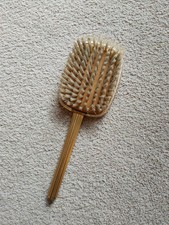
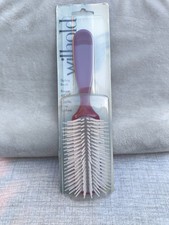
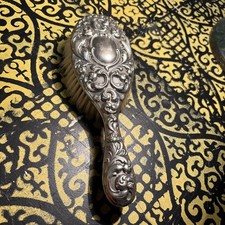
(pause) Presently, Mrs. Carter paused, her hand resting for a moment upon Edward’s trembling back. She reached into her handbag and produced a stout wooden hairbrush, its surface polished by years of use. The sight of it drew a collective breath from the onlookers, for all knew that the hairbrush was reserved for the gravest of offences. With measured care, she laid the brush across Edward’s backside and delivered a series of firm, deliberate strokes—each one eliciting a fresh wail, each one a reminder that actions bore consequences.
(pause) The spanking was not hurried, nor was it cruel. Mrs. Carter’s face was set, but her eyes were gentle, and when at last she set the hairbrush aside, she gathered Edward into her arms and whispered words of comfort. The crowd, satisfied that justice had been done, began to disperse, some exchanging approving glances, others recalling their own childhood lessons.
(short pause) Amongst us children, there was a hush—a mixture of awe, sympathy, and a certain dread. Ginger shuffled his feet, and Henry looked away, cheeks flushed with secondhand embarrassment. We all understood, in our own way, that the spanking, though severe, was an act of love—a mother’s way of ensuring her son would grow to be honest and upright.
(pause) Edward, still sobbing, was helped to his feet. Mrs. Carter straightened his jacket, wiped his tears, and pressed a handkerchief into his hand. “You are forgiven, my boy,” she said quietly, “but you must never forget.” She took his hand, and together they walked away, leaving behind a silence that seemed to settle over the village like a gentle mist.
(pause) As I watched them go, I felt a curious mixture of relief and admiration. The lesson had been harsh, but it was given with care, and I could not help but think that, in such moments, the true values of our village were preserved. Discipline, respect, and the certainty of right and wrong—these were the things that bound us together, as surely as the red bricks and the winding lanes.
(long pause) And so, as the bells rang out and the day went on, I resolved to keep to the straight and narrow—at least for a little while. For in Little Wingham, every child knew that a mother’s hand, though stern, was guided by love, and that the lessons learned upon her knee would last a lifetime.