(gap: 2s) In the gentle rhythm of Army life, our family was guided by the steady hand of my father, a distinguished gentleman in the uniform of the British Army. Our home was wherever duty called, from the bustling ports of China to the sun-baked barracks of India, the broad avenues of America, the snowy fields of Canada, and, of course, the familiar drizzle of the United Kingdom. Each new posting was an adventure, and our family adapted with grace, making each house a home, whether it was a snug flat or a draughty residence with the comforting scent of coal smoke.
(short pause) My father’s role was always shrouded in a dignified mystery, and we children, affectionately known as ‘military brats,’ learned to adjust swiftly to new surroundings. The Army’s world was one of order and discipline, and from my earliest years, I was aware of the importance of proper conduct. The customs of corporal punishment varied from country to country, but the underlying lesson was always the same: discipline was a loving guide, not a cruel hand.
(pause) I recall with clarity the Christmas of 1967, spent on a grand American base. The precise state escapes me, but the memories remain vivid. Christmas in America was a splendid affair, filled with excitement and tradition. Father Christmas would arrive in a helicopter, his red suit billowing, to the delight of every child. The day began with a formal family meal—roast turkey, potatoes, and all the trimmings—before laughter and games filled the air.
(short pause) That year, our belongings were still in transit, and my younger brother, sensitive and tender-hearted, was dismayed by the absence of presents. Despite my parents’ efforts to comfort him, his tears persisted. At last, my mother, her voice calm yet resolute, declared, “If you do not compose yourself, you shall receive a sound spanking.” In those days, such admonitions were not empty threats, but a mother’s solemn promise to uphold order and teach self-control.
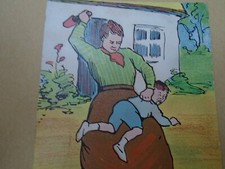
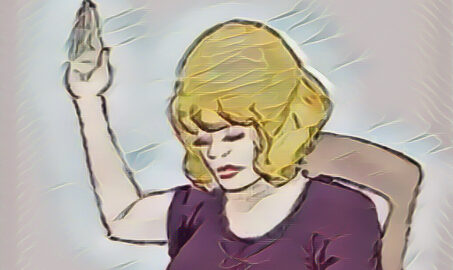
(pause) When my brother’s sobs grew louder, my mother acted with the measured firmness of a loving parent. She gently but firmly took him by the hand, seated herself, and placed him across her lap. With deliberate care, she raised her hand and administered a series of crisp, well-aimed smacks to his bare bottom. Each smack was delivered with purpose, the sound echoing in the room, mingling with his cries. The spanking was not given in anger, but as a necessary lesson in self-restraint and respect. My mother’s hand fell five times, each time pausing to ensure the lesson was received, and my brother’s tears soon gave way to quiet reflection.
(short pause) In our family, it was understood that discipline was imparted with fairness and love. When one child was chastised, the others watched and learned, reminded that actions have consequences. The moral lesson was clear: a moment’s mischief could result in a sore bottom and a heartfelt apology, but forgiveness and affection always followed. After the tears, my mother would embrace us, her gentle words reinforcing the bond between parent and child.
(pause) Upon completing my brother’s spanking, my mother removed his pyjama bottoms and sent him, red-faced and subdued, to my father. With a single, firm smack to the backs of his legs, my father continued the lesson. He then delivered two more well-placed smacks, each one measured and controlled, before instructing my brother to sit quietly and reflect. This scene, repeated in many homes of the era, was a testament to the values of humility and proper behaviour.
(short pause) Our education was equally varied, with most lessons conducted on base, though we occasionally attended local schools. In China, we once visited a village school, where discipline was maintained by a stern gentleman known as the Discipline Master. His cane was ever-present, a symbol of authority and order.
(pause) At the slightest infraction, the Discipline Master would take a child by the ear, lead them to the front, and instruct them to assume a push-up position. With a swift, practiced motion, he would bring the cane down across the child’s calves. The sound was sharp, the lesson immediate. When a visiting boy from our base misbehaved, the Discipline Master administered a single, stinging stroke to his calves, followed by an additional stroke on each hand for his outburst. The punishment was public, serving as a moral lesson to all present: discipline is essential for the cultivation of character.
(short pause) Such scenes were not uncommon, though our own lives were so well-ordered that true mischief was rare. Yet, on occasion, the rules were broken. I recall my older sister, spirited and bold, slipping away from the base in Germany to visit a shopping centre. She was discovered pilfering a lipstick, and the news reached our parents with great disappointment.
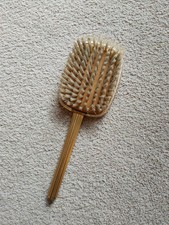
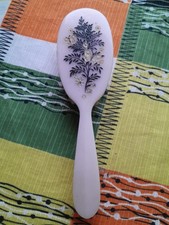
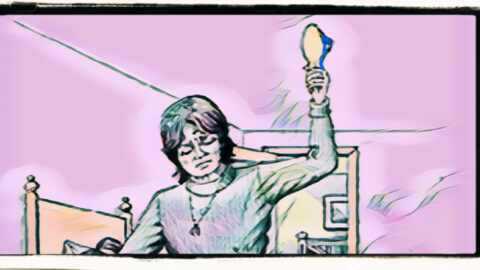
(pause) My father was deeply troubled, pacing the room, while my mother sat in silence, her expression grave. My sister, defiant, uttered a cheeky remark, which proved to be the final straw. Without hesitation, my mother rose, took my sister firmly by the arm, and led her to her bedroom. There, my mother produced her hairbrush—a tool reserved for the gravest offences. She seated herself, placed my sister across her lap, and, with solemnity, delivered six firm strokes to her daughter’s bare bottom. Each stroke was deliberate, the hairbrush landing with a resounding crack, and my sister’s protests soon gave way to tears. The lesson was clear: honesty and respect are the cornerstones of family life, and transgressions must be met with appropriate correction.
(short pause) After the punishment, my mother comforted my sister, offering words of forgiveness and encouragement. We would gather in the sitting room, sipping tea and sharing stories, the bonds of family strengthened by the trials we had faced together. Discipline, imparted with love and fairness, was the foundation upon which our family was built.
(pause) As for myself, I was a well-behaved child, perhaps owing to my keen awareness of the importance of discipline. I received only a handful of spankings, each one a sharp but necessary reminder that rules must be followed and that kindness and obedience are virtues to be cherished. The sting of the hand or slipper faded quickly, but the moral lesson endured, shaping my character for years to come.
(short pause) Upon reaching adulthood, I met my first sweetheart, a young recruit named Danny, who was training at the same base. Our conversations often touched upon the subject of childhood discipline, and I learned that he, too, had experienced the corrective sting of the slipper and the cane. His stories were recounted with humility, and I sensed a shared understanding of the value of such lessons.
(pause) In reflection, I see that those years were a tapestry of experiences—some painful, some sweet, all woven together by the loving hands of devoted parents. In the world of the 1950s and 60s, discipline was not an act of cruelty, but a guiding principle, teaching us right from wrong, respect from insolence, and the enduring value of family. As dusk fell over the estate and the fairy lights twinkled in the windows, we knew that, whatever tomorrow might bring, we were safe, cherished, and prepared to meet life’s challenges with dignity and grace.