(gap: 2s) In the heart of Oakfield Estate, where the air was ever tinged with the comforting aroma of coal smoke and the cheerful shouts of children rang out between rows of pebble-dashed houses, there lived a small boy named Stephen. Stephen was a gentle soul, with a mop of untidy hair and cheeks that blushed as easily as the dawn. He was, as his mother often said, “a sensitive lad,” and his shyness was as much a part of him as his patched trousers and scuffed shoes.
Now, in those days, children were expected to be seen and not heard, and a certain firmness in upbringing was considered the mark of a loving home. Stephen’s mother, a kindly woman with a wise heart, believed in the value of a well-timed lesson, and she knew that sometimes, a little discomfort could teach a great deal.
One brisk Sunday afternoon, as the estate bustled with the familiar sounds of mothers hanging out the washing and fathers tinkering with their motorcars, Stephen was nowhere to be found. His mother, ever attentive, soon discovered him in the garden shed, perched upon an upturned bucket, his small hands twisting anxiously in his lap. He had refused the rare treat of a visit to the park, and his mother’s heart told her that something was amiss.
She led him gently back to their snug sitting room, where the fire crackled and the scent of boiled cabbage lingered. There, with patience and a gentle hand, she coaxed the story from him. Stephen, his voice barely above a whisper, recounted the events of the previous day, when he had visited a friend’s house for tea.
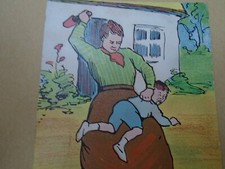
The house had been alive with the boisterous energy of boys at play. At one point, the friend’s mother, a jolly woman with a twinkle in her eye, had delivered a playful smack to her son’s bottom as he bent over the arm of the sofa. The room erupted in laughter, and the mother, with mock sternness, offered to do the same for any boy who wished to volunteer. To Stephen’s astonishment, one of the boys did just that, and the mother, not one to disappoint, took him across her knee and administered a pantomime spanking, the sound ringing out like a starter’s pistol at a school race.
The boy leapt up, cheeks aglow, and declared that it had not hurt a bit. The laughter was bright and merry, and the boys soon returned to their games, the incident already becoming a tale to be retold on many a rainy afternoon.
But for Stephen, the moment lingered. He confessed, in tones of deepest embarrassment, that he had wished to volunteer himself, but his shyness had held him back. By the time he had summoned his courage, the opportunity had passed, and he was left with a curious longing and a sense of regret.
His mother listened with understanding, for she remembered her own childhood and the peculiar games children play. In those days, a smacked bottom was as much a part of growing up as scraped knees and muddy boots. She saw in Stephen’s confession not naughtiness, but a desire to belong, to be brave, and to understand the world in his own way.
“Well, Stephen,” she said, her voice gentle but firm, “if you truly wish to know what it is like, you have only to ask. Look me in the eye and request it, and I shall oblige.” Her words were a challenge, but also a gift—a chance for Stephen to conquer his shyness and speak up for himself.
The room grew quiet, save for the ticking of the mantel clock. Stephen’s cheeks burned crimson, and he fidgeted upon the threadbare rug. At last, with a courage that made his mother’s heart swell with pride, he looked up and said, “Please, Mother, may I have a smacked bottom?”
His mother’s eyes twinkled with mischief, but her voice was as stern as any schoolmistress. “Very well, Stephen. You have asked, and so you shall receive. Come here, my boy.”
She drew up a sturdy wooden chair and sat down, smoothing her skirt with practiced hands. Stephen approached, his steps hesitant but determined. With gentle firmness, his mother guided him across her lap, arranging him so that his small body lay comfortably, his legs dangling and his hands gripping the chair’s rung.
“Now, Stephen,” she said, “this is not a punishment, but a lesson. You wished to know, and so you shall.” With that, she raised her hand and delivered a smart smack to the seat of his trousers. The sound was crisp, and Stephen gave a little jump, more from surprise than pain.
“Did that hurt?” his mother inquired, her tone both kind and instructive. “A little, Mother,” Stephen replied, his voice muffled. “Then you shall have another, to be sure you remember.” And so she administered several more smacks, each one firm but never cruel, pausing between to ask if he understood why he was there.
As the lesson continued, Stephen’s embarrassment faded, replaced by a sense of accomplishment. He had faced his fear, spoken up for himself, and discovered that a smacked bottom, while not pleasant, was hardly the end of the world.
When at last his mother set him upon his feet, she drew him into a warm embrace. “You see, my dear boy,” she said, “sometimes the things we fear most are not so dreadful after all. It is far braver to ask for what you need than to hide away in silence.”
Stephen rubbed his backside, which tingled with the memory of the lesson, but his eyes shone with pride. He had learned that courage is not the absence of fear, but the willingness to face it, and that a mother’s love is sometimes expressed in the firmest of ways.
From that day forth, Stephen found it a little easier to speak up, to ask for help, and to meet the world with a braver heart. And though he never again requested a smacked bottom, he remembered the lesson always: that honesty, courage, and a loving hand can turn even the most uncomfortable moments into memories of warmth and wisdom.
And so, dear listener, let us remember: a little firmness, delivered with love, can teach us to be brave and true. For in the end, it is not the sting of a spanking that lingers, but the lesson learned and the love that endures.