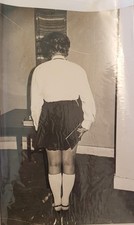
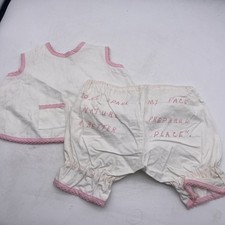
(gap: 2s) In the gentle yet resolute spirit of the 1950s, the home was regarded as the crucible of character, and discipline was considered a mother’s loving duty. My own upbringing, within a devout Christian community, was shaped by these values—values that seemed to seep into the very walls of our home, as if the faded wallpaper and the scent of boiled cabbage and polish were themselves reminders of duty and order. From my earliest recollections, the importance of moral instruction and the careful correction of youthful missteps was ever-present, woven into the fabric of daily life like the crocheted blankets draped over our threadbare sofas.
(pause) In our household, the practice of corporal discipline was not only accepted, but esteemed as a necessary means of guiding children towards virtue. It was widely believed that a child’s happiness and future uprightness depended upon the firm, yet affectionate, hand of authority. The maxim, “Spare the rod and spoil the child,” was oft repeated both in our church and at home, serving as a gentle reminder of parental responsibility. I remember the way my mother would recite it, her voice soft but unwavering, as she folded laundry or stirred a pot of stew, the words lingering in the air like the steam from the kettle.
(pause) Our family was rather unique, comprising my father, my mother, and my father’s other wives—whom we addressed as Mother Beth and Mother Anne. At any given time, our home was filled with the laughter and occasional tears of between ten and thirty children. The house itself seemed to expand and contract with the seasons, the bedrooms overflowing with patchwork blankets and the hallways echoing with the thunder of small feet. Each adult, as well as the eldest siblings, took part in the noble task of discipline, ensuring that every child learned the value of obedience and respect. Even the principal at our school, which was established for the children of our community, was entrusted with this solemn duty. The school, a squat brick building with peeling paint and a playground of cracked tarmac, was an extension of our home, its rules and rituals mirroring those of our family.
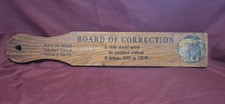
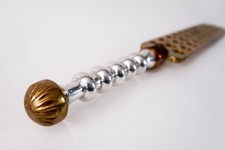
(pause) Each adult imparted discipline in their own manner, always with the intention of nurturing good character. The principal, a stern and imposing figure with a bristling moustache and a voice that could silence a room, favoured the use of a yardstick. With swift, measured strokes, he would correct the errant child, applying the yardstick to the palms, head, bottom, thighs, and calves. The resulting red marks were not a source of shame, but rather a visible sign of the lesson learned and the care bestowed. I can still recall the sharp, clean sound of wood meeting flesh, the collective intake of breath from the assembled children, and the way the principal’s eyes would soften, just for a moment, as he reminded us that this was for our own good.
(pause) My father, a man of quiet authority, preferred the belt. When summoned to his study—a small, book-lined room that always smelled faintly of pipe tobacco and old leather—we would be asked to bend over the desk and receive a number of lashes corresponding to our age. The ritual was solemn, almost ceremonial: the unbuckling of the belt, the gentle clearing of his throat, the brief, searching glance to ensure we understood the gravity of our actions. Though the experience was sobering, my father’s hand was never cruel, and the knowledge that he acted out of love and duty softened the sting. To be sent to Father was considered the gravest consequence, yet his discipline was tempered with dignity, and afterwards he would often sit with us, his hand resting on our shoulder, speaking quietly of forgiveness and the hope for better choices.
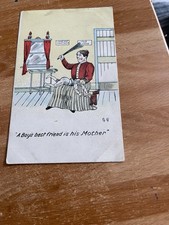
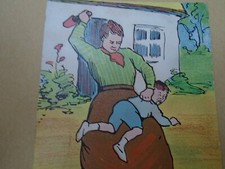
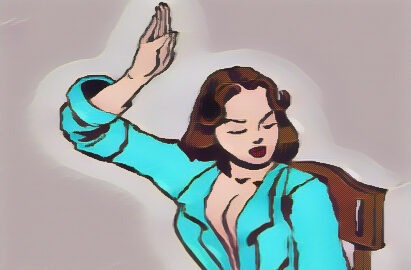
(pause) Mother Beth, ever brisk and efficient, administered discipline with her hand. The ritual was swift: a child’s misdeed would be addressed by a brief, firm spanking, usually six to twelve strokes, delivered over her lap. The sting would fade quickly, but the lesson endured. Mother Beth’s approach was a daily reminder that correction, when given promptly and with affection, is a mother’s greatest gift. She would often hum a hymn as she worked, her hands quick and sure, and afterwards she would smooth our hair and send us back to play, the world righted once more.
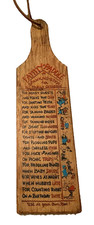
(pause) Mother Anne, who presided over the kitchen, favoured the wooden spoon. Her discipline was reserved for the older girls who assisted her with household tasks. A misstep in the kitchen—a dropped plate, a forgotten ingredient—would be met with a sharp, instructive smack to the palm or, on occasion, several well-placed strokes to the backs of the thighs. Though infrequent, her spankings were memorable, and the boys, for the most part, managed to avoid them altogether, watching with wide eyes from the doorway as the lesson was delivered. The kitchen itself was a world apart, filled with the clatter of pots and the scent of baking bread, and Mother Anne ruled it with a mixture of sternness and warmth.
(pause) My own mother, whom I shall call Mother Prudence, was known for her thoughtful and thorough approach. When a child’s conduct required correction, she would summon us to one of the bathrooms via the intercom, her voice calm and unwavering: “Corby is to see Mother Prudence in the first floor bathroom,” or “Harriet is to attend to Mother Prudence in the basement bathroom.” Each bathroom was equipped with a chair, upon which Mother Prudence would sit, awaiting the arrival of her wayward child. The bathrooms, with their cold tile floors and the faint scent of lavender soap, became places of reckoning, their ordinary fixtures transformed by the gravity of the moment.
(pause) Upon entering, the child would stand before her as she recounted the misdeed, imparting both admonition and encouragement. The child would then be placed over her lap, and a measured, deliberate spanking would ensue, interspersed with gentle scolding. Mother Prudence believed in the concept of ‘broken compliance’—the moment when a child, having been chastened, would surrender all defiance and offer sincere apologies and prayers. Occasionally, she would employ a belt or switch for the older children, but most often it was her hand that delivered the lesson. The ritual would end with a quiet embrace, a whispered prayer, and the sense that, in some small way, order had been restored.
(pause) Even as a young child, I was acutely aware of the significance of these moments. Though I dreaded the sting of discipline, I understood that it was an expression of love and concern for my moral welfare. I recall, with a mixture of embarrassment and fascination, witnessing my friend Grace receive her own correction, and feeling a curious longing to exchange places with her—a testament, perhaps, to the powerful influence of discipline upon the young mind. The memory is vivid: the hush that fell over the room, the way Grace’s cheeks flushed, the quiet resolve in her eyes as she accepted her punishment, and the gentle, almost tender, way her mother spoke to her afterwards.
(pause) In later years, as I ventured beyond the confines of my upbringing and discovered the wider world, I came to appreciate the universality of these experiences. The lessons imparted through careful, loving discipline have remained with me, shaping my character and fortifying my spirit. Indeed, the recollection of those formative years, and the moral instruction received therein, has proven more restorative than any modern therapy. I have found, in moments of doubt or difficulty, that the memory of those rituals—the sound of a belt being unbuckled, the scent of lavender soap, the warmth of a mother’s embrace—serves as a touchstone, a reminder of who I am and where I come from.
(long pause) Thus, let us remember that the gentle art of discipline, when administered with wisdom and affection, is a mother’s highest calling and a child’s greatest blessing. In the well-ordered home, as in society at large, it is through such loving correction that we nurture the virtues of obedience, humility, and respect—qualities that shall serve our children all their days. The echoes of those lessons linger still, in the quiet moments before sleep, in the way we speak to our own children, and in the enduring hope that, through love and discipline, we might shape a better world.