(gap: 2s) Many children who grew up in grand houses—those sprawling, echoing places with polished banisters and the faint scent of lavender polish—might regale you with tales of maids bustling about, governesses with starched collars, and the gentle clink of silver at breakfast. But in our modest home, such luxuries were as distant as the moon. We had, it is true, a cleaner who visited once a week, her hands red from scrubbing and her voice always cheerful, but the true running of the household fell squarely upon the capable shoulders of Mother and Father. Every corner bore their touch, every meal their careful planning, every rule their quiet decree.
Our house in London, though not grand by the standards of the well-to-do, was a curious thing: a solid, slightly draughty structure with six bedrooms, each with its own peculiar scent and character. With only two children—my sister and myself—and our parents, three rooms stood perpetually empty, their doors closed against the dust and the world. One, with its faded floral wallpaper and a bed that creaked like a ship at sea, became the guest room, reserved for the rare visitor. Another, lined with shelves and the faint aroma of ink and paper, was Father’s office, a place of quiet industry. The last was known, in our family’s private language, simply as ‘The Room’. In the stories I read, such a place might be called the Discipline Room, a chamber of dire consequence, but to us, it was always just ‘The Room’—a name spoken with a peculiar mixture of dread and familiarity.
‘The Room’ was the smallest of all, a boxy little space at the end of the upstairs corridor, where the floorboards creaked and the air always seemed a touch colder than elsewhere. Had it been a bedroom, it would have fit only a single narrow bed and a wardrobe no bigger than a coffin. The walls were painted a pale, institutional green, and the skirting boards bore the scars of a thousand knocks and scrapes.
Mother, with her unerring sense of order, arranged ‘The Room’ with a kind of severe grace. Two wooden stools, their varnish worn smooth by years of anxious bottoms, stood in the corners nearest the door. A small chest of drawers, its handles cool and slightly loose, held a jumble of oddments—old exercise books, pencils sharpened to nubs, and a tin of barley sugars for emergencies. Against the far wall, beneath the window, sat an ancient chaise lounge, its upholstery faded to a gentle grey, the stuffing lumpy but oddly comforting. It had belonged to Grandmother, and if you pressed your nose to the fabric, you could still catch the faintest whiff of her lavender scent.
The window in ‘The Room’ was unlike any other in the house. Instead of cheerful curtains, it was covered by a stiff, yellowing blind that let in only the thinnest sliver of daylight. The glass was clouded, and the latch had long since rusted shut, so the air inside was always faintly musty, tinged with the scent of old wood and polish. Overhead, a single bare bulb hung from a frayed cord, casting a cold, pitiless light that made the shadows seem sharper and the corners deeper. The effect was rather severe, as if the room itself disapproved of frivolity.
Over the years, ‘The Room’ wore many disguises. At Christmas, it became a secret grotto, its drawers and chaise piled high with mysterious parcels and rustling paper. During the summer, it was a storehouse for battered suitcases and the odd umbrella, and at parties, it swallowed up coats and hats, their scents mingling in the air. But beneath these innocent uses, there was always the knowledge—unspoken, but ever-present—that ‘The Room’ had a more serious purpose.
For it was in ‘The Room’ that discipline was meted out. Not always the sharp, stinging kind, but often the slow, aching punishment of time and reflection. When we had transgressed—spoken out of turn, forgotten our manners, or committed some childish mischief—Mother or Father would send us to sit on one of the stools, our noses inches from the wall. The stools, with their hard, unyielding seats and lack of footrests, were instruments of quiet torture. After an hour, your legs would tingle and your feet would throb, and the silence would press in on you like a heavy blanket. In the chest of drawers, there was always a stack of lined paper and a clutch of pencils, and sometimes we were told to stand and write lines or essays for what felt like an eternity. The scratch of pencil on paper, the ache in your hand, the slow crawl of time—these were punishments as real as any smack.
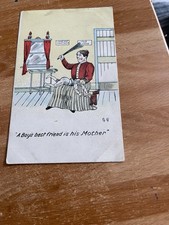
But when the offence was grave, when the air in the house grew thick with tension and the footsteps in the corridor sounded heavier than usual, ‘The Room’ became a place of ritual and consequence. The very atmosphere seemed to change—the air grew dense, and the silence was broken only by the faint creak of the chaise lounge as Mother settled herself, her skirt rustling like dry leaves. She would call us forward, her voice calm but unyielding, and we knew what was expected. With trembling fingers, we would lower our trousers and underpants, the cool air prickling our skin, and carefully lay ourselves across her lap. The faded fabric of the chaise pressed against our cheeks, and our hands, clasped tightly in front, grew clammy with anticipation. My heart would hammer in my chest, each beat echoing in my ears, and my breath would come in shallow, nervous bursts as I waited for the first smack to fall.
When we were small, Mother used only her hand. Her palm was firm and steady, and she delivered exactly twenty smacks—never more, never less. Each one landed with a sharp, echoing sound that seemed to fill the little room, bouncing off the walls and lingering in the air. The sting would build with each blow, a hot, prickling pain that spread across my skin like nettles. I tried, always, to remain silent and still, as was expected, but my legs would tense and my eyes would fill with tears that I dared not let fall. There was a peculiar humiliation in it, but also, strangely, a sense of comfort. Mother’s hand was unwavering, her voice gentle but resolute, and there was a curious security in the predictability of the punishment. I knew, even as I wept in silence, that I was safe, that the world was ordered, and that forgiveness would follow.
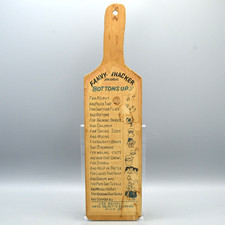
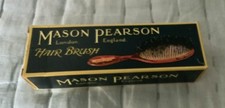
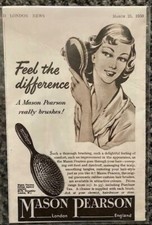
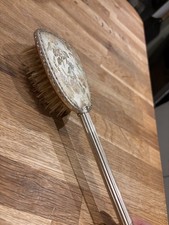
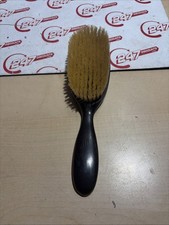
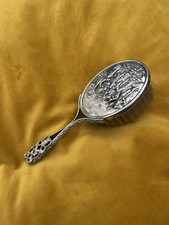
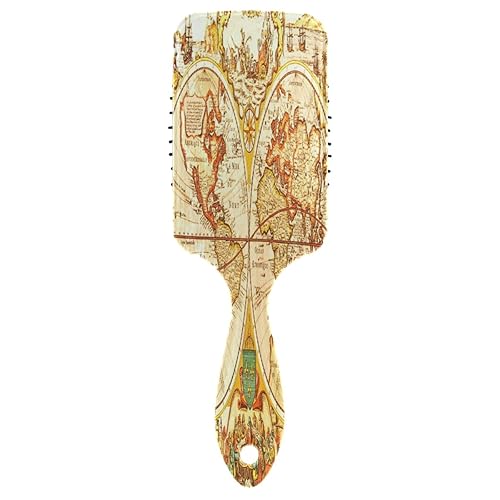
As we grew older, the punishments grew sterner. For serious misdeeds—lying, defiance, or the rare act of cruelty—Mother would reach for the heavy wooden hairbrush that lived in the top drawer. The cold, hard back of it would press against my bare skin for a moment, a silent warning, before the first blow fell. Thirty sharp smacks, each one more biting than the last, would leave my bottom burning and my resolve crumbling. The sound of the brush striking flesh was unmistakable—a flat, punishing crack that seemed to reverberate in my bones. I would grip the edge of the chaise, my knuckles white, my face flushed with shame and pain, counting each stroke in my head, willing myself not to cry out. The ordeal felt endless, and by the end, my skin would be hot and throbbing, marked with the memory of every stroke. The pain was real, but so too was the lesson, etched deep into my memory.
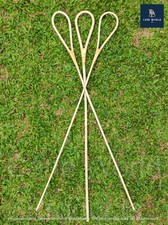
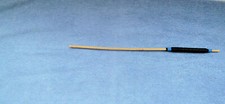
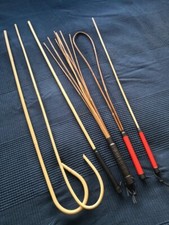
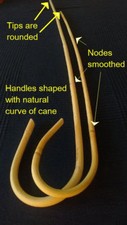
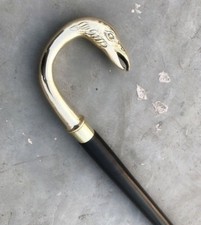
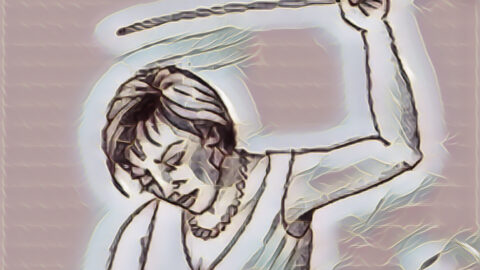
If the offence was grave indeed—something truly unforgivable, like stealing or endangering another—Father would be summoned. The cane, a slender rod of polished wood, was reserved for the most serious transgressions. I would be made to bend over the stool, my hands gripping the seat so tightly that my knuckles shone white. Father would stand behind, his voice steady and grave as he counted out six strokes. Each one was a line of fire, a sharp, searing pain that cut through any lingering bravado. The anticipation between strokes was almost worse than the pain itself—my breath would hitch, my heart pounding, the room silent except for the swish and crack of the cane. The marks would linger for days, a physical reminder of the lesson learned, and I would carry them with a strange mixture of shame and pride.
These punishments were never given in anger. The atmosphere in ‘The Room’ was solemn, almost sacred, as if we were participating in an ancient ritual. Afterward, Mother would gather me in her arms, her embrace warm and forgiving, her voice a soft murmur in my ear: “It is over now. You are forgiven.” The pain would fade, but the lesson remained—etched not just on my skin, but deep within my heart. In our house, discipline was not merely a matter of order or justice, but an act of love—a lesson in boundaries, forgiveness, and the quiet, enduring strength of family.
I vividly remember the unbearable stinging, the urge to drum my feet, the sweat and tears. I also remember how I’d feel later, though. The burning would ease to a throbbing itch, and a warm buzzing would manifest in the front of my knickers. I’d slip a hand down my pants and rub myself, sometimes slipping the handle of my own hairbrush into my vagina.
Even now, in my 50s, memories of lying across my mother’s lap fuel my masturbation and sexual fantasies more than anything else.