(gap: 2s) Growing up on the Bransholme council estate in Hull in the early 1970s was like living in a world built from concrete and wind, where the air always seemed to carry the tang of coal smoke and the distant clang of shipyard cranes. Fathers left for the docks or the factories before the sun had even thought about rising, their boots echoing down the stairwells, while mothers—hair in curlers, housecoats tied tight—kept the home running and the kids in line. The estate itself was a patchwork of pebble-dashed terraces, washing lines strung like bunting between flats, and battered cars parked nose-to-tail along the kerb. Kids in hand-me-down jumpers and scuffed shoes played football on the grass verges, the thud of the ball against a garage wall a constant soundtrack. Mothers gossiped over fences, voices rising and falling with laughter and the occasional sharp word, and everyone seemed to know everyone else’s business—sometimes before you did yourself. Life was tough, and discipline was the glue that held it all together. Corporal punishment wasn’t just accepted; it was expected, woven into the fabric of daily life like the smell of stewing cabbage or the hum of the electric fire.
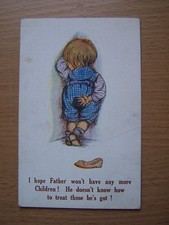
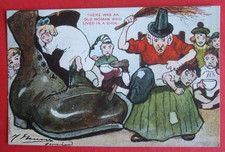
Back then, smacking wasn’t just something that happened behind closed doors—it was everywhere, as much a part of childhood as scraped knees or the taste of Tizer. A smack or a slap could come from your parents, your teachers, even a neighbour if you were caught nicking apples or mouthing off. Nobody really questioned it; it was simply how children were kept in line, a ritual as old as the estate itself. Parents, teachers, and even the old ladies who watched from their windows believed a good hiding was necessary to teach respect and discipline. It was so widely accepted that most people never thought twice about it, and it was rare—almost unthinkable—to hear anyone speak out against it. The idea of questioning a smack was as foreign as asking why the sky was grey or why the milkman always whistled the same tune.
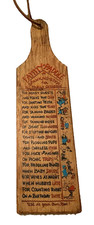
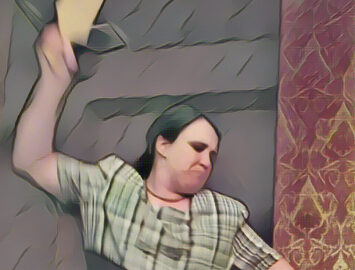
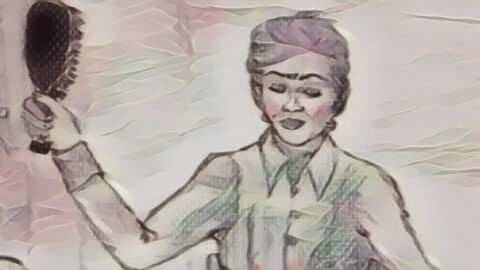
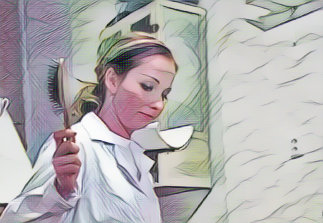
The tools of discipline were as familiar as the furniture in our homes. At home, the belt was a favourite—leather, sometimes cracked and worn, the buckle cold and heavy in your hand. It hung on the back of a door or lay coiled in a drawer, always within easy reach, a silent threat that needed no words. The slipper—usually Mum’s, soft and faded from years of wear—could transform in an instant from something comforting to something that stung like fire when brought down on bare legs or bottoms. Wooden spoons, meant for stirring porridge or soup, were sometimes snatched from the kitchen and wielded with surprising force, the handle leaving a ghostly print on your skin. Some mothers even used hairbrushes, the heavy wooden kind, or a rolled-up newspaper for a quick smack across the back of the legs. I remember the sound of the wooden spoon clattering back into the drawer, the echo lingering long after the sting had faded.
At school, the implements were different but the attitude was the same. The cane was the ultimate threat—thin, whippy, and kept in a cupboard in the headteacher’s office, its presence whispered about in corridors and feared in every classroom. Teachers also used rulers, usually the thick wooden ones, rapped across knuckles or the palm of your hand with a sharp crack that left your fingers tingling. Some had a favourite plimsoll, kept just for punishment, and you’d be called to the front of the class to bend over and take your licks, the rubber sole leaving a hot, stinging welt. Even a chalkboard pointer or a bunch of exercise books could be used in a pinch, the improvisation almost as frightening as the implements themselves. The anticipation was sometimes worse than the punishment—the way the teacher would pause, weighing the ruler in their hand, the hush that fell over the class as everyone waited for the first blow.
It didn’t matter where you were—home, school, or even out in the street—there was always something close at hand that could be used to deliver a quick lesson. The attitude was that these implements were just part of the job, tools to keep children in line. Parents would talk about which worked best, swapping stories about the slipper versus the belt, or how many strokes a cane should be for a particular offence. Teachers, too, had their preferences, and some were almost proud of their reputation for a heavy hand. I remember overhearing my mum and her friends in the kitchen, voices low but urgent, comparing notes on discipline as if they were discussing recipes or the best way to get stains out of school shirts.
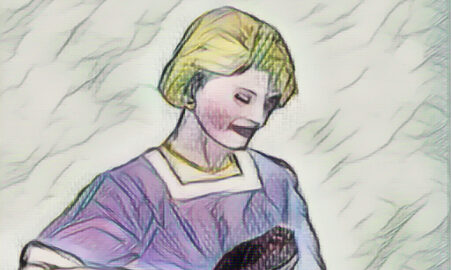
In fact, there was a strange sort of pride in it all. Parents and teachers would openly brag about how hard they smacked children and what they used. You’d hear mothers on the estate, standing outside with their curlers and housecoats, laughing as they compared notes. “You should’ve seen the mark my wooden spoon left on his legs!” one would say, holding up her own battered spoon like a trophy. Another would chime in, “Oh, I use my slipper—leaves a proper red print, that does!” Sometimes they’d even show off the implements, waving a cracked leather belt or a thick hairbrush, boasting about how many times they’d brought it down in a single session. The air would fill with the smell of tea and cigarettes, the clink of mugs on the table, and the low hum of the radio playing The Kinks in the background.
The tone was rarely angry or ashamed—it was almost competitive, a badge of honour among parents. They’d swap stories over milky tea and cigarettes, voices rising with laughter as they described the latest hiding they’d given out. “Patty gives her kids a good hiding too—she uses the belt,” my mum would say, and the others would nod approvingly, sometimes even offering tips: “Try the wooden spoon, it stings more than you’d think!” It was as if the more inventive or forceful the punishment, the more respect you earned among your peers. I remember the way my mother’s eyes would light up when she told these stories, her voice taking on a note of pride that made my stomach twist.
Teachers were no different. In the staff room, they’d boast about their favourite canes or rulers, sometimes even giving them nicknames. “Old Whippy’s done the trick again,” a teacher might say, grinning as he tapped the cane against his palm. Others would talk about how many kids they’d lined up for a round of plimsoll smacks, or how a chalkboard pointer could silence a whole class. There was a sense of camaraderie in these conversations, a shared understanding that being strict—and being seen as strict—was part of the job. The smell of chalk dust and instant coffee hung in the air, mingling with the nervous energy that seemed to seep from the walls.
My own mother was a tough, anxious woman, always on edge, and quick to lose her temper. Her moods were like the weather—unpredictable, sometimes stormy, sometimes eerily calm. I spent much of my childhood afraid of her, never knowing what might set her off. The sound of her footsteps in the hallway could make my heart race, and I learned to read the tension in her voice, the way her jaw tightened when she was about to snap.
I used to hide in the airing cupboard to avoid a smack, curling up among the warm towels and the faint scent of fabric softener, listening for the creak of the floorboards outside. My mother would often threaten me and my brother with a belt, waving it about as a warning, the leather hissing through the air. It made me a painfully shy and nervous child, always watching, always waiting for the next outburst. Even now, the sight of a belt hanging on a hook can make my stomach clench.
I remember once, we were staying at a hotel because of my dad’s work—a rare treat, the kind of thing we’d talk about for weeks beforehand. The hotel pool was bright and echoing, the air thick with the smell of chlorine and the shrieks of other children. All the other kids were splashing about, their laughter bouncing off the tiled walls, but I didn’t want to go in—I hated the feel of the rubbery swimming cap, the way it pinched my scalp, and the cold, chemical tang of the water. My mum got frustrated, her patience wearing thin as she tried to force me into my swimsuit in the women’s changing room, her hands rough and insistent.
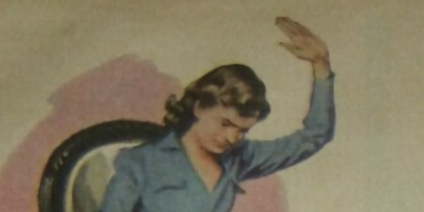
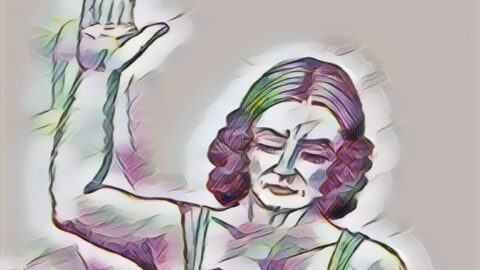
When I wouldn’t cooperate, she lost patience. She yanked my hair in front of everyone, her fingers twisting painfully at the roots, then smacked me hard on the backside, not caring who saw or heard. The sound echoed off the tiles, sharp and humiliating, and I felt every pair of eyes in the room turn towards us. The sting of the slap was nothing compared to the burning shame that flooded my cheeks.
(pause) The memory of those moments is still vivid, etched into my bones. There was always a tense, prickling silence before it happened—a pause in the air, my heart thudding in my chest, the world shrinking to just me and my mother’s looming presence. I’d feel her grip tighten on my arm, the roughness of her fingers digging into my skin, the faint scent of her perfume mixed with cigarette smoke. The anticipation was almost worse than the smack itself: the dread, the heat rising in my face, the sting of humiliation as I realised there was no escape. Then, the sharp crack of the slap, echoing in the tiled room, followed by a burst of pain that seemed to bloom across my skin. My breath would catch, and for a moment, the world would go silent except for the ringing in my ears and the sound of my own stifled sob. Sometimes there’d be a second or third smack, each one landing with a dull, fleshy thud, the pain building in hot, stinging waves. Tears would spring to my eyes, but I’d try to hold them back, swallowing the lump in my throat, desperate not to give her the satisfaction of seeing me cry. The shame was almost physical—a burning in my cheeks, a wish to disappear, to melt into the floor. Afterward, there’d be a heavy, awkward silence, broken only by my sniffling and the distant sounds of other children playing, oblivious. My skin