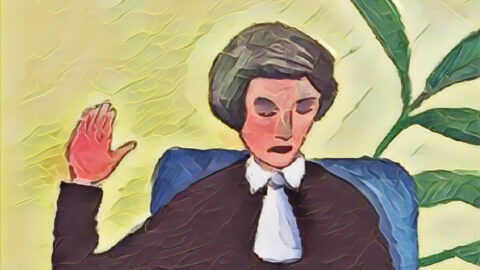
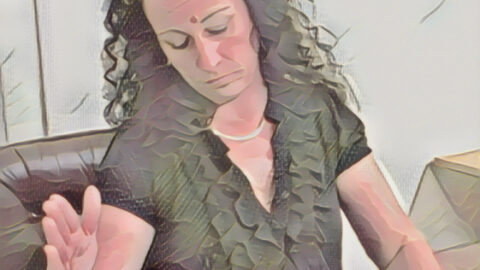
My mother was a lady of simple and proper appearance, but to me, she was the very centre of our world. She always wore a plain frock and sensible shoes, her hair neatly arranged in a tidy bun that never seemed to come loose, no matter how busy the day. Her hands were strong and gentle, always ready to comfort or to guide, and her eyes sparkled with a warmth that made even the coldest mornings feel safe. She stood tall, her back straight as a ruler, and spoke with a clear, gentle authority that filled our home with order and comfort. There was never any nonsense in her manner, and she expected us to behave well at all times. Yet, though her discipline was firm, she was never unkind. With her hands on her hips, she could quiet a room with a single look, and we all knew to mind our manners. After a lesson or a scolding, she was always the first to offer a comforting hug or a cup of strong tea, making sure we knew we were loved, even when we had been naughty. She was, in every way, the heart of our home—just as one might find in a story by Enid Blyton, where mothers are both the keepers of order and the givers of comfort. Her laughter, when it came, was like the sound of church bells on a Sunday morning—clear, bright, and full of hope.
I grew up in Blandford, Dorset, during the 1960s, in a small stone cottage nestled between rolling green hills and winding country lanes. Our village was a patchwork of thatched roofs, mossy stone walls, and gardens bursting with hollyhocks and foxgloves. The air was always tinged with the scent of peat smoke and wildflowers, and the sound of sheep bleating drifted in through the open windows. In our house, discipline was as much a part of life as the morning mist. Spankings were not rare, nor were they gentle warnings. They were real, memorable events—each one a lesson that lingered long after the sting had faded, and each one meant to teach us right from wrong. But our days were also filled with laughter, games of football in the lane, and the comforting rituals of tea and toast by the fire. My siblings and I would race down the hallway in our sock feet, sliding across the cold flagstones, our giggles echoing off the walls. Mother’s voice would call us back to order, but her eyes always twinkled with secret amusement.
The first spanking I remember is as clear as day, as if it happened only yesterday. It was a chilly autumn afternoon, and the kitchen was warm with the scent of simmering stew and baking bread. Rain tapped gently at the windowpanes, and the wireless played a cheerful tune in the background. I had taken biscuits from the food cupboard without permission, thinking I was clever and that no one would notice. But mothers always know. Mother caught me at once, her footsteps soft but certain on the flagstones. She sat on the sturdy wooden chair by the hearth, her face stern but not angry, and called me over. With a firm but steady hand, she placed me across her lap, baring my bottom. Then, with measured rhythm, she delivered ten sharp, ringing smacks—one, two, three, four, five, six, seven, eight, nine, ten—each one echoing off the stone walls. The sound was as startling as the sting. I cried out, tears streaming down my cheeks, my legs kicking in protest. When it was over, I stood up, rubbing my sore bottom, hopping from foot to foot. Mother’s eyes softened as she explained why stealing was wrong, and after my tears had dried, she wrapped me in a warm hug and poured me a cup of strong tea. I never took biscuits again without asking. The lesson was clear: actions have consequences, but forgiveness follows when one is truly sorry. That day, I learned that honesty and trust were treasures more precious than any treat.
There were three types of spankings in our home, each with its own lesson, and each as much a part of our upbringing as Sunday school or the village fête. The first was the quick smack—a single, brisk swat on the seat of our shorts, usually given in the hallway or the garden when we were too noisy or unruly. Mother would catch my eye, her lips pressed in a thin line, and with a swift motion, land a smack that made a sharp sound but barely stung through the thick wool. It was more a warning than a punishment, a reminder to behave. The embarrassment of being corrected in front of siblings or neighbours was often worse than the sting itself. If it happened while I was in the bath or getting dressed, the smack landed on bare skin, making me yelp and jump, but the sensation faded quickly—just a dull ache that vanished as soon as I pulled my shorts back up. The lesson was simple: mind your manners, or be reminded. Sometimes, after a quick smack, Mother would ruffle my hair and wink, as if to say, “All is forgiven, but do better next time.”
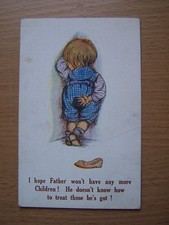
The second type was the bare bottom hand spanking, the most common form of discipline until we reached our teens. These were never given in anger. Mother would find a chair—sometimes in the kitchen, sometimes in the parlour, or even in the middle of the village shop if I had misbehaved in public. She would calmly call me over, sit down, and guide me across her lap. My shorts and underwear would be pulled down, exposing my bare skin to the cool air. Then, with a steady hand, she would deliver twelve hard, rapid smacks—one after another—each one stinging fiercely. There was no shouting, just the rhythmic sound of her palm meeting flesh and my muffled cries. My bottom would burn bright red, the heat lingering for hours, but the marks faded by bedtime. I remember once, at age seven, being spanked in the shopping mall for running off. The shock of public discipline made me behave at once. These spankings were regular—perhaps once a month—and always ended with a quiet talk and a gentle embrace. The lesson: respect rules, and learn from your mistakes. Afterward, Mother would often sit with me by the fire, stroking my hair and telling me stories of her own childhood, reminding me that everyone makes mistakes, but it’s how we learn from them that matters.
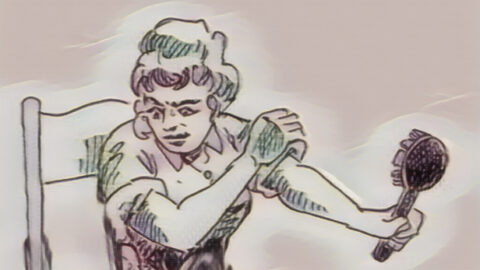
The third, and by far the most severe, was the hairbrush. This was reserved for the gravest offences—lying, endangering others, or acts of real defiance. The hairbrush was a heavy, solid thing with a wooden back that Mother kept on the mantel, a silent reminder of the seriousness of some rules. When the hairbrush came out, we knew we were in real trouble. The ritual was solemn. Mother would call me into the parlour, her face grave, and instruct me to bend over the arm of the chair. Over my shorts or pyjamas, she would deliver fifteen hard, deliberate smacks—each one landing with a dull, punishing thud. The pain was deep and lasting, leaving my bottom sore and tender for days. I would bite my lip, trying not to cry, but the tears always came. Afterward, Mother would sit with me, her hand resting gently on my shoulder, explaining why the punishment was necessary. The lesson: some mistakes carry heavier consequences, and it is best not to repeat them. Yet even then, her love was unwavering. She would hold me close, whispering that she believed in my goodness, and that every day was a new chance to do better.
My worst spanking came when I was nine, for playing with matches in the garden with my friend Joe. The day was bright, the grass damp with dew, and the air filled with the distant sound of church bells. Joe and I had found a box of matches behind the shed, and curiosity got the better of us. We struck a match, watching the tiny flame flicker in the breeze, feeling both thrilled and afraid. Mother caught us just as we struck a match behind the shed. Without a word, she marched me to the patch of grass, sat on the stone step, and pulled me over her knee. My shorts were pulled down, and the spanking began—fifteen hard, stinging smacks, each one sharper than the last. I cried so hard my tears mixed with the dirt, making a muddy patch beneath my face. Mother’s voice was calm but firm as she told me how dangerous fire could be, how easily it could destroy everything we loved. She spoke of the cottages, the fields, and the people who depended on us all to be careful. When it was over, she held me close, her apron smelling of flour and coal, and let me sob into her shoulder. The lesson was burned into me as surely as the sting in my bottom: some rules exist to keep us safe, and breaking them brings real pain—but love and forgiveness are never far behind. That evening, as the sun set behind the hills and the village settled into quiet, Mother tucked me into bed, her hand cool on my forehead. She whispered, “You are my precious boy. I want you safe, always.” I drifted to sleep, the lesson and her love wrapped around me like a warm blanket.
(pause) Looking back, I see now that every lesson, every scolding, and every hug was a thread in the tapestry of my childhood. My mother’s discipline was never about anger or punishment for its own sake—it was about teaching us to be kind, honest, and brave. She taught us that mistakes are part of growing up, but so are forgiveness and second chances. Our home was filled with the music of laughter, the comfort of strong tea, and the steady, loving presence of a mother who wanted nothing more than for her children to grow into good people. And so, as the years passed and the village changed, the lessons I learned in that little stone cottage stayed with me, guiding me through life’s challenges and joys. For in the end, it was not the spankings I remembered most, but the love that followed, and the knowledge that, no matter what, I was always safe at home.