Once upon a time, in the cheerful little village of Thornton-le-Dale, nestled in the heart of Yorkshire, there lived a sensible and loving mother and her children. The village was a patchwork of stone cottages, winding lanes, and gardens bursting with hollyhocks and sweet peas. On Sunday mornings, the gentle chime of church bells mingled with the laughter of children and the distant whistle of a steam train.
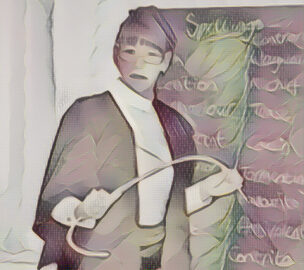
The mother was always neat and tidy, dressed in a plain cotton frock and a crisp apron, her hair pulled back in a no-nonsense bun. Her shoes were sturdy, and her hands were always busy—scrubbing the flagstone floors, folding the washing, or pouring strong Yorkshire tea into china cups. She moved briskly from room to room, humming softly as she dusted the mantelpiece or polished the brass doorknobs. Her eyes were wise and kind, and her voice was gentle, yet firm.
Each morning, the children would tumble out of bed, their feet cold on the flagstones, and hurry to the kitchen where the kettle sang on the Aga and the scent of toast and marmalade filled the air. The mother would check that everyone had washed behind their ears and brushed their hair before breakfast. After a hearty meal, she would send them off to school with a kiss on the forehead and a brown paper bag from the village shop—perhaps a Wagon Wheel or a toffee for a treat.
(short pause) The village itself was alive with the simple joys of daily life. Mothers in headscarves and floral pinnies chatted by garden gates, while fathers cycled to work on Raleigh bicycles. Children played hopscotch on the pavement, their laughter echoing as they chased after the ice cream van or swung high on the creaky swings in the playground. The air was filled with the scent of cut grass, coal smoke, and the distant tang of rain on stone.
The mother believed that children should be kind, honest, and helpful. She taught her little ones to say “please” and “thank you,” to help carry the shopping, and to look after their younger siblings. If a child was naughty, she never shouted or lost her temper. Instead, she would say, “Come here, please. We must talk about what you have done.” Her voice was calm, but her gaze was steady.
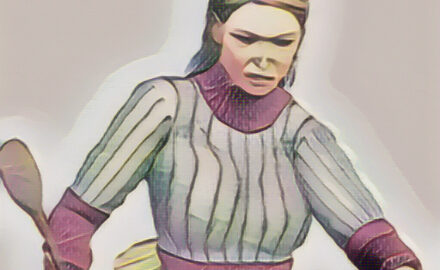
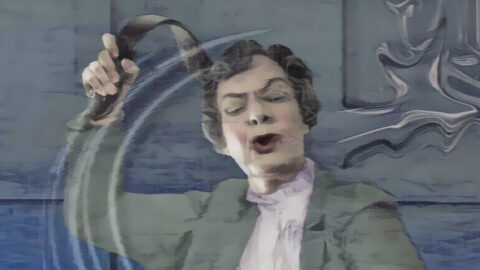
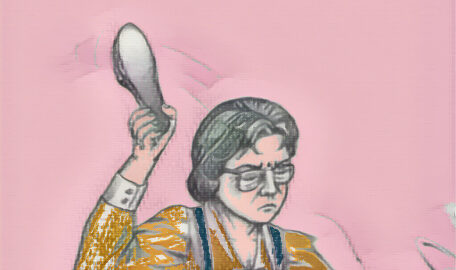
One blustery afternoon, the youngest boy, Tom, forgot his mother’s warning and played football near the garden. The ball crashed into a row of flowerpots, sending soil and petals everywhere. The mother called Tom into the kitchen, where the clock ticked quietly and the kettle steamed. She knelt beside him and explained, in her gentle voice, why it was wrong to disobey. Then, she took the wooden spoon from the drawer and said, “You must have three smacks, so you remember to listen next time.” Tom bravely bent over her knee, and she gave him three firm smacks—one, two, three. Each one stung, but the mother was never cruel. When it was done, she set the spoon aside, smoothed his hair, and gave him a warm, loving hug. Tom’s eyes filled with tears, but he knew his mother loved him very much.
Another time, at the tea table, Tom was rude to his sister, snatching the last biscuit and making her cry. The mother looked at him with her wise eyes and said, “That was not kind. You must learn to speak gently.” She led him to the quiet sitting room, where the fire glowed softly and the wireless played brass band music. She explained why kindness was important, and then she said, “You shall have four smacks, so you remember to be gentle.” Tom lay across her lap, and she gave him four firm smacks—one, two, three, four. Afterwards, she hugged him tightly and told him she was proud when he tried his best.
(short pause) Sometimes, the lessons were not about smacks at all. When Tom’s older sister, Mary, forgot to feed the hens, the mother did not scold her. Instead, she took Mary by the hand and together they walked to the henhouse, gathering eggs and scattering grain. “We must care for those who depend on us,” the mother said softly. Mary nodded, her cheeks pink with shame, but she remembered the lesson long after.
On rainy days, the children would gather around their mother in the sitting room, listening to stories or helping her darn socks by the fire. She taught them to sew on buttons, to polish their shoes, and to write thank-you notes to Auntie Mabel. When quarrels broke out, the mother would separate the children and speak to each one quietly, helping them to see the other’s point of view. “It is easy to be cross,” she would say, “but it is braver to forgive.”
At bedtime, the mother would tiptoe into each child’s room, smoothing the blankets and checking if they were wet or dry. She would whisper a gentle goodnight, her hand cool on their foreheads, while the distant laughter of teenagers and the hum of a passing Morris Minor drifted through the open window. The children felt safe and loved, knowing their mother was always near.
(short pause) The mother always made sure her children understood why they were punished or corrected. She never acted out of anger, but always out of love and a wish to help them grow into good, kind people. The children learned that it was important to listen, to be gentle, and to do what was right, even when it was difficult.
And so, in the little village of Thornton-le-Dale, the children grew up happy and safe, surrounded by the warmth of their mother’s love and the gentle rhythms of village life. They learned that discipline, when given with fairness and kindness, helped them to become thoughtful and good, and that was the greatest lesson of all.