(gap: 2s) Once upon a time, nestled in a row of pebble-dashed council houses on the edge of Surrey, there lived a little boy and his elder sister. Their world was a patchwork of small wonders: the communal green where the grass grew thin beneath the pounding of young feet, the battered cars that lined the curb like silent sentinels, and the distant, echoing laughter from the concrete playground. Their home, though modest, was always immaculate—a testament to their mother’s tireless pride. She polished the secondhand furniture until it gleamed, straightened the imitation wood paneling, and kept the net curtains spotless, as if the world outside might judge her by the shine of her windows.
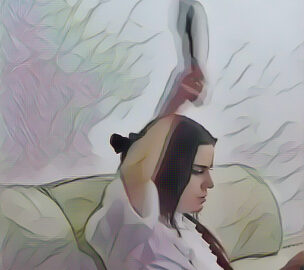
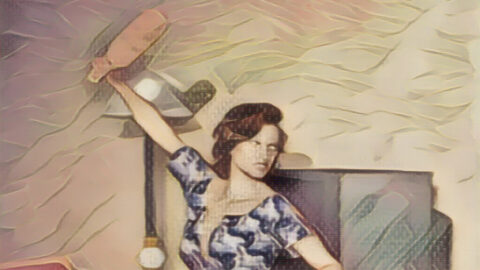
The children’s mother was a woman of quiet strength, her heart both gentle and unyielding. She wore her polyester blouses and skirts with a dignity that belied their age, and her eyes, sharp and watchful, missed nothing. She had learned resilience early—her own mother had passed away when she was just a girl, leaving her to care for a younger sister in a world that offered little comfort. In those days, discipline was a language of love, spoken with a wooden hairbrush polished smooth by years of use. When her little sister misbehaved, she would gently but firmly place her over her knee and deliver three measured smacks, always explaining, “This is to help you remember to be good.” The ritual was never cruel, but it was never in doubt. Years later, when she became a mother herself, she kept the hairbrush tucked away in a drawer, a relic of her own childhood, and used it with the same careful purpose on her son. Each time, she would kneel beside him, her voice soft but unwavering: “I love you, but you must learn to do what is right.” The boy, blinking back tears, would feel the sting more in his heart than on his skin, and his mother’s embrace afterward was always warm and forgiving.
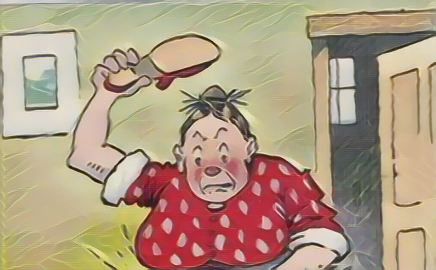
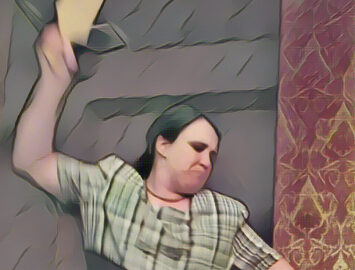
The little boy’s memories of those lessons were vivid and complex—a mixture of fear, shame, and a deep, aching desire to please. Sometimes, his aunt would visit, sitting quietly on the settee, her presence a gentle reminder of the family’s history. She would offer him a knowing smile, her eyes filled with understanding, as if to say, “I have been where you are.” As the boy grew, his mother sensed the change in him—the way his shoulders squared, the way his voice deepened with the first hints of adolescence. She decided he was now too old for the hairbrush. Instead, she relied on her voice, which could cut through the din of any quarrel, and on the family slipper—a faded, scuffed thing that seemed to carry the weight of generations. The slipper was always close at hand: perched on a chair, tucked under her arm, or peeking from her handbag as a silent warning. If the boy or his sister crossed a line, their mother would call them to her, her face stern but her eyes glinting with a mixture of exasperation and love. Two firm smacks with the slipper, never more, always followed by a careful explanation and a tight, reassuring hug. “We must learn from our mistakes,” she would say, her voice gentle again, and the children would nod, chastened but secure in her affection.
Life outside the home was a different story. The children attended a sprawling brick school at the edge of the estate, its corridors echoing with the clatter of shoes and the shouts of children. The classrooms smelled of chalk dust and floor polish, and the playground was a battleground of games and whispered secrets. The teachers were a stern lot, but none inspired more fear than Miss Evelyn, the Head of Year. Miss Evelyn was a relic of another era—her hair scraped back into a severe bun, her face a map of lines etched by years of discipline. She moved through the halls with a purposeful stride, her eyes sharp as a hawk’s, her lips pressed into a thin, unsmiling line. Nearing retirement, she had little patience for childish excuses or mischief. Her reputation was legendary: for the girls, a battered old slipper waited in her desk drawer; for the boys, a long, polished cane. She made no secret of her methods, and the mere mention of her name could silence a room. If a child broke the rules, they would be summoned to her office—a place of dread, where the air seemed colder and the walls closer. Miss Evelyn delivered punishment with a cold, mechanical efficiency, her voice clipped and emotionless: “This is what you deserve for your behaviour.” There was no comfort, no explanation, only the certainty of consequence.
The little boy’s first visit to Miss Evelyn’s office was seared into his memory. He had spent hours on his science homework, carefully drawing the planets with colored pencils, his tongue poking from the corner of his mouth in concentration. His mother, beaming with pride, had shown the homework to his father that evening, but in the morning rush, she forgot to return it to his satchel. When the teacher, Mr. Jenkins, asked for the homework, the boy’s heart sank. He searched his bag, his desk, his pockets—nothing. He tried to explain, his voice trembling, but Mr. Jenkins only frowned and wrote a note, sending him to Miss Evelyn. The walk to her office felt endless, each step heavier than the last. Outside her door, other boys waited, some feigning bravado, others pale with dread. When his turn came, Miss Evelyn listened to his stammered explanation with a stony face, then cut him off with a curt shake of her head. “It is your responsibility,” she said, her voice cold as marble. She pointed to the heavy wooden desk. “Bend over.” The boy’s hands shook as he gripped the edge, his heart pounding so loudly he thought she must hear it. Miss Evelyn took up the cane, her movements precise and unhurried. Four sharp, stinging smacks landed across the seat of his trousers, each one a jolt of pain that left him gasping. The first made him flinch, the second brought tears to his eyes, the third made him bite his lip until it bled, and the fourth left him blinking furiously, determined not to cry. Miss Evelyn stood over him, her face unreadable. “Let that be a lesson to you,” she said, her tone final. There was no comfort, no gentle word—only the expectation that he would remember.
The boy stumbled from the office, his cheeks burning with shame and his eyes stinging. He hurried to the playground, where the laughter of other children seemed impossibly distant. The pain faded quickly, but the lesson lingered, heavy and unspoken. Some boys, he knew, visited Miss Evelyn more than once, each time receiving four smacks with the cane. The girls, when sent to her, would receive the slipper—four firm smacks, each one delivered with the same unwavering resolve. There was one boy, always in trouble, who endured four smacks every day for a week, his bravado slowly crumbling under the weight of discipline. The teachers insisted that rules were meant to keep everyone safe and happy, but to the children, it often felt as though order mattered more than kindness. The boy learned to keep his head down, to double-check his satchel, to avoid the sharp gaze of Miss Evelyn whenever possible.
When the boy returned home that day, his mother saw the redness in his eyes and the stiffness in his walk. She knelt beside him, her hands gentle on his shoulders, and offered to write a note to the school. But the boy shook his head, his voice small but resolute. “I want to show I can be brave,” he whispered, “and learn from my mistake.” His mother pulled him into a tight embrace, her voice thick with pride. “I am proud of you for telling the truth and trying your best,” she said, her words a balm to his wounded spirit. In that moment, the boy understood that love could be both fierce and forgiving, that mistakes were not the end but a chance to begin again.
And so, in their little house on the edge of Surrey, the boy and his sister grew up surrounded by the quiet rhythms of family life—the scent of polish in the air, the laughter that echoed through the narrow lanes, the ever-present slipper that was both a warning and a promise of forgiveness. They learned that even when mistakes were made, there was always a way back, always another chance to do better. With every lesson, every hug, every stern word softened by love, they became thoughtful and responsible, just as their mother had hoped. The memories of childhood—painful, joyful, complicated—wove themselves into the fabric of who they were, shaping them into adults who understood that kindness and discipline could walk hand in hand, and that the truest lessons were those learned at home, beneath the watchful eyes of a mother who loved them fiercely.