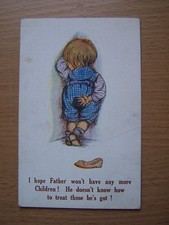
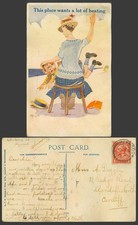
(gap: 2s) In the soot-stained streets of Beatham, Nottingham, during the 1960s and early 1970s, childhood was a tapestry woven with the threads of discipline, laughter, and the ever-present scent of coal smoke drifting from the distant chimneys. The terraced houses stood shoulder to shoulder, their bricks blackened by decades of industry, and the narrow streets echoed with the shouts of children at play—marbles clacking in the gutter, hopscotch chalked on the pavement, and the occasional shriek as a game of tag spilled into the road. Discipline, in those days, was as much a part of growing up as scraped knees and muddy shoes. Spanking, though less frequent than in the days of our grandparents, was a familiar shadow in every home, lurking just behind the lace curtains and the ticking of the wind-up clock. Most children, myself included, had felt the sting of a well-aimed slipper or belt at least once, and though public chastisement was rare—reserved for the most dreadful tantrums—the threat of it lingered in the air, as real and tangible as the coal dust that settled on every windowsill.
At school, the cane had been banished, but the teachers’ tempers had not. The classrooms, with their high windows and rows of battered desks, were ruled by men and women whose voices could silence a room with a single word. On occasion, a miscreant would receive a single, sharp slap across the buttocks, usually during the chaos of break time, when the playground rang with laughter and the shrill whistle of the headmaster. After the Iron Curtain fell, schools grew gentler, and I remember those years with a fondness that softens the memory of discipline. The lessons learned were not only of arithmetic and grammar, but of respect, humility, and the curious mixture of fear and affection that defined our childhoods.
I was a quiet, obedient child, blessed with parents whose love was as constant as the ticking of the wind-up clock on our mantelpiece. My mother, ever attentive, ensured my needs were met and trouble was kept at bay. She spoke to me with calm reason, explaining the world’s mysteries and guiding me with gentle words. Her voice, soft yet firm, could soothe away the worst of my worries, and her hands—always busy with some task—were as skilled at comforting as they were at mending torn trousers or baking a perfect loaf of bread. My father, warm and supportive, was a steady presence, his laughter rumbling through the house like distant thunder. He worked long hours, but when he returned, he brought with him a sense of safety and belonging. I cherished my closeness with them both, and the evenings spent by the fire, listening to stories or the gentle strains of the wireless, remain among my fondest memories.
I excelled at school, attended music lessons, and by the age of seven or eight, could play the piano and compose simple melodies. The upright piano in our front room, its keys yellowed with age, became my companion on rainy afternoons. My parents granted me freedom to play, and unlike some of my friends, I was seldom grounded or denied my pleasures. The world outside our door was a place of adventure, and I roamed the ginnels and back alleys with a sense of wonder, always returning home in time for tea, my pockets full of marbles and my mind brimming with stories.
Yet, I was not without fault. My fondness for discussion sometimes became stubbornness, and though always respectful, I could be persistent to the point of exasperation. My parents, especially my mother, met my obstinacy with patience and gentle lectures, her words weaving lessons that lingered long after the conversation had ended. Honesty was our family’s golden rule, and my parents promised always to listen if I found myself in trouble. There was a quiet dignity in their approach, a belief that children should be guided, not broken, and that love was the surest path to understanding.
In all, I received precisely ten spankings during my childhood, each one delivered by my mother. She made it clear that these were not acts of anger, but lessons in right and wrong. Each time, she would warn me, her voice steady, and explain the reason for my punishment. The ritual was always the same: a quiet word, a moment of reflection, and then the summons to her bedroom, where the battered slipper or soft belt awaited on the neatly made bed. The pain was never severe, and forgiveness was swift—my mother’s embrace came before the day’s end, and my father’s the next morning. They seemed to regret the necessity of discipline, and always comforted me afterwards, their arms warm and reassuring, their words gentle and kind.
I was spared other forms of punishment—no standing in corners, no humiliation. My much older brother, tall and clever, was never spanked, only scolded on rare occasions. He watched my tribulations with a mixture of sympathy and amusement, offering quiet advice when he thought I needed it. Our home was a place of order and affection, where discipline was measured and never cruel.
My first spanking remains vivid in my memory, not for its pain, but for the lesson it imparted. I was four years old, and the offence was a stubborn refusal to finish my meal—a plate of boiled cabbage and potatoes, the smell of which still haunts me. My mother, gentle yet resolute, explained the importance of eating, but I would not yield. She fetched a small, soft belt from her wardrobe—a belt I had only seen used to tie parcels at Christmas. The bedroom was cool and quiet, the afternoon light slanting through the curtains, dust motes dancing in the air. Sitting on the edge of my bed, her face serious but not unkind, she told me calmly that I would receive three smacks to help me remember to listen. I lay across her lap, my heart fluttering with nerves and a touch of shame. The belt landed three times, each smack sharp enough to sting and command my attention. I gasped, more from surprise than pain, and a single tear escaped. My mother’s hand rested gently on my back as she spoke softly, assuring me of her love and her wish for me to grow up thoughtful and kind. The moment passed swiftly, and within minutes, I was in her arms, comforted and forgiven. The lesson was clear: actions have consequences, but love is never far away.
Another time, when I was five, I lay face down on the bed as my mother delivered two firm smacks with the belt, her voice tinged with sadness as she lectured me. The room was filled with the scent of lavender polish and the faint crackle of the wireless in the next room. She never gave more than two at a time, and always with reluctance. The lesson was simple: disobedience brings sorrow, not only to the child, but to the parent as well. I remember the way her hands trembled as she put the belt away, and the way she lingered by my side, smoothing my hair and whispering that she hoped I would understand.
From the age of six, I began to resist, refusing to get into position for my punishment. My mother never forced me. Instead, she would wrap her arms around me and deliver three quick smacks from behind, never using her hand, for she believed hands were meant for loving. Each time, the lesson was the same: resistance only delayed the inevitable, and honesty was always best. The struggle was brief, and afterwards, we would sit together in silence, the air heavy with unspoken words, until at last she would sigh and pull me close, her forgiveness as certain as the sunrise.
I cannot recall the reasons for every spanking, though I am certain I deserved them. What I disliked most was the anger that sometimes accompanied them—a flash in my mother’s eyes, a tightening of her lips. Looking back, I regret not submitting more willingly, especially to my mother, who always sought to avoid conflict. The lesson here was humility: pride and stubbornness serve no one. I learned to swallow my pride, to accept correction with grace, and to seek reconciliation rather than victory.
Once, when I was seven or eight, I pleaded with my mother not to spank me, promising obedience. She put the belt away at once, her eyes softening as she knelt beside me. She never wished to teach me a lesson through pain, only to ensure I understood the importance of obedience. From her, I learned the generosity of a parent’s heart—the willingness to forgive, to trust, and to believe in the goodness of a child’s promise.
On one occasion, I hid most of the belts in the wardrobe, hoping my parents would forget about spanking if they could not find a belt. The wardrobe was a cavernous thing, its doors creaking ominously, and I tucked the belts behind stacks of winter jumpers and old school uniforms. Years later, my mother discovered them and laughed, asking if they had truly spanked me so hard. I had to admit they had not. The lesson was that avoidance is futile, and honesty is always rewarded. We laughed together, the years between us bridged by a shared memory and the knowledge that love had always been the stronger force.
Despite the unpleasantness, I learned to separate the emotional sting from the physical. Sometimes, the sensation was oddly bearable—a sharp reminder that faded quickly, leaving only a faint warmth and a sense of having paid one’s dues. As a child, I even wondered what it would be like to receive a spanking on my bare bottom, but I never wished to upset my mother by provoking such a punishment. The lesson was curiosity tempered by respect, and the understanding that some boundaries are best left untested.
One winter morning, when I was eight and home sick, I refused to put on a warmer shirt. The house was cold, the windows frosted with delicate patterns, and my breath hung in the air like smoke. My mother threatened a spanking, but left to cook. After a while, I arranged the scene myself—placing the belt on the bed, lying face down, and calling her in. She understood, and gave me five brisk smacks, each one sharp and clear. The sound echoed in the quiet room, and I bit my lip, determined not to cry. Afterwards, she kissed my head and returned to the kitchen, her footsteps fading down the hallway. I felt content, for she was not angry, and the pain was fleeting. The lesson was that sometimes, we seek boundaries to feel secure, and that love can be found even in the most unlikely moments.
I never rubbed my bottom after a spanking, wishing to keep the tingle as long as possible—a strange badge of honour, a reminder that I had faced the consequences and survived. Afterwards, I placed the belt in my own wardrobe, almost as a trophy. I wore it in my shorts when I was ten, strutting about the house with a sense of pride. I received that belt a few more times for disobedience, but never hid it again. Spankings ceased at age ten, and threats ended by twelve. My parents realised that punishment wounded my feelings more than my body. The lesson was that love, not fear, is the true guide, and that the bonds between parent and child are strengthened by forgiveness and understanding.
Throughout my life, I have enjoyed a warm, loving relationship with my parents. They are both elderly now, but remain in good health, their eyes bright with the wisdom of years. The lessons of my childhood, learned through discipline and affection, have shaped me into the person I am today. I look back on those days with gratitude, knowing that every spanking, every gentle word, and every embrace was a thread in the tapestry of my life—a tapestry woven with love, resilience, and the quiet certainty that I was cherished beyond measure.