My dearest friend in childhood was a girl named Naomi. Naomi was a year older than I, with a wild mane of curly brown hair that always seemed to escape her neat ponytail, and a delightful sprinkling of freckles across her nose. She was tall for her age, with long, rather gangly limbs, but her smile was bright and her laughter could fill the whole house. She lived only a few streets away, in a cheerful home with a red front door and a garden brimming with daisies and marigolds. One golden afternoon, I was invited to her house for a sleepover—a treat I had anticipated all week.
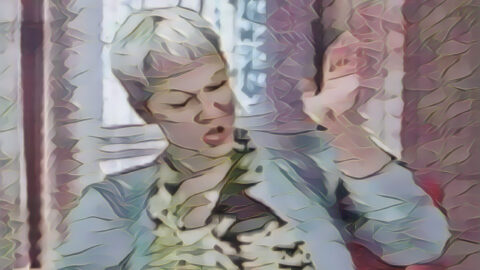
Naomi’s mother, Mrs. Evans, was the sort of lady who brought warmth and cheer wherever she went. She was in her early forties, with soft, wavy chestnut hair usually tied in a loose bun, and gentle hazel eyes that crinkled kindly when she smiled. She was tall and sturdy, with a gentle but firm manner, and she always wore pretty floral aprons over her dresses. Her laughter rang through the house, and she had a way of making us feel both loved and gently guided. That evening, she welcomed me with a soft hug and a plate of homemade biscuits, her eyes twinkling as she asked about my day. After a while, she sent us outside to play while she prepared supper, her voice following us with a gentle reminder, “Do not get into mischief, girls!” The house was quieter than usual, for Naomi’s father, Mr. Evans, a tall, quiet man with a bushy moustache and a fondness for gardening, was away on business, leaving just the three of us together.
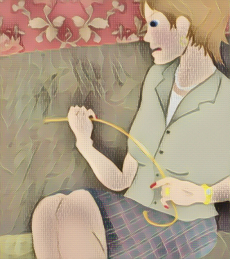
Outside, the garden was filled with the scent of freshly cut grass and the gentle hum of bees. Naomi and I ran about, our laughter mingling with the soft rustle of leaves. I, Caroline, was a small, fair-haired girl with a round face and wide blue eyes, always a little more cautious than Naomi, but eager to join in her adventures. Soon, Naomi found a pair of battered tennis racquets and a faded green ball in the shed, and we began a lively, if rather disorderly, game of tennis. Our version was not quite like the real thing, but we did not mind—each wild swing and missed shot only made us laugh all the more.
In our excitement, we did not think how close we were to the house. The porch, with its glass door shining in the sunlight, was only a few feet away. Naomi sent the ball flying towards me, and I, wishing to impress her, struck it back with all my might. The ball soared past Naomi, missing her by a wide margin, and struck the glass door with a sharp, echoing crack. We stood quite still, our hearts thumping, as we saw a jagged line—about eight inches long—splinter across the glass. It had not shattered, but the damage was plain to see.
In a moment, Mrs. Evans appeared at the back door, her face clouded with concern and a touch of disappointment. She stood tall in the doorway, her floral apron dusted with flour, and her hazel eyes serious. “You naughty girls!” she exclaimed, her voice stern but not unkind. “Naomi, how many times have I told you not to play so close to the house?” We stood in silence, ashamed and unable to meet her gaze. “Now, which of you struck the ball into the glass?” she asked. My cheeks burned as I raised my hand, admitting my fault. “Well, you must both be punished, for you were both playing where you ought not. Go to your room at once!”
We hurried upstairs, our feet scarcely touching the steps, and went into Naomi’s room—a cosy place with floral curtains, a patchwork quilt, and shelves lined with well-loved books and soft toys. Naomi’s room was always a little untidy, with clothes draped over the chair and drawings pinned to the walls. We did not speak at first, each of us lost in our own anxious thoughts. From downstairs, we could hear the faint clatter of dishes and what sounded like a one-sided conversation. I supposed Mrs. Evans was on the telephone, perhaps telling Mr. Evans about the broken glass or seeking advice from a neighbour.
Time seemed to pass ever so slowly as we waited, the air thick with anticipation. Every creak of the floorboards made us jump. At last, we heard footsteps coming up the stairs, slow and deliberate. The bedroom door opened, and Mrs. Evans entered, her expression calm but serious. In her right hand, she held a table tennis bat—small and wooden, but somehow far more formidable than it had ever seemed before. Naomi’s eyes filled with tears at the sight, and my own stomach twisted with dread.
In one corner of the room stood Naomi’s desk, a sturdy wooden piece where she did her schoolwork. Mrs. Evans moved it to the centre of the room, facing the bed where we would sleep that night. She sat down, her posture calm but resolute, and looked up at us. I must have looked as frightened as I felt, for she gave me a small, understanding nod. “Yes, Caroline, you must be punished as well. In fact, you shall go first. Come here to me.”
I stood quite still, my feet refusing to move. My own mother, Mrs. Parker, was a petite lady with short, straight blonde hair and a gentle, almost timid manner. She rarely smacked me, preferring quiet talks and gentle warnings, and the thought of being punished by someone else’s mother was both bewildering and frightening. Looking back, I am still surprised my mother agreed to it, but perhaps she believed I should respect the rules of my friend’s home.
When I did not move, I braced myself for a scolding, but instead Mrs. Evans’s face softened. She stood, crossed the room, and gently took my hand. “Come along, dear. Let us get this over with, shall we?”
(short pause) With a firm but gentle hand, Mrs. Evans guided me to stand at her right side. She explained, in a calm and steady voice, “You must learn,