In the world of home and family, the name Mrs Beeton is synonymous with wisdom and guidance. Yet, few know of her husband, Samuel, a pioneering publisher whose work also profoundly shaped the domestic sphere. His magazines were a cultural force, bringing new ideas directly into the parlours of middle-class England. In this article, we explore not only their lives but the lessons imparted to children, always with care and a sense of moral duty.
Isabella Mayson became Mrs Beeton in 1856, and her monumental Book of Household Management followed six years later. Their early years were a tapestry of joy and heartbreaking sorrow, including the loss of two children. Yet through this adversity, Isabella’s resolve was forged, and she contributed her considerable talents to her husband’s publications, always upholding the cherished values of home and family.
After a personal tragedy, Isabella began writing for The Englishwoman’s Domestic Magazine, a publication dedicated to nurturing contentment and virtue within the home. Its pages offered advice and encouragement to women, guiding them in their important roles.
Following Isabella’s untimely passing in 1865, a grief-stricken Samuel Beeton faced mounting financial hardship. In this challenging period, the magazine’s correspondence columns took on a new significance, becoming a forum to discuss the most intimate challenges of family life, including matters of discipline, with the aim of fostering good character and respect in children.
From 1867, letters about corsetry and the discipline of children became prominent. For the first time, fathers and mothers alike shared their experiences, always stressing that any correction was given with love and a desire to teach right from wrong.
A concerned mother, at her wit’s end with her two spirited daughters, once asked how best to guide them away from their willfulness. The advice offered was clear: a firm, well-considered spanking, delivered calmly and with explanation, could serve as a valuable lesson, instilling respect and understanding.
A teacher wrote, ‘I recommend a measured spanking for the eldest, as an example to the younger ones. Such discipline, when given thoughtfully, helps children appreciate the importance of obedience and family harmony.’
A schoolmistress agreed, noting that such discipline, when applied with care and dignity, encourages children to reflect on their actions and inspires a genuine desire to strive to do better.
One father, a widower left to raise his daughters alone, confessed his initial uncertainty in his new role. He found that a gentle but firm approach, including the occasional, solemn spanking, helped his children understand necessary boundaries and the importance of respect.
After consulting with family and professionals, he adopted a method of private correction in his study, always ensuring that discipline was fair, never excessive, and explained as a difficult but necessary lesson in self-control and responsibility.
Other parents shared similar views, believing that a well-timed spanking, given with kindness and a clear explanation, could help children learn from their mistakes and grow into considerate adults.
One mother advised, ‘When disobedience occurs, bring the child to a quiet room, explain the reason for the spanking, and administer it calmly. The lesson is not only in the correction but in the loving guidance that follows.’
She continued, ‘Though the child may be surprised or upset, firmness and reassurance are key. A single, well-explained punishment, sometimes witnessed by siblings, can reinforce the importance of good behaviour for the entire household.’
Another parent preferred to wait before disciplining, allowing time for reflection so the correction was an act of reason, not anger. When the moment came, the spanking was given with care, and the child was reminded that it was an act of love, meant to guide them towards better choices.
Children were sometimes given a set number of spanks, appropriate to the offence, and always followed by a conversation about how to improve. This approach, parents found, led to lasting respect and understanding.
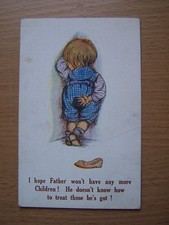
Even the youngest children, when corrected with a gentle tap from a slipper, learned that their parents’ guidance was rooted in love. For older children, a more serious spanking was reserved for repeated misbehaviour, always with the aim of teaching and not harming.
The magazine also published letters from mothers who opposed corporal punishment, expressing concern for the emotional well-being of children. These voices reminded readers that discipline should always be balanced with compassion.
A rector wrote in support of thoughtful discipline, noting that it was as important as any other lesson in the home. He believed that, when given with care, a spanking could help children develop self-discipline and respect for others.
He recalled his own childhood, where discipline was firm but fair, and credited his mother’s guidance for his strong character. He stressed that love and respect were never lost through such lessons; on the contrary, they were fortified.
He observed that both boys and girls benefited from consistent discipline, and that fairness in correction fostered a sense of justice and equality within the family.
Stories were shared of mothers known for their firm but loving approach, using the birch or slipper as a last resort, always explaining that the lesson was for the child’s own good.
In earlier times, both home and school employed such methods, and many believed that the decline in discipline had led to a loss of respect among the young. The magazine encouraged parents to consider the moral lesson behind every correction.
While some schools continued the tradition, others had moved away from corporal punishment. The debate continued, but all agreed that the aim was to guide children towards becoming responsible, caring adults.
As we reflect on these stories, let us remember that every act of discipline, when given with love and explanation, is a lesson in itself. The true goal is to nurture children who are respectful, kind, and prepared for the challenges of life.