In my youth, I formed a close friendship with a boy from my village, Simon, who was two years my junior. My own background was that of a respectable middle-class family, where good manners were expected and discipline at home was firm but fair. Thanks to this upbringing, my manners were considered impeccable by all who knew me. In those days, it was not unusual for children to receive a firm smack on the bottom when their behaviour warranted correction. Our mothers, both dignified and resolute women, took it upon themselves to instil in us the values of respect and obedience, believing that a well-timed lesson would serve us well in life.
It was somewhat uncommon, however, that our mothers were the principal disciplinarians in our homes. My own father travelled frequently for business, leaving my mother to manage the household and my upbringing. Simon’s mother, having once served as a nanny, was well-versed in the art of child-rearing and discipline. Her husband, perhaps recognising her experience, entrusted her with the responsibility of guiding Simon’s conduct.
As we grew older, Simon and I began to confide in one another about the punishments we received. We spoke in hushed tones about the occasions when our mothers deemed it necessary to correct us, sharing the details of each incident. For me, these conversations were both fascinating and oddly comforting, as I realised that others, too, faced similar lessons at home.
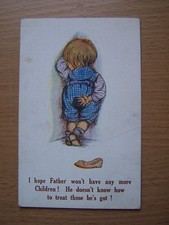
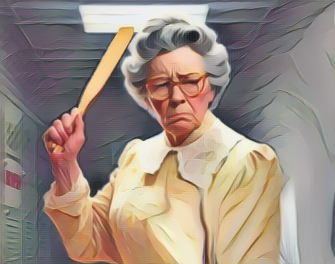
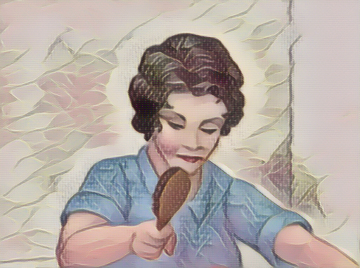
My mother, a woman who had married into the middle class, was always conscious of her position in society. There were times when it seemed she harboured aspirations above her station, carrying herself with a certain dignity and refinement that set her apart from others in our village. In contrast, my own family was of a class lower than James’s, though we both attended the local council-run school together. She took great pride in maintaining the standards of our household, ensuring that manners and decorum were always observed. Her approach to discipline reflected this sense of propriety—firm, measured, and always with the intention of upholding the values she believed befitted our social standing. I remember how she generally preferred to use her hand, delivering a swift and measured smack when I had misbehaved. The sharp sting as her palm landed firmly across my bottom would echo in the quiet room, each pause between smacks a silent lesson in obedience. On rare occasions, when my disobedience was particularly grave, she would reach for the slipper, a symbol of her resolve. The slipper, cool and unyielding, would be brought down with deliberate force, each strike leaving a tingling warmth and a lasting impression. From an early age, I found myself strangely fascinated by the rituals of discipline, especially the use of the slipper. It was not merely the act itself, but the sense of ceremony and the clear boundaries it established that drew my attention. I recall the first time I witnessed the slipper being used—its presence alone commanded respect and a certain apprehension. Over time, my curiosity deepened, and I became particularly interested in the slipper as an instrument of correction. Its unique sound, the anticipation it created, and the lasting lesson it delivered all contributed to my enduring interest in this form of corporal punishment. Simon, on the other hand, described how his mother would employ a sturdy hairbrush, the same one she had used during her years as a nanny, to administer discipline with precision and care. He recounted how she would have him bend over her knee, the bristles of the brush grazing his skin before the first sharp smack landed, each one delivered with unwavering authority until the lesson was learned.
Listening to Simon recount his experiences, I found myself deeply intrigued by the rituals and reasoning behind each punishment. He described the sensation of the hairbrush, the way it would leave his skin tingling and marked, a vivid reminder of his misdeeds. In our community, corporal punishment was regarded as a necessary means of teaching right from wrong, and most families accepted it as part of a child’s upbringing. We understood that these moments, though unpleasant, were intended to shape our character and instil lasting values. After each spanking, there was a quiet moment of reflection, the ache lingering as a silent promise to behave better in the future.
Though I never witnessed Simon’s mother in the act of disciplining him, there came a day when I arrived at his home just after such an event had taken place. The atmosphere in the house was subdued, and I sensed that something significant had occurred.
I knocked at the door, hoping Simon could join me for an afternoon of play. His mother answered, her expression composed yet gentle. From within the house, I could hear Simon’s quiet sobs, a poignant reminder of the lesson he had just received.
I inquired if Simon might come outside, and his mother replied, ‘He has just been punished, so I am not certain he will feel up to playing.’ Nevertheless, she called for him, and after a moment, Simon appeared, his cheeks flushed and eyes glistening with tears. He walked gingerly, each step a reminder of the spanking he had just received. The marks of the hairbrush were likely still fresh, and the discomfort was evident in his posture. It was clear that the experience had left a strong impression on him, both physically and emotionally.
We made our way to the woods, a favourite place for our adventures. As we walked, I gently asked if he had received a smacked bottom. Simon nodded, explaining that he had neglected to tidy his room, and his mother had felt it necessary to remind him of his responsibilities. He described how she had him bend over, the hairbrush coming down in a series of firm, measured strokes, each one reinforcing the lesson. Though the lesson was stern, it was always delivered with the intention of guiding us towards better behaviour and a sense of duty. The ache would fade, but the lesson remained, a constant reminder to do what was right.