(gap: 2s) In the gentle hush of Yorkshire , when the milk float hummed softly down the lane and the scent of cut grass mingled with the promise of roast beef, there lived a little girl named Patricia. Her world was one of neat jumpers, polished shoes, and the kindly order of a well-kept home. The cul-de-sac where she lived was a tapestry of English comfort: privet hedges trimmed just so, dandelions peeking through the cracks, and the distant chime of church bells drifting on the breeze. The air was always tinged with the faintest trace of coal smoke and the sweet, earthy perfume of rain-soaked earth.
Patricia’s home was a haven of warmth and order. The sitting room, with its floral curtains and velvet cushions, glowed in the afternoon sun. A three-bar electric fire flickered beneath the mantel, and the gentle strains of the Carpenters or ABBA would drift from the radio, mingling with the clink of teacups and the rustle of the Yorkshire Post. Her stepmother, Mrs. Fairchild, presided over the household with a gentle dignity. She wore her paisley blouse and gold chain as if they were a badge of office, her hair always set just so, her voice calm and measured.
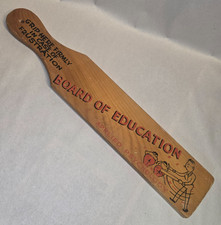
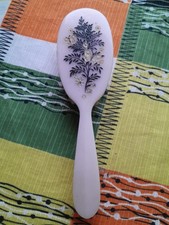
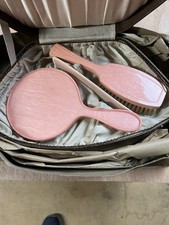
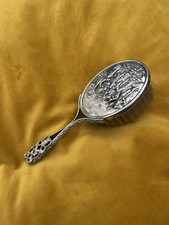
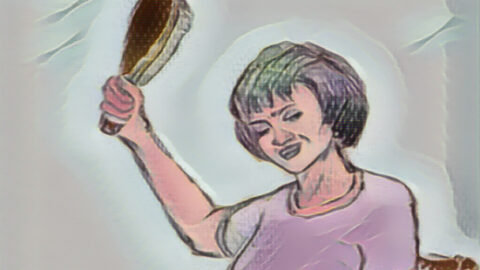
Mrs. Fairchild believed, as did all good mothers then, that a child’s character was shaped by discipline as much as by affection. If ever Patricia forgot her manners or let mischief get the better of her, Mrs. Fairchild would deliver a swift, stinging smack to the seat of her dress—a reminder, not of anger, but of love’s duty. The wooden hairbrush, resting on the sideboard beside a postcard from Scarborough Pier, was a silent sentinel, a symbol of the steady guidance that shaped Patricia’s days. Never was there cruelty in her hand, only the firm, loving correction of one who wished her children to grow up honest and true.
The days in Yorkshire were filled with gentle routines and small adventures. Patricia and her friends, Emily and Mary, would ride their Raleigh Choppers up and down the lane, their laughter echoing between the houses. Mums in floral blouses and flared trousers would gather by the garden gates, exchanging news and recipes, while the golden retriever dozed in the sun and the milk float made its rounds, leaving bottles clinking on the doorsteps.
On one bright morning, Patricia found herself at St. Winifred’s School, a place of polished floors and kindly nuns, where the air was filled with the scent of chalk and lavender polish. The school was a grand old building, its red brick walls softened by ivy and the passage of time. Inside, the classrooms were bright and orderly, with rows of desks, a blackboard at the front, and windows that looked out onto the green fields beyond.
Sister Agnes, tall and stern in her black habit, watched over the children with eyes as sharp as a robin’s. She moved through the corridors with quiet authority, her footsteps echoing on the polished floors. During quiet time, when the sun slanted through the high windows and the world seemed to hold its breath, a ripple of giggles broke the silence. Emily and Mary, Patricia’s dear friends, could not contain their mirth, and soon Sister Agnes’s shadow fell across their desks.
Without a word, Sister Agnes took Patricia gently but firmly by the collar and led her to the cloakroom, where the walls were cool and the air smelled faintly of soap. The cloakroom was a place of whispered secrets and nervous glances, its hooks heavy with duffle coats and wellies. “Why are you making noise during quiet time?” Sister Agnes asked, her voice as crisp as autumn leaves. Patricia’s heart fluttered like a sparrow. “I was quiet, Sister,” she replied, her voice small and true, for she had not uttered a sound.
Sister Agnes’s cheeks grew pink with vexation. “What would your parents do if you were naughty and then told a fib?” she asked, her tone as serious as the church bells on Sunday. “Wouldn’t they give you a proper spanking?” Patricia thought of the wooden hairbrush resting on the sideboard at home, and of her stepmother’s steady hand. She knew the answer, as all good children did. “Yes, Sister,” she whispered, “my stepmother would spank me for that.”
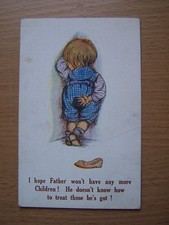
“Face the wall and put your hands on your head,” Sister Agnes commanded, and Patricia obeyed, her nose pressed to the cold plaster, her heart thumping in her chest. In that quiet moment, with the faint sound of children’s laughter drifting from the playground, Patricia understood the weight of honesty and the importance of owning one’s actions. The minutes stretched, each tick of the clock a reminder of the seriousness of the moment.
Behind her, she heard the scrape of a chair. In her mind’s eye, she saw the storybook scenes of naughty children, skirts lifted, knickers down, receiving their just deserts across a firm lap. The wooden hairbrush, so familiar at home, seemed to hover in the air, a symbol of the lesson to come. Patricia’s palms grew clammy, her cheeks flushed with dread and shame. But before Sister Agnes could act, the door opened softly and Sister Bernadette entered, her voice gentle as a summer breeze.
There was a quiet conversation, and then Sister Agnes turned to Patricia, her sternness melted away. “I am so sorry, Patricia,” she said, her voice warm and contrite. “It was not you who made the noise, was it?” Patricia shook her head, relief washing over her like sunlight after rain. Sister Agnes took her small hands in hers and asked, “Will you forgive me?” “Yes, Sister,” Patricia replied, for forgiveness was a lesson as important as any other.
Together they returned to the classroom, where Sister Agnes announced, “Emily and Mary, you will remain with me during recess.” The two girls looked pale and penitent, and as Patricia joined the others in the playground, she wondered what lesson awaited her friends. The playground was alive with the shouts and laughter of children, the clatter of marbles on the tarmac, and the distant call of a blackbird in the hedgerow.
After recess, it was plain to see that Emily and Mary had been weeping, their eyes red and their spirits subdued. The lesson had been delivered, as was the custom, with a firm hand and a loving heart. In those days, a spanking was not a thing of shame, but a gentle correction, meant to guide children back to the path of goodness. The girls sat quietly at their desks, their hands folded, their faces thoughtful.
That afternoon, as the sun dipped behind the privet hedges and the milk float made its final round, Patricia’s stepmother called her into the sitting room. The room was filled with the golden light of late afternoon, the air warm and still. “I have spoken to Mary’s mother,” Mrs. Fairchild said, her voice grave but kind. “Did you know that she and Emily were punished at school today?” Patricia nodded, careful not to mention her own narrow escape, for some things were best left unsaid.
“Both girls received a sound spanking for their naughtiness,” Mrs. Fairchild continued. “You must remember, Patricia, that if you misbehave at school, you will receive the same at home. Do you understand?” “Yes, ma’am,” Patricia replied, her voice meek and respectful. She glanced at the wooden hairbrush on the sideboard, its polished surface gleaming in the sunlight, and felt a shiver of resolve run through her.
Mrs. Fairchild fixed her with a steady gaze. “If I hear you have been punished at school, you can expect a spanking at home. Obedience and honesty are the marks of a good girl. Do you understand me, Patricia?” Patricia nodded, her heart full of gratitude for the gentle firmness that shaped her days. “Yes, ma’am,” she said, for she knew that love sometimes wore the face of discipline.
The danger passed, and many peaceful years would follow before Patricia again found herself in such trouble. But the lesson remained, as clear as the Yorkshire sky after a summer shower: in a good home, a well-spanked bottom was not a sign of harshness, but of love—a hope that children might grow up to be honest, kind, and true.
The seasons turned, and Patricia grew, her days filled with the simple joys of Yorkshire life: blackberry picking in the hedgerows, Sunday walks on the moors, and evenings spent by the fire with a book and a mug of cocoa. The lessons of her childhood—honesty, obedience, forgiveness—became the foundation of her character, as enduring as the stone walls that lined the fields.
And so, in the golden light of those Yorkshire days, Patricia learned that the firmest lessons are often the kindest, and that the path to goodness is marked by both gentle words and loving correction. (long pause) For in the end, it is not the sting of the hairbrush that lingers, but the warmth of a home where right and