(gap: 2s) In the heart of Oakfield Estate, where rows of pebble-dashed flats stood shoulder to shoulder and the grass verges wore more mud than green, there lived a boy named Samuel and his dear mother. The year was not so very long after the war, and though times were sometimes hard, there was a cheerful spirit that filled every corner of their modest home. The air was always fresh with the scent of laundered sheets, mingled with the aroma of strong tea and the faintest whiff of damp from the hallway. Children, clad in hand-me-down jumpers and sturdy shoes, played marbles by battered lampposts, their laughter ringing out as mothers, hair set in curlers, exchanged news and gentle scoldings by the communal bins.
(short pause) Samuel’s home was small, but it was a place of warmth and order. The lounge, with its faded floral curtains and crocheted blankets, was always aglow with the gentle hum of the electric fire. The black-and-white television flickered in the corner, its picture sometimes fuzzy, but it mattered little. What mattered most was the sense of belonging, the comfort of familiar things, and the steady presence of Mother, who presided over the household with a loving but firm hand.
(pause) Mother was the heart of the family. She wore her nylon housecoat with pride, her costume jewellery sparkling as she moved briskly about her duties. Her hands, though gentle, were never idle—always knitting, tidying, or pouring tea from a chipped pot. She believed, as many mothers did in those days, that children must be guided with kindness, but also with discipline. For, as the good books said, “Spare the rod and spoil the child.” Yet, in her hands, discipline was never cruel, but a gentle correction, given with love and a twinkle in her eye.
(short pause) Samuel was a lively boy, full of mischief and curiosity. One Sunday afternoon, after a morning of boisterous play and cheeky remarks, Mother decided it was time for a lesson. She settled herself in her favourite armchair, the springs creaking beneath her, and called Samuel to her side. “Come here, my boy,” she said, her voice both gentle and resolute, “it is time we had a little talk about your spellings.”
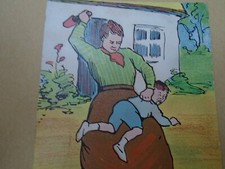
(pause) Samuel’s heart fluttered as he approached, for he knew well the ritual that was to follow. He clambered across Mother’s lap, the scratchy wool of his jumper prickling his skin. The room was quiet, save for the ticking of the clock and the soft hum of the fire. Mother straightened his collar and looked at him with a mixture of sternness and affection. “Now, Samuel,” she said, “spell ‘necessary’ for me, if you please.”
(short pause) Samuel, ever the rascal, muddled the letters on purpose, hoping to make Mother laugh. But Mother only shook her head, her lips pursed in mock dismay. “Oh, Samuel,” she sighed, “that simply will not do.” With practiced care, she delivered a smart smack to the seat of his trousers—not harsh, but firm enough to remind him of the importance of trying his best. The sound was sharp, but the pain was fleeting, and Samuel knew it was given with love.
(pause) Each time Samuel stumbled over a word, Mother would patiently spell it out, tapping gently for each letter, her voice rising and falling in a sing-song rhythm. “N-E-C-E-S-S-A-R-Y,” she would chant, and Samuel would repeat after her, his voice growing steadier with each attempt. The room filled with the music of their voices, the gentle rhythm of Mother’s hand, and the warmth of shared laughter. Even as Samuel wriggled, he felt the love in every tap, and the pride in Mother’s eyes as he finally spelled the word correctly.
(short pause) In those days, a spanking was not a thing of shame, but a gentle nudge back onto the right path—a reminder that actions have consequences, and that those who love us most will sometimes guide us with a firm but loving hand. Mother’s discipline was always followed by a kind word and a reassuring hug, her arms smelling of lavender and tea. “You’ll thank me one day, Samuel,” she would say, her eyes twinkling with secret pride.
(pause) When the lesson was done, Mother would stand Samuel up, hands on her hips, and give him a gentle scolding for not taking his spelling seriously. But there was always a smile behind her words, and Samuel knew he was cherished. “You are a handful, my boy, but you are my handful,” she would say, pulling him close for a quick, tight embrace.
(short pause) That week, when the spelling test came at school, the words seemed to float onto the page, each letter a memory of Mother’s voice and the gentle rhythm of her hand. Samuel remembered not only the spellings, but the lesson behind them: that mistakes are part of growing up, and that a loving correction—given with patience, humour, and a bit of ceremony—can help a child become a better person.
(pause) On Oakfield Estate, such lessons were part of daily life. A smart smack was a sign of care, a way to teach right from wrong, and to show that love sometimes means saying “no” and meaning it. Samuel looked back on that Sunday afternoon not with resentment, but with gratitude. It was one of those small, ordinary moments that shaped his childhood, teaching him about respect, kindness, and the quiet strength of a mother’s love.
(long pause) The games and gentle corrections continued, always wrapped in laughter and affection. Even now, many years later, Samuel could close his eyes and see that little lounge, hear the hum of the fire, and feel the warmth of Mother’s wise, loving discipline. The memory lingered—a lesson in love, patience, and learning from one’s mistakes, right there on Oakfield Estate, where the wallpaper may have been peeling, but the love was always in good supply.