My earliest recollections are not of the bustling Canadian suburb you see here, but of a far humbler cottage at the edge of a sleepy Welsh village, sometime in the late 1950s. The wind, ever restless, rattled the windowpanes and sent the scent of peat swirling through the air. Our home was small, with a garden overrun by brambles and a gate that squeaked in protest at every opening. My foster mother, Lillian, was not my birth mother, but she was the only mother I truly knew. I had been placed in her care after my own mother, unmarried and alone, could not keep me.
Lillian was a woman of formidable presence, with a voice that could quell a room and a stare that could freeze a boy in his tracks. She was not unkind, but she was brisk, and her tempers—though sudden—were always followed by long, thoughtful silences. In those days, it was the accepted duty of every parent and guardian to instil discipline, and corporal punishment was regarded as both necessary and proper. Indeed, it was believed that a firm hand was the surest path to respect and good behaviour, and no one thought it unkind or unusual.
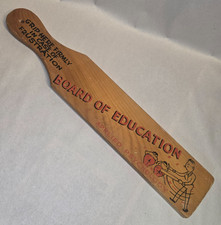
The implements of discipline were always close at hand—her sturdy wooden hairbrush, broad and polished from years of use, a well-worn slipper with a soft sole, and, on rare and most serious occasions, the heavy leather belt that had belonged to my late foster father. Each had its place: the hairbrush upon her dressing table, the slipper by the door, and the belt hanging on a hook in the hallway, a silent sentinel and reminder of the rules that governed our home.
The moments preceding a spanking were always filled with a peculiar tension, not unlike the hush before a thunderstorm. I would hear the scrape of her chair upon the linoleum, the measured tread of her feet, and the faint creak of the floorboards. When she called my name, her voice was calm but resolute. “William,” she would say (for that was the name she gave me), “come here, if you please.” My feet, encased in thick woollen socks, would scarcely make a sound as I approached, heart thumping, cheeks burning. She would seat herself, smoothing her house dress with a brisk motion, and pat her lap in a manner that brooked no argument.
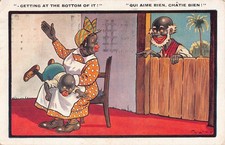
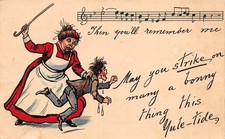
The act itself was always conducted with a certain ceremony, as though it were a lesson in deportment rather than a mere punishment. I would be guided gently but firmly across her knees, my cheek pressed against the cool fabric of her dress, the faint scent of lavender and starch in the air. There would be a pause—a moment of silence broken only by the ticking of the clock or the distant sound of a radio. Then, with a swift and deliberate motion, the first smack would land, sharp and echoing, the sting blooming instantly across my skin. If it was the hairbrush, its hard surface would bite through the thin cotton of my pyjamas; if the slipper, its slap was muffled but no less effective. Each stroke was measured, accompanied by a steady lecture on the importance of honesty, obedience, or respect.
“You must learn, William,” she would intone, her voice unwavering, “that every action has its consequence. A boy who tells fibs will find himself sorely regretting it.” The pain was real—hot and insistent—but it was always tempered by the knowledge that it was meant to teach, not to harm. The sounds lingered in my memory: the rhythmic smack of wood or leather, my mother’s quiet breathing, my own gasps or the occasional whimper. The room would fill with the scent of wood polish and soap, the world narrowing to the lesson at hand. Sometimes, I would squeeze my eyes shut, focusing on the pattern of the wallpaper or the feel of the linoleum beneath my toes, determined to endure.
After each punishment, there was a hush. My foster mother would rest her hand upon my back, her breathing slowing, the tension in her shoulders easing. I would feel a curious mixture of relief and shame, my skin tingling, my heart still racing. Yet there was a peculiar intimacy in those moments—a silent understanding that discipline had been given and received, and that, for a time, the world was set right again.
As the years passed, I became ever more eager to please her, and I grew into something of a devoted son. The spankings, though harsh, were always administered with a sense of duty and care, and I knew that my foster mother’s sternness was born of love and a desire to see me grow into a good and upright young man.
In those days, it was not uncommon for children to be disciplined in such a manner. It was simply how things were done, and few questioned it. The lessons imparted by those punishments were lasting, and I learned to accept them with as much dignity as I could muster.
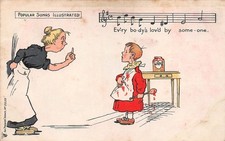
There were, of course, moments of rebellion. I recall one Sunday afternoon, the air thick with the scent of roast beef and overcooked cabbage, when I was caught red-handed filching a penny from the tea caddy. Lillian’s eyes narrowed, and she fixed me with a look that brooked no denial. “William, what have you to say for yourself?” she demanded. I stammered, cheeks aflame, “I only wanted a sweet from Mrs. Evans’ shop.” Her lips pressed into a thin line. “A sweet, is it? Well, you shall have a lesson instead.”
The ritual unfolded as always, but this time, her lecture was sharper, her disappointment more keenly felt. “A boy who steals, even a penny, cannot be trusted,” she said, punctuating each word with a brisk smack of the hairbrush. I wept, not so much from the pain as from the shame of having disappointed her. Afterwards, she sat me on her knee, wiped my tears with the corner of her apron, and said, “You are a good boy at heart, William. But you must learn to be better.”
As I grew older, I began to notice subtle changes in my foster mother’s demeanour during these occasions. At first, her actions seemed purely out of duty or frustration, but gradually, I sensed a certain relief in the way she administered discipline. Sometimes, after a particularly trying day, she would reach for the hairbrush or slipper with a kind of anticipation, her eyes sharper, her movements more deliberate. It was as though, in those moments, the act of chastisement allowed her to find some measure of peace and control.
With this realisation, I found myself responding differently. There were times when, instead of resisting or crying out, I would simply accept whatever punishment she deemed necessary, lying still and silent, not even flinching. My composure sometimes surprised her, perhaps even encouraged her to continue. In a strange way, it became a silent understanding between us—her need to discipline, my willingness to endure. The ritual itself became almost predictable: the implements, the stern lecture, the swift strokes, and then the quiet that followed.
I was, perhaps, an unusual child, able to bear as much pain as my foster mother could deliver, but I must confess that I also found a strange comfort in these acts of chastisement. There was reassurance in the predictability, the structure, and even the closeness that followed.
By the time I reached my mid-twenties, I had a house of my own, and my foster mother would visit from time to time. I often reflected upon our earlier experiences, and one day, I asked her directly whether she had found any satisfaction in disciplining me when I was a boy.
To my surprise, she admitted that she had felt it her duty, but also asked how I had felt about it. With a blush, I confessed that I, too, had found a strange comfort in those moments of intimacy and correction.
Then, quite unexpectedly, my foster mother asked if I would like her to continue disciplining me as she had when I was a child. I agreed, feeling a curious mixture of anticipation and nostalgia.
Within minutes, I found myself once more across her knee, just as in the old days. She would sometimes reach for the same hairbrush or slipper she had used in my youth. The familiar implements brought back a flood of memories—the anticipation, the sharp sting, the sound of the smack echoing in the quiet room, the warmth of her hand on my back afterwards. The sensations were as vivid as ever: the initial shock of pain, the slow burn that followed, the mingled feelings of embarrassment, relief, and a deep, unspoken bond.
These encounters continued for many years, until I was well into my fifties and my foster mother in her seventies. Looking back, I see those moments not merely as discipline, but as a complicated, deeply human connection—one that shaped my understanding of love, authority, and forgiveness. The spankings, though harsh, were always framed as moral lessons, and I am grateful for the care and guidance my foster mother bestowed upon me.
(long pause) And so, as I sit now in my own quiet home, the echoes of those childhood lessons linger still. The world has changed, and such methods are no longer in favour, but I remember them not with bitterness, but with a kind of wistful gratitude. For in every sharp lesson, there was a kernel of love, and in every stern word, a hope for my betterment. That, I think, is the truest legacy a parent can leave.