(gap: 2s) In the heart of 1970s Surrey, where the council estates sprawled like patchwork quilts of pebble-dashed houses and battered cars, life ticked by with a peculiar rhythm. The air always seemed tinged with the scent of boiled cabbage and coal smoke, and the sound of children’s laughter—sometimes shrill, sometimes secretive—echoed between the rows of terraced homes. On our estate, every family nursed dreams of something grander, yet clung fiercely to the rituals and rules that kept up appearances. It was a world of chain-link fences, mismatched curtains, and lawns dotted with dandelions and empty milk bottles, where the Co-op milk float rattled by at dawn and dusk, and every neighbour’s business was, inevitably, your own.
It was on such a Sunday, beneath a sky the colour of old dishwater, that I found myself visiting my cousin’s house—a place I adored for its faint whiff of adventure and the promise of jam sandwiches. My cousin, clever and quick-witted, was my idol, and I longed for her approval. But on this particular afternoon, scarcely had we arrived than she vanished, whisked away by her mother with a look that brooked no argument.
I pestered my parents with questions, my curiosity gnawing at me like a mouse in a biscuit tin. “Where’s she gone?” I asked, again and again, my voice rising above the hum of the two-bar electric fire and the distant strains of “On the Buses” from the telly. On our estate, secrets were as rare as new shoes, and I could not bear to be left out of the loop.
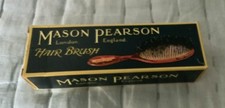
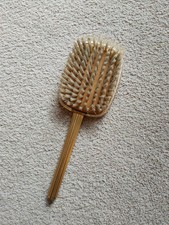
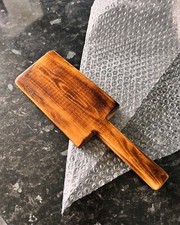
What I did not know—what no child was ever meant to know—was that my cousin had been summoned upstairs for a reckoning. She had, it seemed, committed some mischief, and her mother, my formidable Aunt Edna, believed in swift, decisive justice. Ten sharp smacks with a wooden hairbrush, delivered with the solemnity of a judge passing sentence, were to be her lot. The adults, of course, were experts at keeping such matters hidden; not a sound escaped the closed bedroom door, and all I was told was that my cousin was “resting” and would not be joining me for the rest of the day.
I was not satisfied. I whined, I sulked, I hovered by the stairs, desperate for a glimpse or a clue. My mother and aunt exchanged glances—those silent, grown-up messages that children can never quite decipher. Still, I persisted, my longing to be included outweighing any sense of caution.
At last, my aunt’s patience snapped. She caught me tiptoeing up the stairs, my heart thumping like a drum in my chest. “That’s enough, young man,” she declared, her voice as crisp as the starch in her apron. She called my mother over, and the two of them conferred in urgent whispers, no doubt weighing the opinions of Mrs. Jenkins next door and the ever-watchful eyes of the estate.
My mother took my hand—her grip firm, her lips pressed into a thin line—and led me up the narrow staircase, past faded wallpaper and the faint aroma of lavender polish. I thought, foolishly, that I was finally to be reunited with my cousin. Instead, I was ushered into Aunt Edna’s bedroom, where the air was thick with the scent of talcum powder and something sterner.
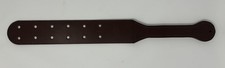
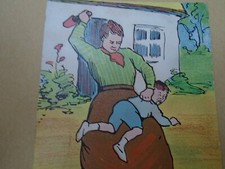
There, in the centre of the room, stood the chair—plain, sturdy, and utterly terrifying. The hairbrush, broad and gleaming, lay atop the bed like a relic from some ancient, dreadful ritual. My mother sat, straight-backed and resolute, and beckoned me over. Before I could protest, she drew me across her knee, my nose inches from the faded carpet, and raised the hairbrush high.
The first smack landed with a crack that seemed to echo through the house. Then another, and another—ten in all, each one stinging more fiercely than the last. My legs kicked, my hands flailed, but my mother held me fast, her face set with the grim determination of a woman who knew her duty. On our estate, discipline was not merely a matter of correction; it was a performance, a declaration to the world that one’s children were properly brought up.
When the final smack had fallen, my mother tossed the hairbrush onto the bed and marched me, still sniffling and red-faced, to my cousin’s room. She opened the door, pushed me inside, and fixed us both with a steely glare. “There you are—stay put. If either of you so much as sets foot outside before you’re told, you’ll both get another ten smacks, together!” With that, she closed the door, leaving us to our misery.
My cousin, her eyes rimmed with tears, stared at me in astonishment. For a moment, we simply looked at each other, two small souls united by pain and humiliation. I cared for nothing except the burning in my seat and the certainty that, by nightfall, every mother on the estate would know of our disgrace.
I flung myself onto her bed, burying my face in the pillow, and sobbed as if my heart would break. The minutes crawled by, thick and heavy, until at last my mother returned, her expression unreadable. “Time to go home,” she announced, and I followed her down the stairs, my head bowed, my pride in tatters.
But the day’s lessons were not yet over. At home, my mother sat me down in the cramped living room, the electric fire humming and the scent of Sunday roast lingering in the air. She explained, in tones both gentle and stern, that she could not allow the neighbours to think she was unable to keep me in order. Then, with a sigh, she drew me over her knee once more and delivered ten sharp smacks with her hand—each one a punctuation mark in the story of my misbehaviour.
Her hand, though softer than the hairbrush, still stung mightily, especially after my earlier ordeal. I cried and wriggled, but she held me fast, her resolve unshaken. On our estate, a proper spanking was as much about setting an example as it was about teaching a lesson. Only when she was satisfied that I had truly learned did she let me go, her eyes softening just a little.
That night, as she tucked me into bed, I was still sniffling, my bottom sore and my spirit chastened. “If you ever behave like that again,” she warned, “it’ll be ten smacks every night for a week.” I believed her. On our estate, promises like that were always kept. As I lay in the darkness, listening to the distant rumble of a milk float and the soft creak of the house settling, I resolved to be good—at least until the memory of that Sunday faded, and the watchful eyes of the estate turned elsewhere.