gap: 2s) Once upon a time, in the heart of the Willowbrook Estate, where the pebble-dashed flats stood shoulder to shoulder and the grass verges wore the scars of many a football match, there lived a band of children whose laughter was as much a part of the place as the distant rumble of the milk float each morning. The estate, with its patchwork lawns and cracked pavements, was their world—a world brimming with secret corners, daring games, and the promise of adventure behind every battered lamppost and beneath every dripping washing line.
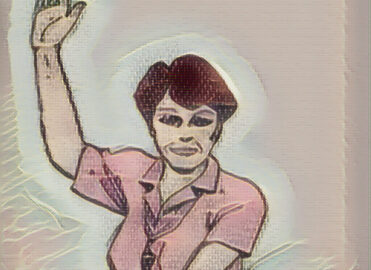
On Sundays, when the air was thick with the mingled scents of tea, toast, and the faintest whiff of coal smoke, the children’s parents would sometimes slip away—perhaps to the market, or to visit Auntie Jean in Croydon—leaving the little ones in the care of Aunt Ruth. Aunt Ruth was a figure both familiar and formidable, her presence as steady as the ticking clock on the mantelpiece. She wore her hair in a neat bun, her housecoat always crisply pressed, and her eyes—blue as the English sky—could twinkle with mischief or narrow with warning in the space of a heartbeat.
Aunt Ruth believed in the old ways. “Children should be seen and heard, but always with good manners,” she would say, her voice gentle but never to be ignored. She treasured honesty above all, and her stories of her own childhood—of ration books and penny sweets, of promises kept and lessons learned—were told in the soft glow of the electric fire, as the children sat cross-legged on the crocheted rug, wide-eyed and silent.
One golden summer evening, after a day spent chasing footballs and climbing the chain-link fences, the children found themselves restless as the sun dipped low, painting the estate in honeyed light. Mothers leaned from their windows, calling names into the dusk—“Allen! Roy! Cassandra! Tea’s on!”—but the children, hearts still racing with the thrill of the day, gathered in the shadowy hallway, whispering plans. “Let’s have one last adventure,” Allen urged, his eyes shining. Cassandra, always the boldest, grinned and nodded. And so, with a conspiratorial hush, they tiptoed out, the door clicking softly behind them.
In the cool, blue shadows by the bins, they met Cassandra, who had smuggled a packet of lemon sherbets from her mother’s purse. “Let’s play knock down ginger!” she whispered, her voice trembling with excitement. The children giggled, darting from hedge to hedge, their laughter echoing off the concrete walls. The game was wild and breathless—knocking on doors, then fleeing into the night, hearts pounding, cheeks flushed. But soon, the neighbours’ patience wore thin. “That will do, children!” came the stern voices, and the game ended as quickly as it had begun.
The little band was rounded up, marched back to their flat by Cassandra’s mother, who wore a look of both exasperation and secret amusement. At the door stood Aunt Ruth, her arms folded, her face grave but not unkind. “Inside, all of you,” she said, her tone brooking no argument. The children shuffled in, heads bowed, the weight of their mischief settling upon them like a heavy blanket.
In the sitting room, the air was thick with anticipation. The orange and brown curtains glowed in the lamplight, and the electric fire hummed quietly. Aunt Ruth stood before them, her hands clasped, her gaze steady. “You know why you are here,” she began, her voice calm and measured. “Mischief is the seed of trouble, and trouble, if left unchecked, grows into sorrow. A lesson must be learned, so that you may grow into good and honest people.” Her words hung in the air, solemn and true.
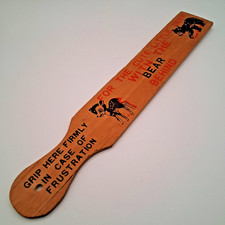
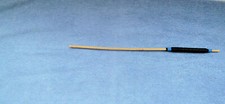
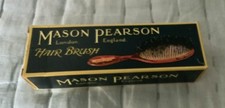
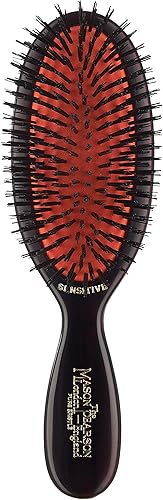
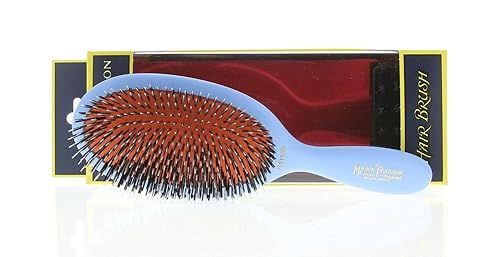
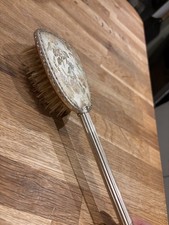
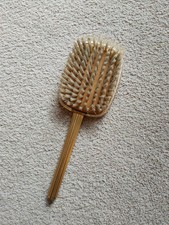
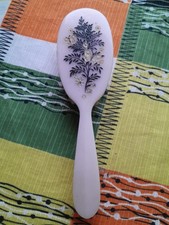
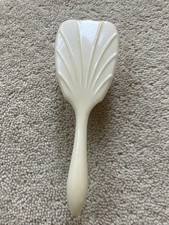
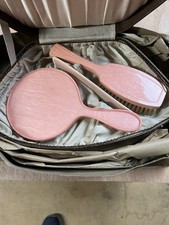
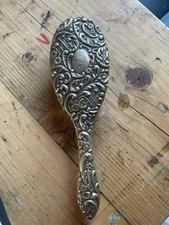
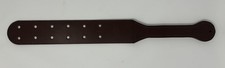
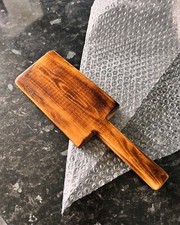
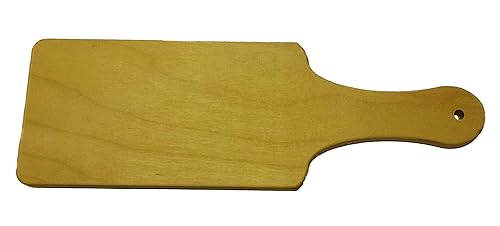
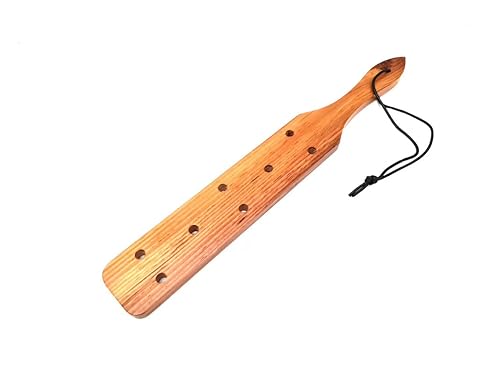
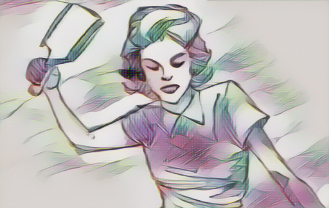
Aunt Ruth fetched the bath brush from its place atop the wardrobe—a relic reserved for the gravest of misbehaviours. The room fell silent, save for the ticking clock and the distant strains of a glam rock tune from a neighbour’s radio. The children stood in a line, hands clasped, eyes wide. Allen, the eldest, stepped forward first, his lower lip trembling but his chin held high.
Aunt Ruth took Allen’s hand, her grip gentle but firm. “Allen,” she said softly, “do you understand why you are here?” Allen nodded, his voice barely a whisper. “We shouldn’t have played knock down ginger, Aunt Ruth. We disturbed the neighbours.” Aunt Ruth nodded, her eyes kind. “That’s right, my dear. And now, we must make things right.” She guided him over the pouffe, and the bath brush landed with a sharp, echoing sound. Allen gasped, a tear slipping down his cheek, but Aunt Ruth’s voice was gentle: “It is not anger, but love, that guides my hand.” When it was over, Allen stood, rubbing his eyes, and managed a small, brave smile.
Next came Roy, who tried to be brave but could not hide the quiver in his voice. “I’m sorry, Aunt Ruth,” he said, his eyes shining with unshed tears. “I only wanted to have fun.” Aunt Ruth knelt beside him, brushing a stray lock of hair from his forehead. “Fun is a wonderful thing, Roy, but it must never come at the expense of others.” Over her lap he went, and the bath brush did its work. Roy’s cries were sharp, but Aunt Ruth’s hand was steady, and when it was done, she pressed a gentle kiss to his brow. “You are a good boy, Roy. Remember this lesson, and you will grow into a fine young man.”
Then it was Cassandra’s turn. She hesitated, glancing at her mother, who gave her a gentle nudge and a reassuring smile. “Be brave, darling,” her mother whispered. Aunt Ruth’s face softened, and she knelt to Cassandra’s level. “Cassandra, you are clever and bold, but even the boldest must learn to be kind.” Cassandra nodded, her eyes wide, and bent over. The bath brush landed with a dull thud, and Cassandra’s cries rang out, high and clear. When it was finished, her mother gathered her up, holding her close and whispering words of comfort: “It’s over now, my love. You are forgiven.”
At last, it was my turn. My heart thudded in my chest, but I stepped forward, determined to be brave. Aunt Ruth looked at me, her eyes shining with pride and sadness all at once. “You know why you are here, don’t you?” she asked. I nodded, my voice small. “Yes, Aunt Ruth. I want to be good.” She smiled, a tear glimmering in her eye. “And you shall be, my dear. This is how we learn.” The bath brush stung, but I bit my lip, remembering to be strong. When it was over, Aunt Ruth wrapped me in her arms, holding me close until the pain faded and only love remained.
When all was finished, Aunt Ruth set aside the bath brush and gathered us close, her arms encircling us like a warm, protective blanket. “Every action has its consequence,” she said softly, her voice barely more than a whisper. “True character is built not by never making mistakes, but by learning from them. You are all good children, and I am proud of you.” The room was quiet, save for the gentle sniffling of children and the soft ticking of the clock, but in that quiet, something important had been learned—a lesson that would last a lifetime.
That night, as we lay in our narrow beds, the sounds of the estate drifting through the open window—the distant laughter of teenagers, the clatter of a milk float, the soft hum of a radio—we thought about Aunt Ruth’s words. The pain in our backsides was fading, but the lesson in our hearts was bright and clear. Rules, we understood, were not meant to spoil our fun, but to help us grow into good and honest people. And though our eyes were heavy with sleep, our hearts were lighter, for we knew we had been given a chance to do better.
And so, dear readers, if ever you are tempted by mischief, remember Aunt Ruth and the lesson of the bath brush. For discipline, when given with love and understanding, is not a punishment, but a gift—a chance to become the very best you can be. (long pause) And that, my dears, is the truest lesson of all