In the heart of a bustling petersham estate, where rows of sturdy red-brick houses stood like sentinels and the air was ever alive with the shouts and laughter of children, there lived a small boy named David. It was the year of our Lord, 1952, and though the world outside seemed vast and mysterious, the world within those brick walls was one of order, noise, and the constant challenge of keeping David’s selfishness in check.
(short pause) Now, David was not a gentle soul. With a mop of curly brown hair and eyes always scanning for what he could get for himself, he was quick to put his own needs first and quicker still to ignore the feelings of his siblings. He lived with his mother, a woman of firm principles and a kind heart worn thin by David’s self-centered ways, and his siblings, who often found themselves overlooked or inconvenienced by his selfish actions.
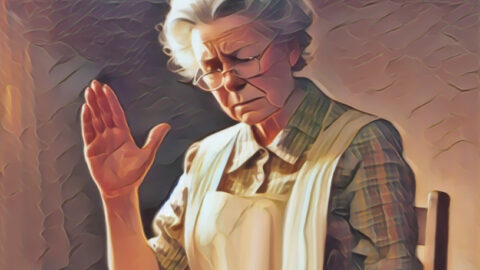
(pause) But there was something else about David, something that all the neighbours and even his own brothers and sisters would whisper about behind closed doors: David was, through and through, a mummy’s boy. He clung to his mother’s apron strings as if they were lifelines, always seeking her attention, her approval, and her protection—especially when he found himself in trouble. Whenever he was scolded or caught out, he would run to her side, hoping for comfort or, at the very least, a shield from the consequences of his own mischief. This attachment, so strong and so obvious, only made his selfishness more pronounced, for he believed that as long as he had his mother’s favour, the world would bend to his will.
(pause) One brisk morning, as the leaves danced along the concrete walkways and the sky hung low with surrey drizzle, David found himself in a most uncomfortable predicament at school. He had slipped away to the lavatory, not for privacy, but to escape a lesson he found boring and to suit his own desires. Suddenly, a group of older boys burst in, their voices loud and mocking. “Who’s doing number twos in there?” they jeered, their laughter ringing off the tiled walls.
(short pause) David, always thinking of himself, snickered along with them, even though he knew another boy was cowering in the next stall. He left the other child to face the cruel jests alone, feeling a twisted sense of satisfaction that he wasn’t the one being targeted. From that day forth, David decided he’d never do number twos at school—not out of fear, but because he didn’t want to be the butt of the joke himself.
(pause) Days slipped into weeks, and David’s stubborn selfishness only grew. He avoided the school lavatories, no matter how great his discomfort, boasting to his friends about how he could “hold it in longer than any of them.” But one rainy afternoon, as the school bus rattled through the narrow streets, David felt a familiar, urgent pressure. He dashed home, legs pumping, but alas—he did not arrive in time.
(short pause) Annoyed and embarrassed, David tried to hide his soiled underthings in the dustbin, grumbling about how unfair it all was. But mothers, as all children know, have eyes that miss nothing. That evening, as the family gathered for tea, David’s mother discovered the evidence. She called him into the kitchen, her voice sharp and unwavering.
(pause) “David, what have you done this time?” she demanded, her eyes both tired and stern. David scowled, refusing to meet her gaze. He muttered about the teasing at school, but mostly complained about how it wasn’t his fault, never considering how his actions affected anyone else. His mother listened, her face hardening with resolve. “You can’t just run from your problems, David. And you certainly can’t make a mess for others to clean up.”
(short pause) Here, too, David’s mummy’s boy nature showed itself. He tried to worm his way out of trouble by clinging to his mother’s skirt, hoping for a gentle word or a softening of her sternness. But his mother, wise to his ways, stood firm. She sent him to wash up, reminding him that every child makes mistakes, but not every child tries to blame everyone else or think only of themselves. David stomped off, muttering under his breath, the sting of the day more about being caught than any lesson learned.
(gap: 2s) For a time, David managed to avoid further mishaps, mostly by sheer luck. But then came a Saturday outing to the grand city mall—a rare and splendid treat. The car ride was long, the shops bright and bustling, and the air thick with the delicious aroma of chips and sausages. Before the journey home, Mother lined up her brood and declared, “Everyone, use the lavatory now. It’s a long drive back.”
(short pause) David, ever the self-interested one, rolled his eyes and insisted he didn’t need to go. The public restroom was crowded, and he loudly mocked his siblings for being “babies” about it, thinking only of his own comfort and pride. He told himself he could wait, that he was tougher than the rest.
(pause) Twenty minutes from home, David’s discomfort became too great to bear. He squirmed in his seat, refusing to admit defeat. But as the car finally turned into their street, David leapt from his seat—only to feel disaster strike. There, before his siblings, he had an accident, and the evidence was plain for all to see.
(short pause) Mother’s face grew grave, her lips pressed into a thin, determined line. “David, to the bathroom, at once,” she commanded, her voice firm and clear. She followed him in, helping him clean up, her words both stern and exasperated. “David, your selfishness has landed you in this mess. It’s far better to do what’s needed than to act the fool. Are you not more embarrassed now than you would have been at the mall?”
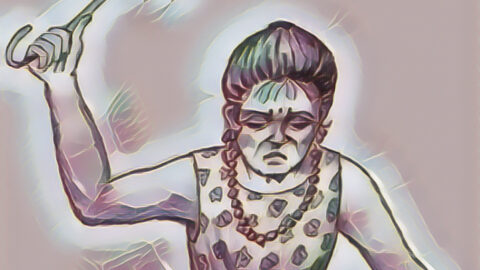
(pause) David’s eyes flashed with anger—not at himself, but at the world for catching him out. And yet, even as he sulked, he looked to his mother for comfort, hoping she might take his side or at least spare him the worst of the consequences. Then, as was the custom in many a good home, Mother reached for her slipper—a symbol not of anger, but of necessary correction. She sat upon the edge of the bed, and with a firm, resolute hand, she administered a sound spanking to David’s backside. The slipper landed with a steady pat, each swat a reminder that actions have consequences, and that lessons, though sometimes painful, are given for a reason.
(short pause) The spanking was not harsh, nor was it given in anger. Mother’s voice was steady as she spoke: “David, let this be a lesson. It’s better to swallow your pride than to end up in a worse state. Honesty, courage, and obedience are the marks of a fine young man—not selfishness and cheek.” David, cheeks wet with angry tears and bottom smarting, glared at the floor, refusing to nod.
(pause) Afterwards, David was sent to his room to reflect. As he lay upon his bed, the sounds of his siblings’ laughter floated up from below. He felt sorry for himself, but mostly he plotted how he’d get back at them for laughing. Mother’s lesson, if it landed at all, was buried beneath David’s self-centered pride and his unwavering belief that, as long as he had his mother to run to, he could weather any storm.
(gap: 2s) That night, as the rain tapped gently at the window and the estate grew hushed and still, David made a quiet promise to himself. Not to be braver, but to never let himself get caught out like that again. Mistakes, he decided, were only bad if someone else noticed.
And so, in the little red-brick house on the posh petersham estate, David learned a lesson of his own: that sometimes, the world catches up with you, no matter how clever or self-serving you think you are. And in this way, with the firm guidance of a weary but loving mother—and with David’s mummy’s boy ways ever guiding his choices—he grew a little more cunning, if not exactly wiser, with each passing Sunday.