In the days when children’s laughter rang out across the neat rows of pebble-dashed houses, and mothers gathered by the red telephone box to share the news of the day, there lived a little girl named Veronica. She and her mother resided in a modest home on Oakdene Court which, although was on the poorer side of surrey was a place where pride and good manners were valued above all else.
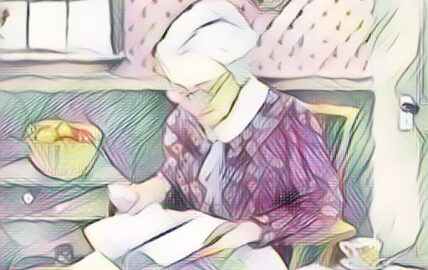
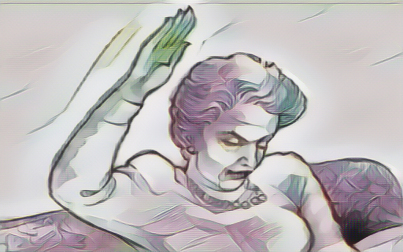
Veronica’s mother, Mrs. Brown, was a tall, dignified lady, always dressed in her best cardigan and pearls, her hair set just so. Though she worked hard as a cleaner at the local school, she never let the house fall into disarray. “We may not have much, Veronica,” she would say, “but we have our pride, and that is worth more than gold.”
Their home, though small, was always tidy. The floral curtains were faded, and the sofa had seen better days, but everything gleamed with care. Veronica knew that her mother’s rules were to be obeyed, for she believed that discipline was the foundation of a good and happy life.
The children of Oakdene Close enjoyed a freedom that would seem remarkable today. They played from morning until the streetlights flickered on, their knees scuffed and their laughter echoing across the green. Yet, each child knew the boundaries set by their parents, and none dared cross them lightly.
Mrs. Brown was a firm believer in the old-fashioned ways. She loved Veronica dearly, but she did not spare the rod when it came to teaching right from wrong. Veronica learned early that a sharp word or a smack was never far away if she forgot her manners or disobeyed.
One day, when Veronica made a grave mistake. With a red crayon, she drew a grand mural of stick figures and suns all across her bedroom wall. She thought it a masterpiece, but when her mother discovered it, her face grew stern.
“Veronica!” Mrs. Brown exclaimed, her voice trembling with disappointment. “What have you done to your wall? Such behaviour cannot be tolerated in this house.”
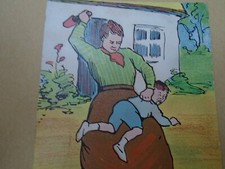
Without another word, Mrs. Brown led Veronica to her own bedroom. She sat on the edge of the bed, her expression grave, and gently but firmly placed Veronica over her knee. The room was quiet, save for the ticking of the clock and Veronica’s anxious breathing.
Mrs. Brown raised her hand and delivered several firm smacks to Veronica’s bottom. The sting was sharp, and Veronica’s eyes filled with tears, but she knew in her heart that she had done wrong. The lesson was clear: one must respect the home and the hard work that keeps it beautiful.
When the spanking was over, Mrs. Brown lifted Veronica onto her lap and wiped away her tears. “My dear girl,” she said gently, “I do this because I love you. You must learn to be responsible for your actions. A tidy home and a respectful child bring happiness to all.”
From that day, new rules were set. Veronica was to do as she was told, without cheek or complaint. She would go to bed on time, eat what was put before her, and wear what her mother chose. There was no room for argument, and Veronica soon learned that obedience brought peace to their little home.
Each afternoon, Veronica changed out of her school uniform and set to work with her chores. She scrubbed the kitchen, polished the floors, and helped her mother prepare supper. The linoleum was cold beneath her feet, and the scent of lavender polish filled the air, but Veronica took pride in her work, knowing she was helping her mother.
After chores, there was always a warm bath—never a shower, for Mrs. Brown believed baths were best for washing away the day’s troubles. Then, in her nightdress, Veronica would help with dinner, peeling potatoes or shelling peas. Sometimes, if she had been especially good, her mother would let her lick the spoon after making custard, and they would share a quiet moment together, the radio playing softly in the background.
Mealtimes were important in the Brown household. Mrs. Brown insisted on wholesome food, and treats were rare. Veronica sometimes envied the other children’s fish fingers and chips, but she knew her mother’s meals were made with love and care. “Good food makes strong children,” Mrs. Brown would say, and Veronica would eat her cabbage and porridge, even if she did not always enjoy it.
One hot Saturday, after her bath, Veronica came down to the kitchen to find her mother preparing a salad for dinner. “It is too warm to cook,” Mrs. Brown declared. Veronica did not care for salad, but she dutifully helped slice tomatoes and pickled onions, her eyes watering from the vinegar.
When dinner was served, Veronica looked at her plate with dismay. “Mum, may I put my plate in the fridge and eat it later?” she asked politely, hoping for mercy.
Mrs. Brown’s eyes grew stern. “No, Veronica. You will sit at this table and eat every bit of that salad. I will not have waste in this house.”
Veronica tried to eat, but soon she began to sulk, pushing the lettuce about her plate. “I don’t want any more,” she said at last, her voice small.
Mrs. Brown stood up, her face set with resolve. She took Veronica by the arm and, with gentle but unwavering firmness, lifted her nightdress and guided her to bend over the kitchen table. Veronica’s heart pounded as she heard the sound of her mother unbuckling her belt—a sound that meant a lesson was about to be learned.
“Veronica,” Mrs. Brown said, her voice calm but unyielding, “I have told you before about wasting food. In this house, we are grateful for what we have. I must teach you to remember this always.”
With measured strokes, Mrs. Brown administered a sound spanking with her belt. The leather made a crisp, echoing sound in the little kitchen, and Veronica’s bottom smarted with each swat. She wept quietly, not from anger, but from the knowledge that she had disappointed her mother.
When it was over, Mrs. Brown helped Veronica to her feet and gave her a gentle hug. “Now, my dear, you will finish your dinner. Remember, gratitude and obedience are the marks of a good girl.”
Veronica sat back down, her bottom sore, and ate every last bite of her salad, tears mingling with the taste of vinegar. She understood, deep down, that her mother’s discipline was an act of love—a lesson to help her grow into a thoughtful and responsible young lady.
After supper, Veronica washed the dishes and tidied the kitchen, her cheeks still damp with tears. Then it was straight to bed, where she lay quietly, listening to the sounds of the estate—the laughter of children, the distant bark of a dog, and the gentle hum of life outside her window.
In time, Veronica found that her mother’s lessons stayed with her. She learned to respect her home, to be grateful for her meals, and to obey without complaint. The spankings became less frequent, for Veronica grew wise and careful, eager to please her mother and make her proud.
There were many happy moments, too. Sometimes, after a long day, Mrs. Brown would sit beside Veronica on the sofa, her arm around her daughter’s shoulders, and together they would watch the flickering black-and-white television. “You are a good girl, Veronica,” her mother would say softly. “I only want the best for you.” And Veronica knew it was true.
The estate was a place of community, where neighbours looked out for one another and news travelled quickly. If a child misbehaved, their mother would know before they reached the front door. Once, after a quarrel with a boy from the next street, Veronica had to march over and apologise, clutching a stick of Brighton rock as a peace offering. The lesson in humility was one she never forgot.
Evenings were filled with the clatter of dishes and the gentle murmur of voices from the corner shop. Sometimes, Veronica would sit on the stairs, listening to her mother and the other ladies discuss the happenings of the day. She did not know it then, but these moments were shaping her into a strong and kind young woman.
The years passed, and Oakdene Close changed, but the lessons Veronica learned remained with her always. She grew to understand that discipline, gratitude, and respect were the cornerstones of a happy life. And though her mother’s ways were sometimes strict, Veronica knew they were rooted in love.
Now, when Veronica walks past her old home, she remembers the laughter, the lessons, and the love that filled those days. She smiles, grateful for a mother who cared enough to teach her right from wrong, and for a childhood rich in memories and morals that would last a lifetime.