(gap: 2s) On the edge of Surrey, beneath a sky that always seemed to threaten rain, our council estate stood like a patchwork quilt of pebble-dashed terraces and narrow lanes. The air was thick with the mingled scents of coal smoke, boiled cabbage, and the faint tang of washing powder. Each house, though modest, was fiercely cared for—net curtains scrubbed until they glowed ghostly white, shoes lined up and polished to a mirror shine, and washing pegged out in perfect rows, fluttering like flags of quiet defiance. Even if the jumpers were hand-me-downs and the shoes bore the scars of a dozen playground battles, there was pride in every detail. (short pause)
The mothers, wrapped in their faded housecoats and curlers, would gather by battered prams, their voices rising and falling in a symphony of gossip and gentle rivalry. They watched each other with hawk-like eyes, measuring the whiteness of a shirt or the shine on a windowpane, as if respectability itself could be won or lost in a single glance. The Ford Anglia parked outside, the strong tea poured from a chipped teapot into mismatched mugs—these were badges of honour, proof that we were all striving, inch by inch, to better our lot. (pause)
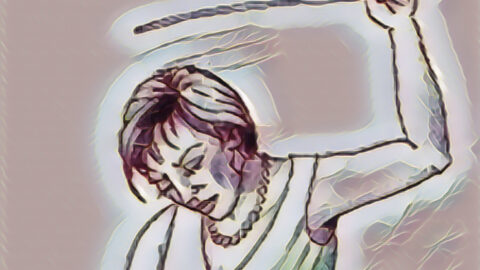
I remember the first time I was summoned for a lesson in discipline—a lesson that would echo through my childhood like the tolling of distant church bells. I had been caught, red-handed, with my fingers in the biscuit tin before supper. Mother sat on the edge of the bed, her face grave and unreadable, the lamplight casting long shadows on the peeling wallpaper. She called me over, her voice low and steady, and with a grip that brooked no argument, she placed me across her lap. The room seemed to shrink, the ticking of the clock growing louder with each heartbeat. Then came six sharp smacks, each one ringing out like a pistol shot in the hush. The sting was immediate, hot and humiliating, and I felt my cheeks burn with a mixture of pain and shame. Yet there was no anger in her hand—only a kind of weary resolve, as if she were passing down a lesson as old as time: one must not take what is not given. (pause)
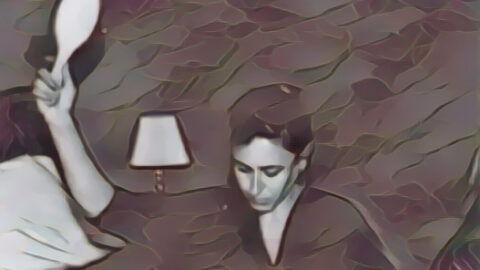
For a year after, I tiptoed through the days, careful not to invite another reckoning. But the memory of those six smacks lingered, as vivid as the red marks they left behind. At school, the rules were just as unyielding. If a boy dared to whisper during arithmetic or failed to finish his sums, he would be called to the front, his heart thudding like a drum. The teacher, always in a tweed jacket with chalk dust on his cuffs, would produce the dreaded slipper—a battered old thing, but capable of delivering four stinging reminders that order must be kept. The sound of rubber meeting cloth was unmistakable, and the silence that followed was heavy with the knowledge that rules, once broken, would not go unpunished. (pause)
After my first real slippering at school—a brisk, humiliating affair in front of the whole class—I became an expert in caution. Yet the memory of Mother’s six smacks haunted me, surfacing at odd moments: the hush before sleep, the quiet after a quarrel, the long walk home beneath the dripping eaves. (short pause)
(soft, introspective) I remember lying awake at night, the darkness pressing in like a heavy blanket, listening to the distant laughter of children and the low rumble of lorries on the bypass. My mind would replay that first punishment in excruciating detail: the slow, inevitable walk to Mother’s chair, the roughness of her housecoat beneath my cheek, the faint scent of tea and cigarettes that clung to her. The scrape of the chair on the cold lino, the hush that fell over the house, the sound of my own breathing—each detail etched itself into my memory, as sharp and clear as the sting of her hand. (pause)
In those moments, the world seemed to shrink to the size of that small, smoky room. I would feel again the sharp, hot sting of each smack, followed by a spreading warmth that was almost comforting. There was shame, yes, but also a strange sense of safety—a certainty that the world had boundaries, and that someone cared enough to enforce them. (pause)
Sometimes, in the quiet of the night, I would imagine other scenarios: being caught filching a penny from the mantelpiece, or sneaking out to play football after dark. The confession, the stern look, the inevitable consequence. The anticipation was almost worse than the punishment itself—a prickling tension that made my skin crawl, a longing for it to be over. I wondered what it would be like to receive four smacks from the teacher in front of the whole class, or to watch another boy take his turn. Each time, the lesson was the same: actions have consequences, and discipline is the price of growing up. (pause)
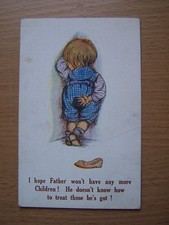
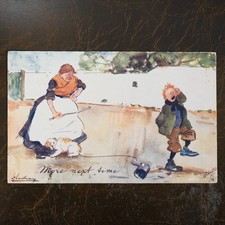
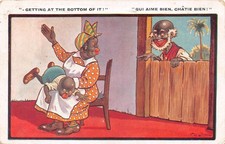
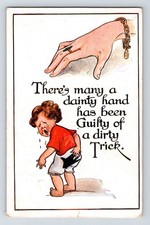
But it wasn’t only in real life that such scenes played out. The world of the 1960s was thick with the imagery of discipline. In the pages of the Beano or the Dandy, Dennis the Menace and Minnie the Minx were forever being bent over a parental knee, their bottoms up, receiving a well-deserved walloping for some mischief or other. The illustrations were a riot of motion lines and red faces, the words “WHACK!” and “SMACK!” exploding from the page in bold, triumphant letters. (short pause)
Even in the more serious storybooks, the threat of a spanking hovered like a raincloud. Naughty children in Enid Blyton’s tales were sent to bed without supper, or threatened with a slipper if they didn’t mind their manners. On television, too, it was not uncommon to see a stern father or a harried mother deliver a swift smack, always with the understanding that it was for the child’s own good. I remember one Sunday evening, watching a black-and-white drama with my family, the room thick with the smell of roast potatoes and the sound of the rain against the window. A boy on the screen was caught lying, and his father, with a heavy sigh, delivered a single, measured smack. No one in the room said a word. It was simply understood. (pause)
No one seemed to question it. In fact, it was expected. If a story ended without a single bottom being smacked, it felt as if something essential had been left out, like a cake without sugar. The grown-ups in these tales were always firm but fair, and the children, though sometimes tearful, were expected to learn their lesson and carry on. (pause)
Looking back, it is almost astonishing how normal it all seemed. The ritual of discipline was woven into the fabric of daily life and the stories we read and watched. It was a world where boundaries were clear, and the consequences of crossing them were as certain as the rain on a Sunday afternoon. (pause)
I struggled with guilt as well. Was it wrong to think about these things? Was I the only one who remembered the lessons so vividly? I told myself it was about learning right from wrong, about understanding the order of things, about not bringing shame to the family. Yet beneath it all, there was a fascination with the ritual, the structure, and the certainty of it. (pause)
As I grew older, the memories changed but never disappeared. The longing became more complicated, mixed with nostalgia and confusion. I never asked for another punishment, nor did I speak of it to anyone, but the thoughts remained—sometimes appearing in dreams, sometimes in quiet moments, always with that same mixture of dread and understanding. For in every sharp smack, there was a lesson: to be honest, to be respectful, and to remember that every action has its consequence. (long pause)
(soft, reflective) Even now, decades later, I can close my eyes and hear the distant clang of the rag-and-bone man’s bell, the laughter of children echoing across the patchy green, the gentle clink of milk bottles on the doorstep at dawn. I remember the warmth of the fire, the scratch of the old sofa, the taste of strong tea and custard creams on a rainy afternoon. And I remember, most of all, the quiet certainty of those Sunday lessons—lessons written not just in words, but in the very fabric of our lives. (pause)
Childhood, in those days, was a world of small rituals and unspoken rules, of boundaries drawn in chalk and enforced with a slipper or a stern word. It was a world where love was measured not in hugs or praise, but in the careful folding of a school jumper, the mending of a torn knee, the steady hand that guided you back onto the right path. And though the world has changed, and the rituals have faded, the lessons remain—etched in memory, as sharp and clear as the sting of a well-meant smack on a Sunday afternoon. (long pause)