In the early 1960s, on the poorer side of Surrey, life on the council estate was a tapestry of pride, struggle, and the ever-present need to keep up appearances. The estate itself was a world apart—rows of pebble-dashed maisonettes, their windows framed by fluttering net curtains, and the air always tinged with the scent of coal smoke and boiled cabbage. Children in short trousers and wool jumpers darted across patchy grass, their laughter echoing between the concrete stairwells, while mums gathered by prams, their voices weaving together in a chorus of gossip and gentle complaint. Washing lines crisscrossed the balconies, bright with the week’s laundry, and the steady parade of Morris Minors and Austin A40s along the kerb marked the rhythm of daily life.
Even at the local council-run school, the pressure to ‘keep up with the Joneses’ was relentless. Mums arrived in their best headscarves, faces set with determination, while boys like us wore hand-me-downs scrubbed to a shine, shoes polished until they reflected the grey sky. Teachers, with their sharp eyes and sharper tongues, seemed to judge not just your marks, but your manners, your accent, and the state of your shoes. Every detail mattered, every slip was noticed, and every family’s reputation was always on the line.
I remember the day as if it were etched in the very walls of that school. My mother’s face was a mask of embarrassment and steely resolve as she looked at us—her two boys, caught in the act and now paraded before the staff. Her voice, low but trembling with emotion, cut through the hush of the office: “You two boys are going to pay dearly for making me come to school to deal with you.” The words hung in the air, heavy with the weight of her pride and the fear of what the neighbours might say.
My brother, always the braver of the two of us, let out a plaintive cry of ‘no, please!’—his voice cracking with desperation. But in a place where everyone knew everyone’s business, there was no room for mercy. The walls themselves seemed to listen, ready to carry tales back to the estate’s washing lines, where every mother would soon know our shame.
As for me, I was still crying like a baby, my face burning with humiliation, my bottom already stinging in anticipation. I knew that any sign of weakness would be remembered, whispered about by the other mums as they pegged out their sheets. The shame was almost worse than the fear, a hot, prickling sensation that made my skin crawl.
Mother’s hand was firm as she grabbed my brother by the ear, her knuckles white with tension. She marched him over to the table, pushing him down into position with a force that brooked no argument. “You’re going to experience the effects of a real slippering,” she declared, her voice ringing with authority. “One that will remind you—and anyone watching—that our family doesn’t tolerate misbehaviour.” Her eyes flicked to the staff, daring them to judge her resolve.
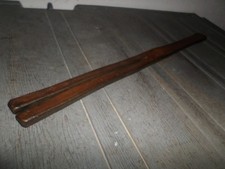
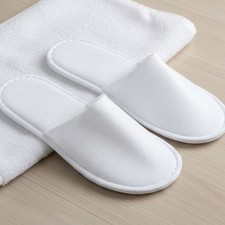
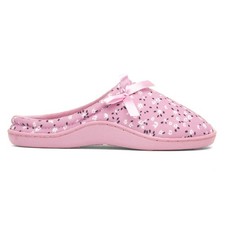
My mother then turned to Miss Bigwither, the formidable school secretary, and asked her to hand over the slipper. Miss Bigwither, a woman whose presence seemed to fill the room, reached for the battered slipper hanging on the wall. But my mother shook her head. “No, the other one,” she said, her voice steady. Miss Bigwither hesitated, her eyebrows raised in surprise, but then nodded and fetched the second slipper—a heavier, more imposing implement. Even the tools of discipline in our school seemed to carry their own hierarchy, their own silent commentary on status and severity.
The room was silent, save for the ticking of the clock and the distant shouts of children at play. My mother raised the slipper, her arm trembling slightly, and brought it down with a resounding smack. The sound was sharp, echoing off the linoleum and high ceilings, and my brother let out a scream that seemed to vibrate through the very floorboards. He jumped up, clutching his bottom, tears streaming down his face, his dignity shattered in front of the assembled adults.
The secretary and Miss Bigwither burst into laughter, their voices harsh and unsympathetic. My mother’s face darkened with anger, her lips pressed into a thin line. She waved the slipper at my brother, her patience worn thin. “I’ll start again every time you move out of position,” she warned, her tone brooking no argument. In this world, discipline had to be seen to be done—there could be no doubt about who was in charge.
My brother, now sobbing uncontrollably, bent over the table once more. The secretary, her eyes glinting with a strange satisfaction, stepped forward. “Let me help,” she said, and took hold of his wrists, pinning them firmly in the small of his back. Her grip was iron, her smile almost cruel. Even the staff seemed to relish the spectacle, as if our suffering somehow validated their own authority in this modest, striving community.
My mother wasted no time, delivering another sharp smack that made my brother howl in pain. His legs kicked up, but the secretary held him fast, her fingers digging into his skin. He began to beg, his voice hoarse and broken, promising never to misbehave again. But the lesson was clear: in this school, and on this estate, you did not let your family down—not ever.
The air in the room was thick with tension, the scent of chalk dust and floor polish mingling with the metallic tang of fear. My brother’s face was streaked with tears, his knuckles white as he gripped the edge of the table. Each swat of the slipper landed with a sharp, echoing crack, the sound bouncing off the walls and searing itself into my memory. His bottom turned a deep, angry red, the pain radiating down his thighs. He gasped and sobbed, his body jerking with each blow, the humiliation as raw as the physical hurt. The secretary’s grip was unyielding, her fingers digging into his wrists, ensuring he couldn’t wriggle free. The laughter of the staff, the stern set of my mother’s jaw, and the knowledge that every shriek would be gossiped about later made the ordeal feel endless. The cold, institutional light overhead made everything seem harsher, more exposed. My brother’s cries mingled with the distant sounds of children playing outside, a cruel reminder that the world went on, indifferent to his suffering.
My mother gave my brother two more hard swats, each one drawing a fresh howl and a desperate kick. His protests became a jumble of sobs and pleas, barely intelligible. The next two swats landed on his upper thighs, eliciting a loud, piteous cry that seemed to shake the very walls. The secretary and Miss Bigwither exchanged glances, their enjoyment of his predicament barely concealed. My mother, her face set with grim determination, readied herself for the final swat, intent on proving that she was a mother who kept her boys in line, no matter the cost.
She tapped my brother’s legs, urging him to spread them further, and gripped the slipper with both hands. The final smack landed squarely in the center of his bottom, and all he could do was let out a loud, shuddering gasp, his whole body trembling with the force of it. The secretary released his arms and helped him to his feet. My brother’s bottom was deep red, almost purple, and his face was twisted in pain as he danced from foot to foot, trying to ease the sting. He was told to place his hands on his head and watch as I was called forward—a public lesson in discipline and family pride.
My heart pounded in my chest as I stepped forward, every eye in the room fixed on me. The anticipation was almost unbearable, a cold knot of fear twisting in my stomach. I felt my mother tap the slipper against my bottom, the touch light but full of promise. Then, with a swift, practiced motion, she brought the slipper down hard. The pain was electric—sharp, hot, and immediate, spreading across my bare skin in a wave of agony. My whole body jolted, my breath catching in my throat as I cried out. The sting was searing, but so was the shame—knowing that every sob, every flinch, was being watched and judged. I clenched and unclenched my bottom, desperate to lessen the pain, but it only seemed to intensify. The cold air of the schoolroom prickled against my skin, making the burning sensation even more acute. I could hear the faint snickers of the secretary and Miss Bigwither, their amusement adding to my humiliation. The second swat landed lower, and my legs buckled. Tears streamed down my face, hot and bitter, as the pain throbbed and pulsed. The next two swats came in quick succession, each one a fresh explosion of agony. I bawled openly, my cries echoing off the walls, my hands gripping the edge of the table for dear life. The final swat landed squarely in the middle, and I thought I might faint from the intensity. I just lay there, limp and defeated, the pain radiating through me, the humiliation complete.
The humiliation was as sharp as the pain, knowing that in our world, every misstep was a mark against the family’s name. I could feel the weight of every gaze, every whispered word that would follow us home, clinging to me like a second skin.
The next two swats came nearly together, each one a fresh jolt of agony that left me gasping. I bawled like a baby, my body shaking as I was held firmly in place. The next swat landed on my upper thighs, and I cried out, begging that I had ‘had enough’—but my pleas only drew further laughter from the women present, who knew all too well the cost of letting standards slip. Their laughter was sharp, almost mocking, a reminder that mercy was in short supply on the estate.
The final swat landed on the middle of my bottom, and for a moment, I thought I might die from the pain. I could not react any more—I just lay there over the table, sobbing, even though the secretary had released me from her grip. In that moment, I understood how much of life on the estate was about appearances, and how discipline was as much about pride as it was about punishment. The lesson was burned into me, as vivid as the marks on my skin.
Eventually, my mother pulled me up and stood me next to my brother. His own pain was subsiding a bit, and having seen his brother soundly spanked, we both knew we’d given the neighbours and teachers something to talk about. But at least our mother had shown she was doing her duty, her head held high as she gathered us up.
My mother took us home immediately, her grip on our shoulders firm but not unkind. Both of us boys sat at an almost sideways angle in the car—it was just too painful to sit normally. The car rattled along the estate’s cracked roads, the familiar sights of maisonettes and washing lines blurring past the window. As we drove past the rows of houses and the watching eyes behind net curtains, I knew that, for today at least, we’d done our part to keep up with the Joneses. The pain would fade, but the lesson—and the pride—would linger, woven into the fabric of our family and our estate.