(gap: 2s) In the village of Alderley Edge, Cheshire, during the late 1950s, the world seemed to move at a gentler pace. Rows of red-brick cottages lined the cobbled lanes, their windows gleaming with the morning sun, lace curtains fluttering in the breeze. The air was often filled with the laughter of children playing marbles and hopscotch, their voices echoing between the houses, mingling with the distant lowing of cows and the sweet scent of cut grass drifting in from the fields. Yet, behind those neat curtains, life was not always as idyllic as it appeared. For those of us raised in devout Christian families, the rules were as unyielding as the stone walls that bordered the village green. The Bible was the highest authority, its words quoted with the finality of law. Church attendance every Sunday was not merely expected—it was demanded, rain or shine, and the notion of having a sweetheart was as forbidden as dancing on the altar. There were no exceptions, and certainly no excuses. (short pause)
Some years ago, after my mother passed away, my siblings and I returned to Alderley Edge to clear out the old cottage and settle her affairs. The house, with its low ceilings and creaking floorboards, seemed smaller than I remembered, as if it had shrunk with the years. Our father had already departed this world, so it was just us, gathered together in the house where we had grown up, surrounded by the ghosts of our childhood.
As we sorted through our mother’s belongings—her collection of pressed flowers, the faded photographs tucked into the corners of drawers, the scent of lavender and old paper rising from every box—we found ourselves reminiscing about her. Most of us had a reasonable relationship with her, but there was always a certain tension in the air—largely because of her unwavering strictness, a quality not uncommon among mothers in Cheshire at that time. She was a woman of iron will, her voice sharp as a winter wind, yet there were moments, rare and fleeting, when a softness would flicker in her eyes.
As we talked, we realised that each of us had endured a most humiliating punishment from our mother during our adolescence. All punishments are embarrassing—perhaps that is their purpose—but these were especially so. I shall try to recount each one, beginning with my eldest sister, Melanie. (short pause) But before I do, I must say that our family was not unique in this. Many of our friends and neighbours lived under similar regimes. There was Mrs. Hargreaves next door, who once made her son stand in the rain for an hour for telling a fib, and old Mr. Pritchard, who believed a cold bath could cure any mischief. Yet, in our house, it was Mother’s word that was law, and her punishments were legendary.
Melanie had just begun to see a new young man. It was a warm summer’s day in Alderley Edge, the kind where the sun painted golden patches on the kitchen floor and the air buzzed with the promise of adventure. Father was away at the railway, and Mother had gone into the village for errands, expected to be gone for quite some time. As soon as Mother left, my sister telephoned her new friend, and he arrived at the cottage almost immediately, his bicycle wheels crunching on the gravel path. We were never permitted to have boys in our rooms, and certainly not in the house when no adults were present. The rules were as clear as the church bell on Sunday morning.
Barely half a minute after he arrived, Melanie and her friend began to kiss. They both removed their shirts as things became more serious. Melanie, eager to impress, decided to go further. She unzipped his trousers and began to touch him in a way that was most improper for a young lady. The room was filled with the nervous excitement of forbidden fruit, the air thick with the scent of lavender soap and the faint tang of sweat.
At that very moment, Mother returned home much sooner than expected, having forgotten something at the grocer’s. She saw the young man’s bicycle outside and immediately grew suspicious. When she did not find Melanie or her friend downstairs, she hurried up the narrow staircase and flung open the bedroom door. There, to her horror, she found my sister and the young man in a most compromising situation. Mother cried out in shock, her voice ringing through the house like a church bell in a storm, and ordered the boy to leave at once, giving him a sharp slap across the cheek. He snatched up his shirt and fled from the house, his footsteps thundering down the stairs.
I had stepped into the hallway to see what the commotion was about, and was surprised to see a flustered, shirtless boy scrambling to dress as he dashed out the door. The air seemed to crackle with tension, the silence that followed as heavy as a thundercloud.
Mother and Melanie soon erupted into a shouting match the likes of which I had never heard. The walls, which had so often echoed with hymns and laughter, now trembled with anger and accusation. I understood why Mother was angry, but she went too far. She called my sister dreadful names, shaming her again and again. Then she called me and my youngest sister up to Melanie’s room. Our sister stood there, arms crossed over her chest, defiant but already tearful, her cheeks flushed with a mixture of shame and fury.
Mother told us what she had witnessed. She repeated her accusations and said she wanted us younger girls to “see what happens to girls who behave in such a manner in this family.” Then she pronounced her sentence: Melanie was to be punished with the strap. The words hung in the air, cold and final, like the tolling of a funeral bell.
This was a shock. We had all assumed she was too old for such punishment. Melanie had not been strapped in years. She protested, her voice trembling with indignation and fear, but Mother silenced her at once and sent my little sister to fetch the strap from the kitchen drawer. The sound of the drawer sliding open, the clatter of cutlery, and the soft thud of leather on wood seemed to echo through the house.
Usually, I was glad to see Melanie taken down a peg, but this was too much—I wished I could be anywhere but there. My younger sister returned with the strap and handed it to Mother, her hands shaking so badly she nearly dropped it. Melanie argued more, her words tumbling out in a desperate rush, but the threat of extra strokes made her fall silent, her lips pressed into a thin, white line.
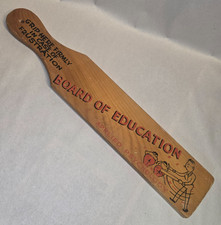
The room felt suddenly smaller, the air thick with dread and anticipation. Melanie’s face was flushed, her jaw set in a stubborn line, but her eyes shimmered with unshed tears. My younger sister and I stood awkwardly by the door, hearts pounding, hands clenched at our sides. The strap—a thick, worn length of leather, darkened by years of use—looked impossibly heavy in Mother’s hand. The faint scent of polish and old leather mingled with the sharp tang of fear.
Melanie bent over, pushing her bottom out, her arms trembling as she gripped the edge of the bed. Mother’s voice was cold and sharp: “You girls pay attention and see what happens. Remember this if you ever think of behaving improperly with a boy!” (short pause) The silence was broken only by the faint ticking of the clock and Melanie’s shaky breaths. Outside, a blackbird sang, oblivious to the drama unfolding within.
Mother drew the strap back, her face set in grim determination. The first stroke landed with a loud, echoing crack. Melanie’s whole body jolted, her knuckles whitening as she clung to the bedspread. My younger sister gasped, her eyes wide with shock and fear. I felt my own stomach twist, a mix of guilt, pity, and a strange, helpless anger. The sound of leather on skin was sharp and final, like the closing of a heavy door.
Mother always gave us our age in strokes. Melanie was fourteen years old, and so she received fourteen strokes. Each lash was delivered with unwavering force, the sound of leather on skin filling the entire house. Melanie tried to stifle her cries, biting her lip so hard it left a mark, but after the fifth stroke, a strangled sob escaped her. Tears spilled down her cheeks, her body shuddering with each blow. The room seemed to shrink with every stroke, the walls pressing in, the air growing thick and stifling.
By the tenth stroke, Melanie was openly sobbing, her face buried in the crook of her arm. The room was thick with tension—Mother’s jaw clenched, her movements mechanical, as if she were trying to drive the lesson in with every swing. My younger sister pressed herself against the wall, tears streaming silently down her face, while I stood frozen, wishing I could look away but unable to move. The clock on the mantelpiece ticked on, indifferent to our suffering.
The final four strokes were the harshest. Melanie shrieked in pain, her legs buckling as she tried to wriggle away, but I instinctively reached out and held her in place, my own hands shaking. The strap left angry red welts across her skin, and the humiliation was as raw as the pain—her sobs echoing in the small room, her dignity stripped away in front of her sisters. I remember the way the sunlight slanted through the window, catching the dust motes in the air, as if the world outside was untouched by the cruelty within.
When it was over, Melanie staggered upright, clutching herself, her face blotchy and streaked with tears. Mother’s expression was unreadable—somewhere between satisfaction and exhaustion. She ordered Melanie into the corner, her voice flat and final, then told my sister and me to leave. As we stepped out, I glanced back—Melanie stood facing the wall, shoulders shaking, her pride and spirit battered. The sound of her quiet, broken sobs lingered long after the door closed, a memory none of us would ever truly escape.
(pause) In the days that followed, the atmosphere in the house was heavy and subdued. Melanie avoided our eyes, her usual spark dimmed, and even Mother seemed quieter, as if the punishment had drained something from her as well. We tiptoed around each other, careful not to disturb the fragile peace. Yet, in the evenings, as we sat around the kitchen table, the old routines resumed—the clink of china cups, the murmur of prayers, the scent of baking bread. Life, as it always does, crept back in.
Years later, as adults, we sometimes spoke of that day in hushed tones, as if the memory itself might still summon Mother’s wrath. We wondered if she had ever regretted her severity, if she had lain awake at night, haunted by the sound of her daughter’s sobs. I like to think that, in her own way, she loved us fiercely, even if her love was sometimes as hard and unyielding as the cobblestones outside our door.
(long pause) There were other punishments, too—less dramatic, perhaps, but no less memorable. Once, my youngest sister was made to write out the entire Book of Proverbs by hand for telling a lie. Her fingers ached for days, but she never lied again, at least not to Mother. I myself was once sent to bed without supper for losing my temper, the hunger gnawing at me as I listened to the comforting sounds of the family downstairs. Each punishment left its mark, shaping us in ways we did not fully understand until we were grown.
Looking back now, I see that our childhood was a patchwork of joy and sorrow, laughter and tears, freedom and restraint. The village of Alderley Edge, with its red-brick cottages and rolling fields, was both a haven and a prison. We learned to cherish the small moments of kindness—a gentle hand on the shoulder, a whispered word of encouragement, a slice of warm bread on a cold morning. And though the lessons were sometimes harsh, they bound us together, siblings united by memory and love, and the unspoken hope that we would do better for our own children.
(dramatic pause) Even now, when I walk those cobbled lanes in my dreams, I hear the echoes of our childhood—the laughter, the tears, the sharp crack of the strap, and the soft, steady voice of my mother, reciting Proverbs as the kettle whistles on the stove. And I remember, with a bittersweet ache, that we were loved, even if we did not always understand it at the time.