(gap: 2s) In the soot-stained heart of Grimethorpe, where the pit winding gear loomed like a watchful giant and the air forever tasted faintly of coal, I spent my childhood among the rows of council houses, each one a patchwork of hardship and hope. The streets echoed with the shouts of children, the clatter of prams, and the distant rumble of coal trains, while the mothers—faces lined with care, hands red from scrubbing—gossiped by battered prams and hung washing that never quite lost its grey tinge.
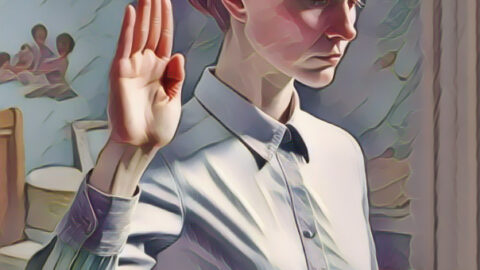
My own mother was a gentle soul, her voice soft as the faded curtains that hung in our lounge, her touch always careful, never harsh. She wore her tiredness like a second skin, her housecoat faded from years of wear, yet her eyes held a quiet strength. In our home, discipline was a matter of gentle words and patient sighs, never a raised hand or a sharp word. I grew up believing this was the way of all mothers, that kindness was the only lesson a child might need.
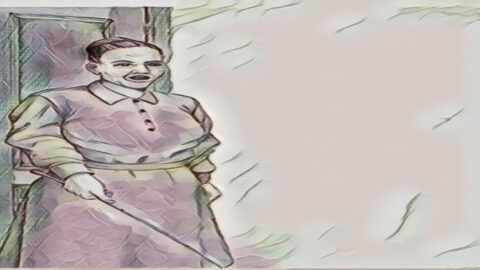
But the world, as I soon learned, was larger and more varied than the narrow streets of our estate. It was David who showed me this—David, with his cheeky grin and scuffed knees, who lived two doors down in a house always filled with laughter and the smell of baking bread. His mother was a hearty Yorkshire woman, her voice booming with affection, her arms always open for a hug or a playful cuff. Their kitchen was a jumble of mismatched mugs, bubbling pots, and sunlight that danced on the linoleum, a place where warmth and chaos lived side by side.
One golden afternoon, as the estate children’s shouts drifted through the open window and the radio played Slade in the background, I sat at David’s kitchen table, my legs swinging above the floor. David, ever the mischief-maker, looked up at his mother with a glint in his eye and piped, “Mum, did you see dinosaurs when you were a girl?” His words hung in the air, bold and bright as the sunbeam that lit his freckled face.
His mother, hands dusted with flour, let out a laugh that shook the teacups on the shelf. “You cheeky monkey!” she cried, her eyes twinkling with mock outrage. “I’ll show you how old I am, you little scamp!” With a flourish, she wiped her hands on her apron and swooped upon David, who squealed and tried to dart away, but she was quick—quicker than any of us expected.
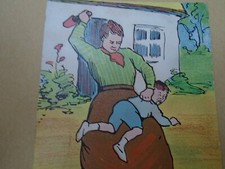
In a flash, she caught him by the arm, spun him round, and sat herself on a sturdy kitchen chair. David, still giggling, found himself tipped across her lap, his legs dangling, his hands clutching the faded tablecloth for dear life. The room seemed to hush, the only sounds the ticking clock and the distant calls of children outside.
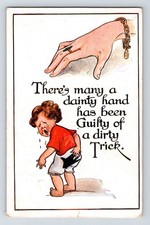
With a practiced hand, David’s mother raised her palm and brought it down with a brisk, echoing smack to the seat of his shorts. The sound rang out, sharp but not cruel—a crisp clap that bounced off the tiled walls. David kicked his legs and let out a yelp, half surprise, half delight, his face flushed with excitement.
“One!” she counted, her voice full of good humour. Another smack followed, then another, each one punctuated by laughter from both mother and son. “Two! Three! Four!” she declared, giving him five quick, playful smacks, each one a little louder than the last, but never harsh. David wriggled and squealed, his eyes shining with merriment, never fear.
“I’m not too old to teach you a lesson, young man!” she declared, giving him a final, gentle smack before letting him tumble to the floor. David leapt up, rubbing the seat of his shorts with exaggerated drama, grinning from ear to ear. The kitchen rang with laughter, and even I, shy and quiet, could not help but smile at the sight.
The lesson was as clear as the sunlight on the linoleum: discipline, when given with love and laughter, need not be frightening. It could be a moment of connection, a gentle reminder to mind one’s manners, and a memory to cherish long after the sting had faded.
That day, I longed for the same attention. When I returned home, I recounted the tale to my mother, hoping she might follow suit. I even teased her about dinosaurs, but she only smiled, her eyes crinkling at the corners, and made a gentle jest. There was no playful smacking for me, only a soft pat on the head and a quiet, “You’re a daft thing.” I felt a pang of disappointment, a longing for the noisy affection I had witnessed.
As the weeks passed, I visited David’s home often, but never again did I see such a lively scene. I asked David if it hurt, if it was always so, and he assured me it was all in good fun, never meant to punish, but to remind him to behave and to share a laugh with his mother. “It’s just a game, really,” he said, “and Mum always gives me a cuddle after.”
The lesson I learned was that every family is different, and affection may be shown in many ways. Some mothers express love with words, others with laughter, and some with a gentle, playful smack. In Grimethorpe, where life was hard and money tight, these small moments of joy and discipline were woven into the fabric of our days.
One rainy Sunday, my mother’s friend came to visit, bringing her twin sons—lively boys with matching jumpers and a knack for mischief. As we played in the cramped lounge, a friendly tussle broke out, and soon the twins’ mother had one boy across her lap, giving him a few light smacks as he giggled and squirmed. The other twin, not to be left out, begged my mother to do the same.
To my astonishment, my mother agreed. She sat upon the brown floral sofa, opened her arms, and the boy climbed across her knees. With a smile, she gave him several gentle smacks, just as the twins’ mother did with her own son. The room was filled with laughter and the sound of playful discipline, the kind that left no mark but a memory.
The twins delighted in the attention, swapping places so each could take a turn across the mothers’ laps. The smacks were never hard, only enough to make a cheerful noise and remind the boys to behave. The mothers exchanged knowing glances, understanding that such moments, though brief, could teach important lessons about respect and good conduct.
I watched, wishing I might be included, but I remained a spectator. My mother smiled at me, her eyes kind, but she did not invite me to join. I felt a mixture of longing and sadness, but I understood, even then, that she cared for me in her own quiet way—her love was gentle, steadfast, and silent as the coal dust that settled on our windowsills.
When the twins had had their fill of fun, they nestled between the two mothers, content and comforted. My mother placed her arm around one of the boys, chatting softly as the afternoon sun streamed through the window, painting golden stripes across the faded carpet.
After our guests departed, I retreated to my room, pondering what I had witnessed. I realised that discipline, when given with love and laughter, could bring families closer together. Yet I also learned that each mother knows her child best, and shows affection in the manner she deems right. In the quiet of my small bedroom, with the distant hum of the pit winding gear in my ears, I understood that love could be loud or soft, playful or gentle, but it was always there, shaping us as surely as the coal shaped our town.
Looking back, I see now that my mother’s gentleness was her way of showing love. She believed in quiet guidance and gentle words, teaching me to be kind and thoughtful through her example. In a world that could be harsh and unforgiving, her softness was a shield, her patience a lesson more lasting than any smack.
The moral of my story is this: whether a lesson is taught with a gentle word or a playful smack, it is the love behind the action that matters most. Every family is unique, every child cherished in their own special way, and every hardship softened by the bonds we share.
And so, dear reader, remember always to be grateful for the love you receive, in whatever form it may take. For it is love, above all, that shapes our childhood and guides us as we grow, even in the shadow of the pit, even on the greyest of days.