(gap: 2s) Once upon a time, in the gentle days of the 1950s, there lived a boy named Peter on a quiet Surrey estate. The houses stood in neat rows, their pebble-dashed walls glistening with morning dew, and the gardens overflowed with dandelions, daisies, and the scent of damp earth. The air was often filled with the shrill calls of swifts and the laughter of children, their voices echoing between the houses as they played marbles and hopscotch on the cracked concrete paths. Peter, with his patched trousers, scuffed shoes, and a mop of unruly hair, was a lively lad—sometimes a little too lively for his own good!
Peter’s mother, a kind but firm lady with gentle eyes and a voice that could turn stern in a heartbeat, believed that children should learn right from wrong. She was never cruel, but when Peter was especially naughty, she would give him a gentle smack to remind him of his manners. Most days, these smacks were little more than a warning, and Peter would soon be back to his cheerful self, the sting forgotten as quickly as it came. Yet, deep down, he always knew his mother’s love was the reason for her firmness.
One golden summer, when the air was thick with the hum of bees and the scent of cut grass, Peter’s family went on holiday to a farm, along with his aunt, uncle, and cousin William. The journey itself was an adventure—windows down, the wind whipping through the car, the countryside rolling past in a blur of green and gold. The boys, Peter and William, were the best of friends, and together they explored the fields, chased chickens, and invented grand adventures among the haystacks, their laughter mingling with the lowing of cows and the distant bark of a sheepdog.
Behind the barn, Peter and William discovered a plum tree, its branches heavy with ripe, purple fruit. The sun glinted off the glossy skins, and the air was sweet with the promise of summer. Some plums had fallen to the ground, and the boys gobbled them up with sticky fingers, juice running down their chins. But soon, their eyes turned to the juiciest plums, hanging just out of reach, swaying gently in the warm breeze.
“Let’s get those!” whispered William, always the bolder of the two, his eyes shining with mischief. The boys built a wobbly platform from old barrels and crates, their hands trembling with excitement and nerves. William scrambled up first, with Peter close behind, the wood creaking beneath their weight. Just as Peter reached for a plum, the fence beneath them gave a loud crack, and down they tumbled in a heap, the world spinning in a blur of green leaves and startled crows.
Peter’s knees and hands were scraped and sore, the sting of gravel sharp against his skin, but William had landed right on a wasps’ nest! The angry insects buzzed out in a furious cloud, and both boys ran, yelping and waving their arms, as the wasps stung them again and again. The pain was sharp and hot, and Peter’s heart pounded with fear and guilt as he dashed across the field, the world suddenly much less friendly than before.
Their parents came running at the sound of the commotion, faces pale with worry. Peter’s father and uncle were more concerned about the broken fence than the boys’ stings, their voices stern and disappointed. But the mothers quickly gathered the boys up, their hands cool and gentle, tending to their wounds with soft cloths and soothing words. The sharp scent of antiseptic filled the air, mingling with the earthy smell of the farm.
“What mischief have you two been up to?” scolded Peter’s aunt, shaking her head, her voice trembling between anger and relief. William was marched off for a stern talking-to, his head bowed, and Peter’s mother took him by the hand, her grip firm but not unkind. Peter’s heart thudded in his chest, a mix of shame, fear, and the lingering sting of wasp bites.
In the bathroom, Mother dabbed Peter’s grazes with stinging antiseptic. The cool liquid burned, and Peter bit his lip, trying not to cry. “This will teach you to be more careful,” she said, her voice gentle but firm, her eyes full of worry and love. Peter winced, the pain fierce, but he knew she was right. He remembered the thrill of reaching for the forbidden plums, and now, the cost of that moment’s greed.
Then, Mother sat Peter down on the edge of the bathtub, the tiles cold beneath him, and explained why what he had done was wrong. “You must never take what isn’t yours, and you must always be careful. You could have been badly hurt, or worse!” she said, her eyes searching his for understanding. Peter nodded, his cheeks burning with shame, the lesson settling deep in his heart.
Now came the part Peter dreaded most. Mother led him to his bedroom, where the sunlight danced on the patchwork quilt and the air smelled faintly of lavender and old books. She sat on the edge of the bed and, with a steady hand, guided Peter across her knee. This was the way mothers in those days showed their children the seriousness of their actions—a ritual both dreaded and, in a strange way, comforting, for it meant the world was still in order.
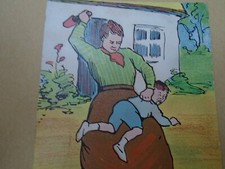
(short pause) Mother’s hand was firm, but not cruel. She gave Peter a series of brisk smacks on the seat of his shorts. Each one stung, sharp and hot, and Peter’s eyes filled with tears—not just from the pain, but from the shame of having disappointed his mother. He squeezed his eyes shut, the world reduced to the sound of her voice and the sting of her hand. He knew he had done wrong, and Mother’s words echoed in his ears: “I do this because I love you, and I want you to grow up to be a good, honest boy.” The room seemed to hold its breath, the ticking of the clock loud in the silence.
As the spanking ended, Peter’s heart pounded in his chest, his bottom smarting, his pride wounded. But then Mother hugged him close, her arms warm and safe, and wiped away his tears with the corner of her apron. She checked his grazes once more, making sure he was all right, and then left him to think about what he had done. The room was quiet, the only sound the distant laughter of children outside, and Peter lay on his bed, staring at the faded print of the Surrey Hills on the wall, his thoughts swirling like autumn leaves.
In the next room, Peter could hear William’s cries as his aunt delivered a similar lesson. The boys spent the rest of the day nursing their sore bottoms and comparing their wounds, both a little wiser for their misadventure. They sat together on the back step, the cool stone soothing their aches, and talked in hushed voices about what had happened. Peter felt a strange mixture of relief and regret, and a new respect for the rules that kept them safe.
That night, Peter lay awake, his legs and hands still tingling, and his heart full of thoughts. He remembered the thrill of the forbidden, the sharp sting of consequence, and the gentle strength of his mother’s love. He understood now that rules were there to keep him safe, and that Mother’s love was sometimes shown in ways that were hard to bear, but always meant for his good. He promised himself, as he drifted off to sleep, to try harder to be honest and careful, and to listen to those who loved him.
The next morning, the sun rose bright and clear, and Peter and William, still a little sore but much wiser, apologised to the farmer for the broken fence. Their fathers paid for the repairs, and the boys stood quietly, heads bowed, as the farmer listened. To their surprise, he smiled and forgave them, his eyes twinkling with understanding. “Boys will be boys,” he said, “but it’s the honest ones who make things right.”
On the last day of the holiday, the farmer gave the boys a bag of plums to take home. They tasted sweeter than ever, the juice cool and fragrant on Peter’s tongue, for he knew he had earned them honestly this time. The memory of the sting faded, replaced by the warmth of forgiveness and the pride of having done the right thing.
And so, dear listeners, remember: it is always better to be honest and careful, and to listen to those who love you. Sometimes, a lesson may sting, but it is given with a loving heart, to help you grow up strong.