(gap: 2s) For the first eight years of my life, it was just my mother and me, tucked away in a cramped flat above a corner shop in Brixton, South London. Brixton in the late 1960s was a world of contradictions—a place where hope and hardship danced together in the streets. The air was thick with the scent of fried onions and jerk chicken wafting up from the market, and the pavements echoed with the shouts of children darting between parked Minis and battered Ford Anglias. The houses, with their peeling paint and sagging gutters, stood shoulder to shoulder like tired old men, but inside, each one held its own secrets, laughter, and sorrows.
My mother was one of the first Jamaican women to set foot in England, drawn across the ocean by the promise of work and a better life. She arrived with nothing but a battered suitcase, a handful of coins, and a heart full of dreams. She brought the warmth of the Caribbean sun with her, and our flat was always alive with the sounds of reggae and calypso, the rhythms pulsing through the floorboards and out the open windows. Even on the coldest mornings, she would hum as she scrubbed the floors, her voice a gentle reminder of home.
In those days, having a child out of wedlock was a scandal—a stain that clung to you like soot. The church ladies would purse their lips and whisper behind their gloved hands, and neighbours would glance away, pretending not to see. My mother carried that burden with a quiet dignity, never letting it show in front of me, though I sometimes caught her staring out the window on Sunday mornings, her eyes shining with unshed tears as the church bells tolled in the distance.
Our flat was small and shabby, but it was filled with love. The net curtains were always tinged with city grime, and the old floral settee sagged in the middle, but my mother made it a home. She worked herself to the bone—scrubbing floors in the mornings, sewing buttons onto shirts for extra pennies at night. She always made sure I had a hot meal, even if it was just tinned soup and a slice of bread, and she patched my dresses so carefully you could hardly see the stitches. On Saturdays, she’d treat me to a Penguin biscuit and a bottle of Corona lemonade, and we’d sit on the stoop, watching the world go by.
But life in Brixton was never easy, especially for a mixed-race girl like me. The streets were alive with colour and music, but there was an undercurrent of suspicion, a sense that I didn’t quite belong. Some days, the other children would let me join their football games, but other times, they’d whisper and point, their words sharp as broken glass. My mother would hold me close and tell me to be brave, to walk tall and never let anyone see me cry.
Then, one winter, my mother fell terribly ill. The flat grew colder and quieter, the laughter fading into anxious whispers. I remember the smell of camphor and the sound of her coughing through the night, the way her hands trembled as she tried to pour tea. When she could no longer care for me, the authorities came—a stern woman in a navy coat, her face pinched and pale. I was bundled into a car, clutching my favourite doll, and driven away from everything I had ever known.
I was placed with a foster family—a deeply religious immigrant Christian household, their faith woven into every corner of their lives. Their house was neat and orderly, with scripture verses pinned to the walls and a heavy wooden cross above the mantelpiece. The air always smelled faintly of boiled cabbage and furniture polish, and the radio played nothing but gospel music. It was a world of rules and rituals, so different from the noisy chaos of my old home.
Each day began and ended with prayer. Before breakfast, we’d gather in the chilly front room, the linoleum cold beneath our feet, and bow our heads as my foster father thanked Jesus for another day. At midday, we paused for grace before lunch, and in the evenings, we knelt together to pray for forgiveness and guidance. Even the smallest decisions—what to eat, what to wear, how to spend the afternoon—were discussed as if Jesus Himself might be listening in from the next room.
Sundays were the holiest of days. We’d dress in our best clothes—starched collars and polished shoes—and walk to church, the streets strangely quiet except for the distant clang of the tram. The church was a cavernous place, filled with the scent of old hymnals and beeswax polish. The preacher’s voice would thunder about sin and salvation, and the congregation would sing hymns so loudly the windows rattled. After dinner, the Bible was read aloud, and my foster mother would remind us, “Jesus is watching,” her voice gentle but unyielding, as if daring us to step out of line.
From the very first moment, I knew I was an outsider. The family was kind, but strict—a no-nonsense Christian clan living on a quiet street off Coldharbour Lane. Their children eyed me with a mixture of curiosity and suspicion, and I found their ways peculiar, especially the endless prayers before every meal. The first time I got into trouble was for giggling during grace, unable to stifle my laughter as my foster father’s voice droned on and on.
But the real trouble came a few weeks later. I had already decided that this was not my home, that I did not belong among these strangers and their endless rules. One grey afternoon, while my foster mother was busy in the kitchen, I slipped out the front door, my heart pounding with excitement and fear. I darted past the corner shop, down Electric Avenue, and into the maze of Brixton’s backstreets. I spent the night huddled in the bus station, shivering beneath my thin coat, the city’s noises both comforting and terrifying.
The police found me the next morning, cold and hungry, and brought me back to the foster house. The entire family was waiting in the front room, the television switched off and the air thick with disappointment. Their own children sat in a row, eyes wide and solemn, as I was lectured about my behaviour. The words washed over me—disobedience, shame, forgiveness—but all I could think about was my mother, lying alone in her sickbed, and the home I had lost.
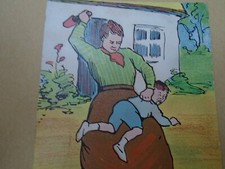
Then came the punishment. My foster mother, her face set and serious, told me to lie across her lap for a spanking—a word I had only heard in stories, never believing it would happen to me. The anticipation was the worst part. My heart hammered in my chest as I shuffled forward, each step heavier than the last. The room was silent except for the ticking of the clock and the faint hum of traffic outside. I could feel the eyes of the whole family on me—my foster father’s stern gaze, the other children’s nervous fidgeting, my foster mother’s lips pressed into a thin, determined line.
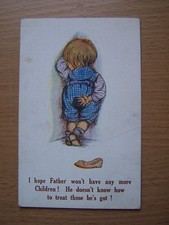
She sat in her faded housecoat, slipper in hand, her voice steady as she recited, “Spare the rod, spoil the child.” It sounded less like a warning and more like a spell, a phrase she had spoken a hundred times before. I hesitated, hoping for mercy, but she patted her lap and said, “Come now, do not make it worse for yourself.” I tried to wriggle away, but she was strong and determined. She pulled me gently but firmly over her knee, my face pressed into the scratchy fabric of her housecoat, the scent of laundry soap and milky tea clinging to her clothes.
The slipper was cold against my skin at first, sending a shiver up my spine. Then came the first sharp, stinging smack—one, then another, and another. Each one landed with a loud, echoing clap that seemed to fill the whole room. There were five smacks in total, each one harder than the last. I bit my lip, determined not to cry, but the pain built quickly, hot and humiliating. My foster mother’s voice was calm but unyielding: “This is for your own good. Jesus wants you to learn obedience.”
The physical pain was a burning ache that spread across the seat of my dress, each smack blurring into the next. But the humiliation was worse—the knowledge that everyone was watching, that this was a lesson meant to be witnessed. I could hear the other children shifting in their seats, the creak of the old settee, the faint sound of gospel music from the radio in the kitchen. The room seemed to shrink around me, the walls closing in as I tried to swallow my tears.
When it was over, my foster mother let me up and told me to say a prayer for forgiveness. My cheeks burned with shame and my eyes stung with tears I refused to let fall. The words of scripture hung in the air, heavy and inescapable. In that moment, I felt small and alone, desperate for my real mother, and certain that I would never truly belong in this house of rules and rituals.
That was the first of many smacked bottoms I received during my time in foster care, right there in the heart of late 1960s Brixton. Each time, the lesson was the same: five sharp smacks, delivered with unwavering resolve, as a reminder that in this house, obedience was not merely expected—it was demanded. Yet, even as I sat on my bed at night, the city’s noises drifting through the window, I would close my eyes and remember the warmth of my mother’s arms, the laughter in our tiny flat, and the hope that one day, I might find my way home again.