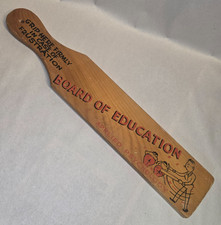
In the Canada of the late 1960s, nestled among the maple-lined streets and the gentle hum of Chevrolets, there existed a punishment so infamous, so chilling, that even the bravest child would blanch at its mere mention. It was known as the school strap. Not the thick, black leather monster of British legend, but a heavy, rubbery strip—stiff as a ruler, yet flexible enough to sting like a wasp—kept secreted away in the teacher’s desk, waiting for the next unfortunate soul who dared to test the boundaries of classroom order.
(short pause) The ritual of the strap was as precise as it was dreadful. When a child’s name was called, the classroom would freeze, the air thickening with a silence so deep you could almost hear the chalk dust settling on the blackboard. The teacher’s voice, clipped and cold, would slice through the hush: “Come to the front.” Every eye would follow you, wide and unblinking, as you rose from your desk, heart pounding so loudly you feared it might burst. The journey to the teacher’s desk felt endless, each floorboard creaking beneath your trembling feet, the anticipation growing heavier with every step.
(pause) The teacher would open the desk drawer with a deliberate slowness, drawing out the strap and holding it aloft for all to see—a warning and a promise. Sometimes, the teacher would announce the number of strokes in a voice as flat as the prairies outside. Most teachers gave a single stroke, but the notorious Mr. McAllister at my intermediate school was a man of iron principle. “Six strokes,” he would declare, his eyes never leaving yours, and your knees would turn to water. You were told to hold out your hand, palm up, fingers splayed wide, and the teacher would inspect it, ensuring it was flat and steady. There was to be no escape, no last-minute reprieve.
(short pause) The moment before the strap landed was the most excruciating of all. Your hand would quiver, your breath caught in your throat, the silence pressing in from all sides. Then, with a swift, practiced motion, the teacher would bring the strap down across your palm. The sound was sharp—a crack that ricocheted off the chalkboard and echoed through the room, making every child flinch in their seat.
(pause) The pain was immediate and searing—a hot, stinging burn that made your entire hand throb and your eyes prickle with tears. If you were sentenced to more than one stroke, you had to switch hands, each one swelling and reddening with every blow. Sometimes, the strap would catch your wrist or knuckles, leaving a bruise that lingered for days, a silent badge of shame. Mr. McAllister, true to his word, always delivered six strokes, each one a lesson in obedience, humility, and the unspoken rules of childhood survival.
(short pause) Afterwards, you would shuffle back to your seat, cradling your hand, determined not to let anyone see your tears. The classroom remained silent, your classmates glancing at you with a mixture of sympathy and relief that it was not their turn. Your palm would be red and puffy, the sting lingering long after the lesson resumed. For hours, even days, you would flex your fingers and remember the sharp, humiliating pain—a lesson, as the teachers insisted, well and truly learned. The moral was clear: rules were not to be broken, and defiance would be met with swift, unforgettable justice.
(pause) At home, the landscape of discipline was different, but no less formidable. When we were small, the punishment was the classic hand spanking over Mother’s knee. Each time, she would deliver exactly five firm smacks to the culprit’s bottom, her hand never wavering, her face set in a mask of weary resolve. The ritual was always the same: you would be summoned, your name called in that unmistakable tone, and you would know precisely what was coming. The anticipation was almost worse than the punishment itself.
(pause) But as we grew older—seven or eight, perhaps—Mother introduced a new instrument of discipline: the infamous pink plastic belt. It was a garish thing, bought at Woolworth’s, with a shiny buckle and a flexibility that made it snap through the air like a whip. The process always began with a heavy silence. You would hear your name, her voice flat and tired, and the house would seem to hold its breath. Every sound—the ticking of the kitchen clock, the distant clatter of dishes—became magnified. She would send you to your room, instructing you to wait. That waiting was its own punishment: sitting on the edge of the bed, staring at the faded wallpaper, your stomach twisting with dread. You could hear her in the hallway, opening the drawer where she kept the pink plastic belt, the faint rattle of buckles and the soft slap of plastic against itself.
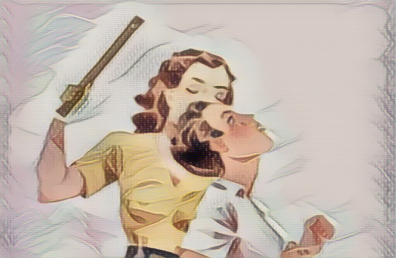
(short pause) When she entered, the room felt colder, the air charged with a strange electricity. She would stand by the bed, her face unreadable, the pink belt looped in her hand. “Lie down,” she would say, and you would obey, face down, feet on the floor, hands gripping the blanket. The anticipation was almost unbearable—your heart pounding in your ears, the smell of laundry soap and old linoleum filling your nose. Sometimes you would squeeze your eyes shut, bracing for the first sting.
(pause) The belt would snap down, quick and sharp, a plastic slap that burned instantly. The sound was unmistakable—a flat, echoing smack that seemed to fill the whole house. Each time, Mother would deliver exactly seven smacks, each one a lesson in discipline, each one spaced just far enough apart to let the pain bloom and settle before the next. The first stroke always made you gasp, the second brought tears to your eyes, and by the third or fourth, you would be biting your lip, determined not to cry out. But sometimes a whimper would escape anyway. The belt left red stripes that throbbed and prickled, your backside burning with each new lash. The punishment never lasted long—just a minute or two—but it felt endless, time stretching out between each strike. The moral lesson was always the same: actions have consequences, and respect for rules was not optional.
(short pause) When it was over, she would leave the room without a word, the door closing softly behind her. You would lie there, face pressed into the blanket, tears hot on your cheeks, the muffled sounds of the house—radio, kettle, distant laughter—slowly returning. The pain would fade to a dull ache, the marks already beginning to disappear, but the shame and relief lingered. You would pull up your pajamas, rub at the sore spots, and promise yourself to be better next time. The house would settle back into its quiet rhythm, as if nothing had happened, but you would carry the memory of the pink belt for days—a lesson learned in silence and sting, a private reminder to tread carefully and think before you acted.
(pause) Father, for his part, had grown up in England, and he would sometimes joke about using an old garden cane on us, claiming it was the “proper British way.” He would tell stories of his own childhood, of headmasters with canes as thick as broom handles and the peculiar pride boys took in comparing their bruises. But in truth, he never laid a finger on us—it was always Mother who handled the discipline in our Canadian home. And so, the lessons were learned, one sharp smack at a time, in the hope that we would grow up wiser, kinder, and just a little more careful than before. The world outside was full of rules and consequences, but within those four walls, we learned the most important lesson of all: that love, though sometimes stern, was always at the heart of every punishment.